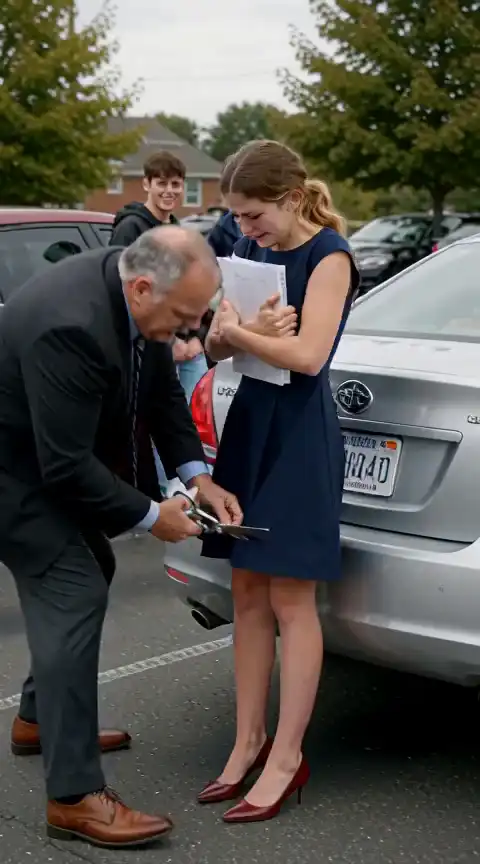



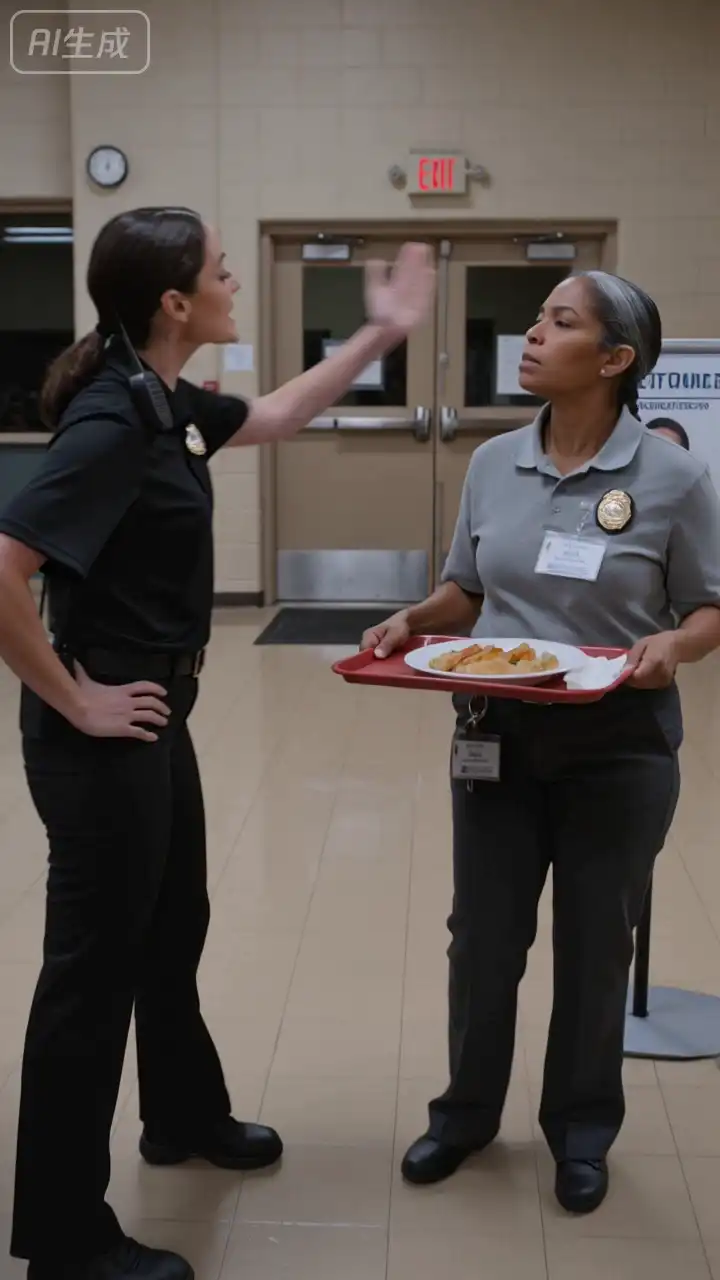
SHE SLAPPED THE CUSTODIAN OVER A LUNCH TRAY. THE SIGN SHE LAMINATED NAMED THE CUSTODIAN AS AUTHORIZED.
The back of the sign had been laminated too.
That was the thing nobody in that cafeteria could get past afterward. It was not that the answer existed. It was that the answer had been taped to the back of the object being used as a weapon, sealed under the same sheet of plastic, in the same machine, by the same woman, on the same afternoon two years earlier.
Lorraine Pike turned the acrylic holder around on the rail and set it down facing the tables.
The front said: SERVICE LINE — CATERING PERSONNEL ONLY DURING CATERED EVENTS. It said it in forty-point type in a font that came free with the laminator.
The back had a printed page taped to it, folded once to fit, with a footer at the bottom that read REV. 3 · APPENDIX B (REVERSE).
Tunde Adeyemi, a junior at the nearest table who had been in the room for the entire thing and had a phone in his hand, read it out loud because he was seventeen and because nobody had told him not to.
"Authorized personnel during catered evening events," he read. "One. Catering management. Two. Serving staff. Three. Bar staff, where applicable." He looked up. "Four. Custodial, evening shift, meal break, thirty minutes."
Delia Frame's hand was still raised.
"Below that," Tunde said, "it says, the designated break room is used for catering storage between six p.m. and nine p.m. on catered event nights, and during that period custodial meal breaks shall be taken in the cafeteria." He turned the sign slightly to catch more light. "And there's a note at the bottom. It says, see attached schedule, and then there's a signature block, and it's initialed."
"Give me that."
"It's got initials," Tunde said. "D.F."
Delia took the sign out of the holder. She turned it over twice, front, back, front, the way a person turns something over when they are looking for a version of it that is not there.
"That's an old schedule," she said.
"It's got a revision number," said Ms. Ocampo.
Grace Ocampo taught chemistry and had been on duty in that cafeteria for two hours, and she was standing at the end of the second long table with a stack of ungraded lab reports under her arm and an expression that had stopped being professional somewhere around seven twelve.
"Rev three," Ms. Ocampo said. "That's the current revision. It's the one on the dining office wall. I read it in September when we had the nut allergy issue."
"It's a schedule," Delia said. "It's not a—"
"It's your signature," Lorraine said.
She had not raised her voice. She was standing in the aisle with her plate still against her chest, and there was a red print coming up across her cheek and down toward her ear, and she said it the way she said everything, which was the way a person speaks who has spent nineteen years being polite to people who did not answer.
"That's your handwriting in the corner," she said. "You laminated it. You taped the schedule to the back of the sign two years ago and then you laminated the sign, and then you put the sign in front of the line, and then you told me to go eat in a room that your own appendix says is full of chair covers until nine."
Delia Frame put the sign down on the rail.
"Here's what's going to happen," she said. "In about four minutes I'm going to call my regional, and my regional is going to call the dining office, and the dining office is going to tell you that a laminated schedule taped to the back of a sign does not override a supervisor's direction on the floor. And then you and I are going to have a conversation about insubordination, and it is going to go in your file, and your file goes to the school, and the school renews this contract in June."
"Article eleven," Lorraine said.
"What?"
"That's the one you want. Not the schedule. The schedule's mine. Article eleven's yours."
Delia looked at her for a moment too long, and in that moment the door at the far end of the room opened and one of the eleven trustees came out.
She was a woman in her sixties in a navy dress with a name tag on a lanyard, and her name was Beatrice Holcomb, and she had practiced labor law in this state for thirty-one years before she retired, and she had come out to find out why the fish had not been served.
She stood at the end of the tray-return aisle and looked at the sign, and at the red print on Lorraine Pike's face, and at the eleven people at her own table who had all stopped talking.
"Delia," she said. "Is that a handprint?"
"It's not—"
"Because it looks like a handprint." Mrs. Holcomb's voice was pleasant and unhurried. "I've seen a great many handprints. In my former line of work they were usually attached to a photograph, and the photograph was usually attached to a filing."
The walkie went off at seven eighteen.
Delia had it at her shoulder with her thumb on the button and her voice dropped into the register people use when they are calling for backup in front of an audience.
"Calder and Finch, this is Frame at Fairmount. I need the regional on the phone. I have a staff member who is refusing a directive and I have a room full of—"
"Put the walkie down."
That was Hollis Trent, who had come in through the double doors at the north end with his coat still on and his badge still clipped to his belt.
Hollis was the business agent for Local 300, which represented the custodial and grounds staff at Fairmount, and he had been at a school board meeting four blocks away, and he had taken the call at seven fourteen from a woman standing in a cafeteria aisle with a plate in her hands.
"Put it down," he said again, "because everything you say into that thing from this second forward is going to be read out loud at a hearing, and I would like you to have the chance to think about it first."
"I'm not talking to you. You're not employed by this school."
"No," Hollis said. "But she is. And she's the building rep for this site, which makes what you did to her at seven eleven a labor relations matter and not a staffing matter, and I have already called the board's general counsel from the parking lot, and she is on her way."
Delia Frame looked at the walkie in her hand.
"There are sixty children in this room," Hollis said. "There are eleven trustees forty feet away. There is a camera above that door that has been running since four o'clock. You have hit a bargaining unit member during a contractual meal break in front of all three, and you have done it over a rule that is printed on the back of the sign you were enforcing. I want you to understand the shape of the hole you are standing in."
"Give me the phone."
Tunde Adeyemi was still holding it up.
"I said give me the phone."
"You're not my teacher," Tunde said. "You're a caterer."
The room made a sound. Not a laugh; sixty students breathing in at the same time.
"Give me the phone or I'll have you removed from this cafeteria."
"You can't remove me from my own cafeteria," Tunde said, and he said it without any heat at all, which was somehow the worst thing he could have done. "I eat here five days a week. You're here twice a month."
Delia Frame took one step toward the fourth table and Hollis Trent moved into the aisle and stood between them, not touching anybody, with his hands in front of him like a man waiting for a bus.
"That's far enough," Hollis said. "You've already put a hand on one member of this campus tonight. You are not going to put one on a minor."
"I wasn't going to touch him."
"Then you'll understand why I'm standing here."
Delia's walkie went off again, a burst of static and a voice asking for Frame, Frame, come back, and she did not answer it, and it hissed at her shoulder for eleven seconds before it went quiet.
Dr. Amos Whitfield, the head of school, came down from the trustees' dinner at seven twenty-six with a napkin still in his hand.
He was sixty-one and he had been head of Fairmount for nine years, and he had the specific quality of a man who has spent his career in rooms where nothing like this happens, which is that when it finally does, he becomes extremely quiet and extremely fast.
"Show me the sign," he said.
Ms. Ocampo showed him the sign.
"Show me the back."
She showed him the back.
"Priya." He did not turn his head. "The binder."
Priya Raman, the school's director of human resources, had already been to the dining office and back and had the vendor contract in a black three-ring binder against her chest, and she put it on a table and opened it to a page marked with a yellow tab.
"Article eleven," she said. "Contractor personnel shall not initiate physical contact with any Academy employee, contractor, student or guest, for any reason, at any time, on Academy property." She turned the page. "Violation is grounds for immediate removal of the individual from campus, and a service credit of five thousand dollars to the Academy, and a written corrective plan from the contractor within ten business days."
"The individual," Whitfield said.
"The individual."
"Not the company."
"The individual is removed tonight and the credit is automatic. The company stays, unless there's a second incident."
Whitfield nodded slowly, and then he did the thing that made him a good head of school, which was that he turned to the woman standing in the aisle with the plate before he turned to anybody else.
"Ms. Pike."
"Dr. Whitfield."
"Are you injured?"
"I've got a sore ear."
"Do you want an ambulance?"
"No, sir."
"Do you want to press charges?"
That stopped the room. Sixty students, one chemistry teacher, one security guard, one union agent, one head of school, and a woman in a gray polo holding a plate of food that had been hot thirty minutes earlier.
Lorraine thought about it for four seconds. You could see her do it.
"No," she said. "I want to eat my dinner."
"Then eat your dinner." Whitfield turned to Delia Frame. "Ms. Frame, you're relieved of this site as of now. Not at nine. Now. Leave your walkie and your lanyard with Ms. Raman, get your coat, and leave the campus. Your regional manager will be told why by me, in writing, before nine o'clock tonight."
"I want to say something."
"You'll have ten business days to say it, in writing, in a corrective plan." He took the napkin out of his hand and folded it. "Not in front of these children."
Priya Raman was already on the phone to the Calder & Finch regional by the trophy case, and she said four sentences into it and then held the phone away from her ear and let the man on the other end talk for a while, and then she said, "No. Tonight," and listened again, and said, "Because the camera above the north door has it at seven eleven and forty seconds, and because my head of school has already told her to leave, and because if she is still on this campus at nine o'clock I will be calling the district attorney's office in the morning about an assault on a school employee, and you will be reading about it in a letter that begins with the words your company." She listened once more. "Eight o'clock. Good."
She hung up and wrote the time on the back of her hand, which was a habit she had, and which people found unnerving until they needed to know exactly when something had been said.
Delia Frame left the building at seven forty-one.
She crossed the parking lot between the sodium lights with her coat over her arm and her phone already at her ear, and the security guard watched her go from the door by the trophy case, and then went and got the chair that had fallen over at seven eleven and stood it back up.
Inside, the cafeteria did something that no one had organized.
The students did not go back to eating.
They sat at their long tables with their trays in front of them and their hands still, and they waited, and when Lorraine Pike finally carried her tray to table twelve — the one by the window that nobody sits at in October because the glass is cold — Tunde Adeyemi picked up his tray and moved to it, and then two girls from the fourth table moved, and then four more, and by seven fifty there were eleven students sitting at the cold table by the window eating a catered dinner that had been plated for trustees.
Ms. Ocampo stayed at the end of the second table with her lab reports and did not tell them to go back.
Hollis Trent sat down across from Lorraine with a cup of coffee he had gotten from the machine in the faculty room, which was not the same coffee.
"You're going to have to sign something," he said.
"I know."
"Tomorrow. Not tonight. Tonight you eat."
"It was your sign, Hollis. I laminated it in the dining office in 2024 and you were standing right there."
"I remember."
"Then how did she—"
"Because nobody reads the back of a sign," Hollis said. "That's what a sign is. It's a thing people obey without reading. She's been obeying her own sign for two years without knowing what was on it, and tonight she found out in front of sixty kids." He drank some of the coffee and made a face at it. "You know what she's going to remember? Not the removal. Not the five thousand dollars. She's going to remember that a seventeen-year-old read it to her out loud."
The corrective plan was filed on the eighth business day and the service credit cleared on the eleventh.
The regional manager for Calder & Finch came out to Fairmount in person on the Friday, which was not required by the contract, and stood in the dining office with Priya Raman and Hollis Trent and a printed copy of Policy 4, and agreed to a change that Lorraine Pike had written out on a lined index card during her meal break.
The card said: put the schedule on the front.
So they did. The new sign went up on the Monday, laminated the same way, same machine, and the front of it read SERVICE LINE — SEE AUTHORIZED PERSONNEL SCHEDULE BELOW, and below it, in twelve-point type, were the four lines of Appendix B, including the fourth one, and including the sentence about the break room being full of chair covers until nine.
At the bottom of the front there was one more line, added by Whitfield himself in his own hand before it was laminated, and it said: custodial meal breaks may be taken at table 12. That table is reserved for staff between 6 p.m. and 9 p.m.
Nobody called it Article anything. It was just on the sign.
Lorraine finished her shift at eleven that night the way she finished every shift, which was by walking the second-floor corridor with a dust mop and turning off the lights in the order the switches wanted.
Her ear had stopped ringing by nine. The red print had gone yellow by Friday and was gone by the following Wednesday, and the only person who ever mentioned it after that week was a freshman who asked her, in November, whether it was true that she had turned a sign around and ended a woman's career.
"I didn't end anybody's career," Lorraine said. "She ended her own by hitting me."
"But you turned the sign."
"The sign was already written," she said. "I just turned it around."
The dining office still has the old sign in a box under the desk, front and back, sealed in the same plastic, two years of a rule nobody had read on one side and the actual rule on the other. Priya Raman keeps it as a training exhibit. She brings it out at every new hire orientation and turns it over in her hands and does not say anything for a moment, and then she says: read the back of the thing before you use it on somebody.
[CLOSURE: COLD JUSTICE]
Disclaimer: Mention of any brand or trademark is for identification only and does not imply partnership or endorsement
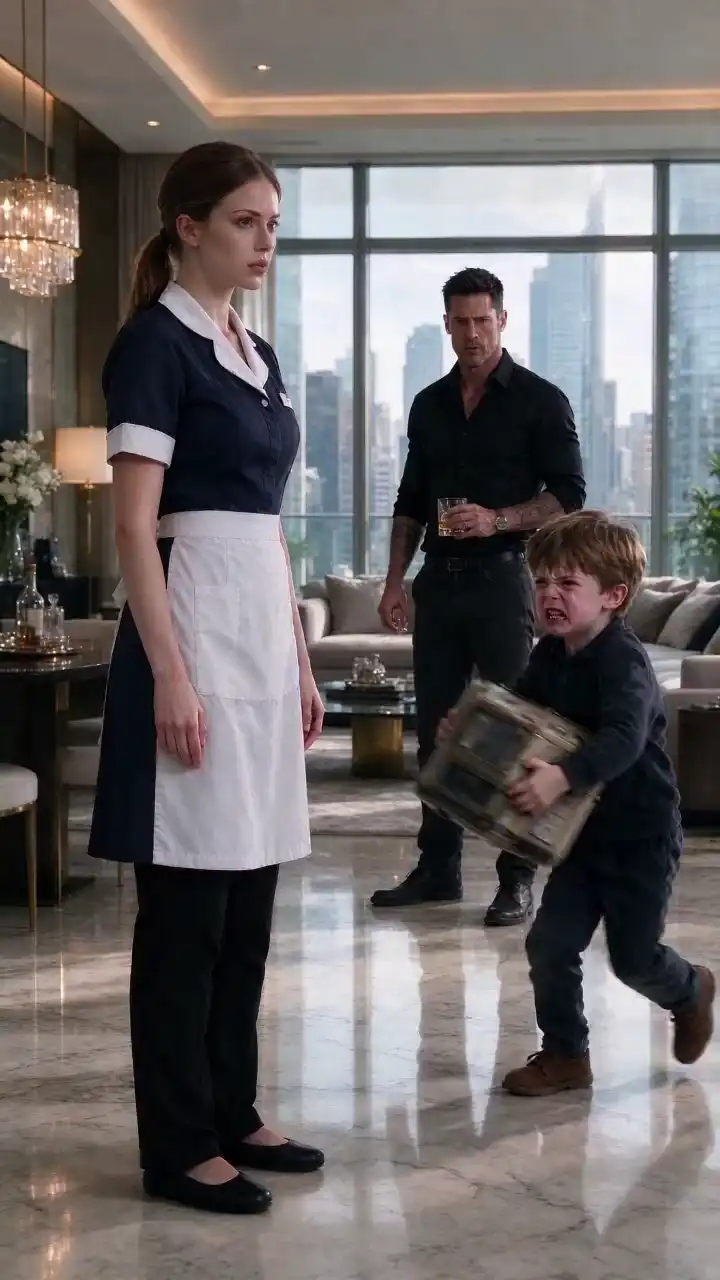
THE BILLIONAIRE'S SON ATTACKED EVERY MAID WHO CAME NEAR HIM... UNTIL A POOR YOUNG WOMAN KNEELED BEFORE HIM AND UNCOVERED THE SECRET BEHIND HIS RAGE

SHE SLAPPED A GUEST FOR USING THE GUEST LINE. THE CERTIFICATE ON THE BARN WALL LISTED HIM AS THE OWNER.
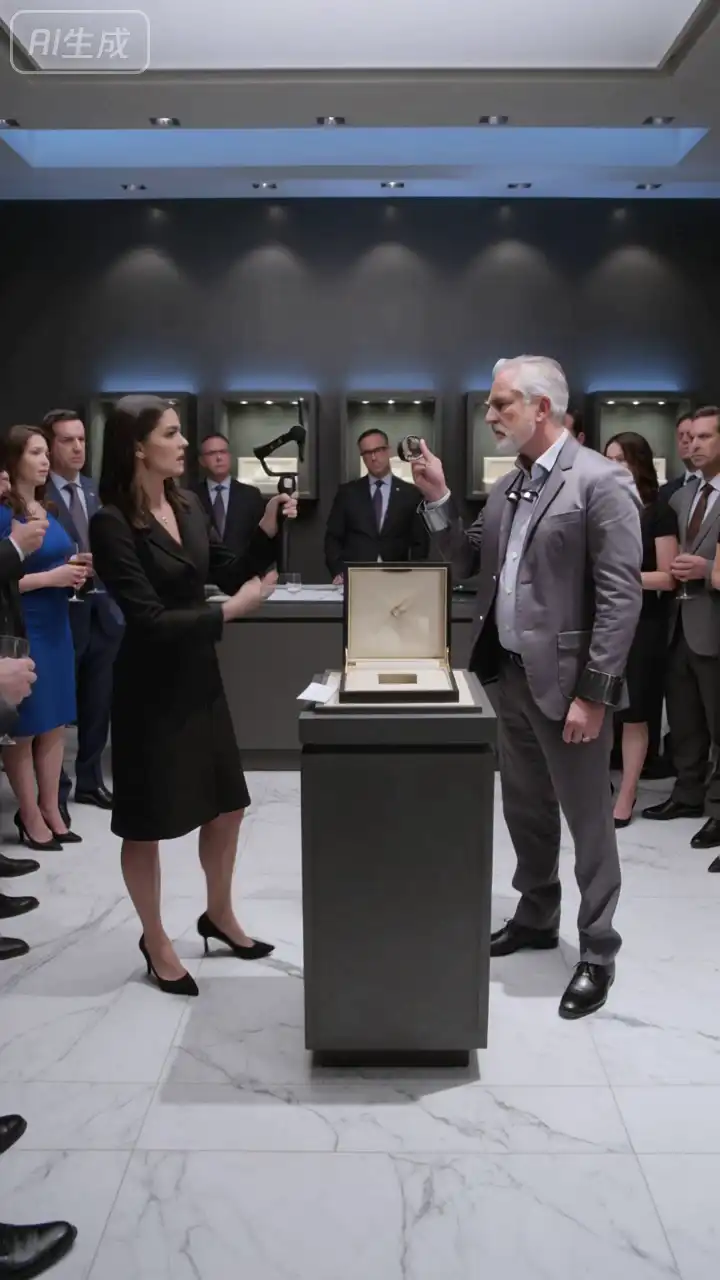
SHE SLAPPED THE MAN WHO DESIGNED THE WATCH. THEN SOMEBODY TURNED THE CARD AROUND.