


A BRUISED FOSTER TEEN WAS PINNED UNDER HIS CRUEL GUARDIAN’S BOOT OVER A REPORTED BUS PASS UNTIL A HEAVY BLACK SEDAN IDLED AT THE CURB AND EVERYTHING CHANGED.
The exhaust from the heavy sedan rolled across the curb in a thick white cloud, cutting straight through the smell of wet gravel and cheap tobacco.
Raymond Henderson did not lift his boot from Tariq’s knuckles.
He did not even look at the car at first.
He kept his eyes locked on Tariq’s face, grinning with the ugly confidence of an adult who believed the state had given him absolute permission to break a child.
“You see anyone coming to help you, boy?” Raymond asked, leaning forward so his full two hundred pounds bore down on Tariq’s hand.
Tariq let out a short, ragged breath through his nose, his forehead pressed against the freezing asphalt.
He refused to make a sound.
He had learned two years ago in a group home in North Ward that when people like Raymond wanted a scream, silence was the only piece of ground you had left.
Beside the shelter bench, Greg Henderson let out a loud, mocking laugh that echoed under the metal roof.
“Look at him, Dad,” Greg said, pulling out his phone to join the recording.
“He thinks if he plays dead, you’ll let him keep his jacket.”
Leon snorted, flicking the empty aluminum can toward Tariq’s face.
It bounced off the kid’s shoulder, leaving a trail of orange syrup across the worn fabric of his coat.
Nobody among the commuters moved.
A woman in a long wool overcoat pulled her knit scarf higher over her nose and turned toward the empty track.
A young man with headphones looked down at his shoes and shoved his hands deep into his pockets.
Everyone knew what was happening.
Everyone could see the foster placement paperwork sticking out of the open pocket of Raymond’s denim jacket.
In this neighborhood, you did not step between a state guardian and his check.
Then the door of the vintage sedan clicked shut with the heavy, airtight thud of pure American steel.
The sound was not loud, but it cut through the idling diesel buses like a rifle shot.
A man in a tailored charcoal suit stepped around the front of the vehicle, his leather-soled shoes making crisp, measured snaps against the salted slush.
He was built broad across the shoulders, thirty years younger than the car he drove, with a posture that belonged to someone who carried authority like an everyday tool.
He did not look at the commuters.
He did not look at Greg or Leon or Trina.
He walked straight to the passenger side of the sedan, opened the rear door, and stood at attention with one hand resting flat against the polished roof.
Raymond frowned, his boot pressure easing just enough for Tariq’s trapped fingers to twitch against the stone.
“Hey!” Raymond barked, assuming the man was an Uber driver blocking the bus lane.
“This is a city loading zone, pal.”
“Move that boat before I flag down the transit cop.”
The man in the suit did not blink.
He did not even glance in Raymond’s direction.
From the deep interior of the sedan, an older man stepped out into the gray winter air.
He was tall, over six feet, with deep brown skin that matched the shade of Tariq’s cheekbones, framed by hair as white and sharp as frosted wire.
He wore a heavy cashmere coat that reached past his knees, tailored so cleanly it made everyone standing in the transit shelter look rumpled and small.
In his right hand, he held a walking stick made of dark, polished walnut, topped with an unadorned silver cap.
He took one slow step onto the platform.
His shoes did not slip on the ice.
His dark eyes swept the platform once, taking in the frightened commuters, the transit officer frozen by the glass booth, the three smirking Henderson kids, and finally Raymond’s heavy boot planted on Tariq’s hand.
Something in the air of the station dropped five degrees.
It was not the wind coming off the river.
It was the total, crushing absence of doubt in the old man’s face.
Raymond felt it.
His grin faltered at the edges, his jaw tightening into an instinctive defensive scowl.
“I said move the car, old man,” Raymond muttered, though his voice lacked half the venom it had carried three seconds earlier.
“We’re handling a private family matter here.”
The older man did not shout.
He did not raise his stick.
He simply walked forward, each tap of the silver-tipped cane ringing clearly off the concrete.
He stopped exactly two feet from Raymond’s boots.
The man in the charcoal suit followed behind him, holding a slim leather folder against his chest with both hands.
For five seconds, nobody breathed.
The bus that had been rumbling at the red light hissed its air brakes and pulled away, leaving the platform in dead, hollow silence.
The old man looked down at Tariq’s bruised knuckles.
He looked at the torn denim.
He looked at the frozen syrup sticking to the boy’s neck.
Then, slowly, his gaze rose to Raymond’s face.
“Remove your foot,” the old man said.
It was not a request.
It was not an argument.
It was the tone a judge uses when he tells a bailiff to clear the gallery.
Raymond bristled, his face flushing dark red beneath his stubble.
He was used to dealing with overworked social workers who begged him to take emergency placements, used to using his size to run his house like a drill sergeant.
“Who the hell do you think you’re talking to?” Raymond snapped, puffing out his chest.
“This is my foster son.”
“The county pays me to manage him.”
“He tried to steal from my daughter this morning, and he’s learning what happens when you disrespect this family.”
Greg stepped up beside his father, trying to look menacing, though his eyes kept darting to the black sedan.
“Yeah, mind your business, grandpa,” Greg sneered, pointing a finger.
“Go back to your nursing home.”
The aide in the suit didn't flinch, but his eyes narrowed with lethal precision.
The older man did not even look at Greg.
He didn't acknowledge the teenager existed.
He kept his eyes on Raymond.
“I will not tell you a second time,” the old man said, his voice flat, low, and terrifyingly calm.
“Take your foot off my grandson’s hand.”
The word did not register immediately in Raymond’s brain.
“Your what?” Raymond muttered, blinking.
Behind him, Trina stopped chewing her gum.
Leon’s phone lowered by two inches.
“Grandson?” Raymond repeated, then let out a sharp, ugly bray of laughter that sounded hollow in the freezing air.
“You’re out of your mind.”
“The county database listed this kid as an unplaced ward with no living kin three years ago.”
“Both his parents died in the hospital fire down in Camden.”
“He doesn't have an uncle, he doesn't have an aunt, and he sure as hell doesn't have a grandfather with a fancy town car.”
Raymond pressed down harder on Tariq’s hand, as if trying to prove to the entire platform that he still held the title deed to the boy.
“He’s state inventory, old man.”
“And until the fourth of the month, his monthly maintenance voucher is made out to Raymond Henderson.”
The old man didn't blink.
He turned his head slightly toward the aide.
“Mr. Harris,” the old man said.
“Sir,” the aide replied instantly.
“Remind Mr. Henderson of the law regarding physical restraint of a minor under state conservatorship.”
Mr. Harris opened the slim leather folder with one hand.
He pulled out a single sheet of cream-colored stationery stamped with an embossed gold seal at the top.
“Under Title Nine, Section Fourteen of the State Juvenile Code, the application of physical force by a temporary resource parent constitutes immediate grounds for emergency revocation of license,” Harris recited, his voice crisp and emotionless.
“Furthermore, under the Vance Estate Restrictive Trust Agreement, dated September twelve, nineteen ninety-eight, any individual residing on property owned by the Vance Land Trust who commits battery against a blood relative of Arthur Vance forfeits all rights of tenancy without notice.”
Raymond’s face went entirely blank.
The red flush drained out of his cheeks, leaving him looking mottled and gray in the cold morning light.
“What did you say?” Raymond whispered.
Trina stepped forward, her voice suddenly trembling.
“Dad… what is he talking about?”
“What’s the Vance Trust?”
Raymond didn't answer his daughter.
His eyes were locked on the signet ring on the old man’s left hand.
It was heavy, antique gold, carved with an anchor wrapped in three silver laurel leaves.
Raymond had seen that exact crest before.
It was stamped on the deed to the four-bedroom colonial house on Maple Street where Raymond and his family had lived for eleven years.
It was stamped on the monthly rent forgiveness forms Raymond had signed every December since his own father died.
It was stamped on the quarterly stipend checks that paid for Greg’s community college tuition, Leon’s truck insurance, and Trina’s private cheerleading uniforms.
Raymond’s knees visibly loosened.
His boot slid backward off Tariq’s hand as if the leather had suddenly caught fire.
Tariq gasped, pulling his swollen, bleeding hand against his chest, curling his body into a tight ball against the shelter glass.
Arthur Vance didn't wait.
He stepped forward, completely ignoring Raymond, and knelt down in the filthy slush.
He didn't care about his thousand-dollar cashmere coat.
He didn't care about the mud soaking through the knees of his tailored trousers.
He reached down with two large, warm hands and gently slid them under Tariq’s shoulders, lifting the boy up from the frozen pavement as easily as if he were ten years younger.
“Get up, son,” Arthur said softly, his voice trembling for the first time.
“You are done laying in the dirt for these people.”
Tariq looked into the old man’s face.
He saw his own eyes looking back at him.
He saw the curve of his father’s jaw, the same dark arch of his brow, the same small birthmark just above the left temple.
“Who are you?” Tariq whispered, his teeth chattering uncontrollably from the shock and the cold.
“I’m your grandfather, Tariq,” the old man said, pulling a pristine linen handkerchief from his pocket and wrapping it gently around Tariq’s crushed, bleeding knuckles.
“I’ve been looking for you across three states for thirty-four months.”
“And God forgive me, you were sitting in the house I paid for the entire time.”
A murmur rippled through the commuters standing along the shelter.
The transit security guard finally walked over, his radio held loosely at his belt, his eyes wide as he looked at the sedan and the old man’s posture.
“Excuse me, sir,” the officer stammered, looking at Arthur.
“Is there a problem here?”
“Do I need to call the precinct?”
Arthur didn't turn around.
“Yes, Officer,” Arthur said, his tone chillingly polite.
“You need to call your precinct commander.”
“Tell Captain Miller that Arthur Vance is standing at the Third Street platform waiting for him.”
The guard’s jaw dropped.
He took one look at Arthur’s face, touched his cap instinctively, and practically ran back into the glass kiosk to grab the landline phone.
Raymond swallowed hard, taking two stumbling steps backward.
“Mr. Vance… listen to me,” Raymond stammered, holding his hands up like a man trying to stop a freight train.
“There’s been an administrative error.”
“A terrible mistake.”
“The county worker… she just dropped him off at the door three months ago.”
“We didn't know.”
“I swear on my mother’s grave, we didn't know who he was!”
Arthur rose to his full height.
He stood between Tariq and the Henderson family like an iron wall.
“You didn't know?” Arthur asked.
His voice was so quiet that even the people fifty feet away had to lean in to hear it.
“You didn't know his name was Tariq Vance?”
“I… we thought it was a coincidence!” Raymond pleaded, his voice cracking into a high, pathetic pitch.
“There are thousands of Vances in the tri-state area!”
“We took him in out of Christian charity, Mr. Vance!”
“We gave him a room!”
“You gave him the unfinished cellar behind the water heater,” a new voice said from the shelter.
Everyone turned.
Tariq was standing upright now, leaning his uninjured shoulder against Arthur’s arm.
His voice was hoarse, but it carried the weight of every cold night he had spent listening to the pipes shake above his head.
“You made me sleep on an army cot with two wool blankets,” Tariq said, staring straight into Raymond’s shifting eyes.
“You took my father’s gold watch out of my backpack the second night I was there and said the county didn't allow foster kids to keep jewelry.”
“You told me if I said one word to the caseworker when she did her monthly inspection, you’d report me for stealing tools from the garage and have me transferred to the youth detention lockup in Newark.”
Greg Henderson tried to step forward, his fists clenched, but Mr. Harris moved with shocking speed, placing his body directly in front of the teenager.
“Take one more step toward this young man,” Harris warned, “and you will spend the next five years in state prison for witness tampering.”
Greg froze, his eyes darting to his father, waiting for Raymond to take charge.
But Raymond was looking at the leather folder in Harris’s hands.
“Mr. Henderson,” Harris said, pulling out a second document.
“On November fourth of last year, the Department of Child and Family Services sent a certified inquiry to the Maple Street residence regarding an unclaimed dependent named Tariq Vance.”
“You personally signed the return receipt.”
“Three days later, you submitted an amended foster parent subsidy application requesting an emergency stipend increase of nine hundred dollars per month to cover 'specialized therapeutic supervision' for the minor.”
“You claimed the child was non-verbal and aggressive.”
Harris looked up from the paper, his eyes like two chips of gray ice.
“You did not report his presence to the Vance Trust administrator, despite the explicit clause in your lease agreement requiring you to notify the board of any minors residing on trust property.”
“You hid him.”
“You hid him so you could collect the state allowance while ensuring the primary probate inquiry for the Vance estate would remain unresolved.”
Trina let out a sharp cry, grabbing her brother’s arm.
“Dad! What is he saying?”
“Are we losing the house?”
“Shut up, Trina!” Raymond barked, sweating profusely despite the freezing sleet.
He turned back to Arthur, his hands trembling violently.
“Arthur… please.”
“My father served your family for forty years at the lumber yard.”
“We’re cousins through the second branch.”
“We’re family!”
Arthur Vance looked at the man who had just ground his grandson’s knuckles into the dirt.
“My brother had many cousins,” Arthur said.
“None of them were cowards who stomped on children.”
Arthur reached into his coat and pulled out a gold pen.
He didn't look at Raymond while he spoke.
“Mr. Harris,” Arthur commanded.
“Yes, sir.”
“Execute the immediate revocation of the Maple Street residential lease under Section Four of the trust charter.”
“Call the sheriff’s department.”
“I want the locks changed on the Maple Street property by noon today.”
“All personal property belonging to Raymond Henderson and his adult dependents is to be packed into commercial storage containers and placed on the municipal curb.”
Raymond’s knees gave out.
He dropped to both knees directly in the puddle where he had forced Tariq to kneel moments ago.
“No… no, Arthur, please!” Raymond begged, reaching out with both hands.
“The kids have school!”
“Greg has his finals next week!”
“We don't have anywhere else to go!”
“You have the transit system,” Arthur said without an ounce of warmth.
“Since you find it so suitable for young people.”
Arthur turned his gaze to Greg.
The nineteen-year-old was shaking, his phone still clutched in his hand, his earlier arrogance completely evaporated.
“And as for you,” Arthur said, his voice dropping into that terrifying register of absolute authority.
“The tuition allowance you receive through the Vance Community Scholarship Program is terminated effective this morning.”
“You will receive a bill from our legal department for the recovery of the past three semesters’ disbursements, obtained under fraudulent representations of household integrity.”
Greg’s face turned white.
“I didn't do anything!” Greg cried, his voice cracking.
“It was my dad! He told us what to do!”
“You kicked his bag into the sewer,” Arthur replied, his dark eyes boring into the boy’s skull.
“I saw you.”
“The driver saw you.”
“Every person standing under this awning saw you.”
Arthur then turned his head toward Leon, who was desperately trying to wipe the energy drink stains off the concrete with his boot.
“The truck you drive,” Arthur said.
“The title is registered to the Vance Agricultural Fleet, leased to your father for agricultural support.”
“Mr. Harris, notify the state police that the vehicle has been unauthorized for personal use and is subject to immediate recovery.”
Leon let out a pathetic groan, dropping his head into his hands.
“My tools are in that truck,” Leon sobbed.
“My entire living is in that truck!”
“You should have thought about your living before you poured sugar on my grandson’s coat,” Arthur said.
Around the shelter, the commuters were no longer looking at their phones.
They had stepped out from under the roof, forming a tight circle around the Henderson family.
A woman who had been waiting for the cross-town express pointed her finger directly at Raymond.
“He was standing on that poor boy’s hand!” she shouted, her voice ringing across the platform.
“I saw him!”
“He told him to beg for his bus pass!”
Another commuter, an older man in a union jacket, stepped forward, spitting on the ground near Raymond’s knee.
“I watched the whole thing,” the man said.
“The boy didn't do a damn thing.”
“They took turns on him like a pack of dogs.”
Raymond looked up, surrounded by the very crowd he had performed his cruelty for only ten minutes ago.
There was no applause.
There were no friendly nods.
Every single face looking down at him was filled with pure, unadulterated disgust.
Two blue-and-white city police cruisers tore around the corner, their sirens whooping once before they jumped the curb and came to a halt behind Arthur’s sedan.
Captain Miller, a broad-shouldered man with twenty-five years on the force, stepped out of the lead cruiser, his coat unbuttoned, his hand resting on his duty belt.
He took one look at the scene—Raymond kneeling in the mud, his children crying against the wall, Arthur Vance standing with his silver-capped stick, and Tariq wrapped in the wool coat.
“Mr. Vance,” Captain Miller said, walking straight past Raymond as if he were an empty soda can.
“We got the call from transit.”
“What do you need?”
Arthur placed a gentle hand on Tariq’s shoulder.
“Captain,” Arthur said calmly.
“I want Raymond Henderson arrested for felony assault on a minor under state conservatorship, child endangerment, and witness intimidation.”
“I want his son Gregory arrested as an accessory to battery and destruction of state-issued educational property.”
“And I want my grandson’s father’s watch recovered from the master bedroom at Fourteen Maple Street before the locks are changed.”
Captain Miller nodded once to his sergeant.
“Cuff them both,” Miller said.
“Wait! No!” Raymond screamed as the two officers grabbed his arms, wrenching him up from the puddle.
“Miller, you know me!”
“I run the youth basketball league!”
“I’m a deacon at Grace Baptist!”
“You’re a man who puts his boot on a child,” Captain Miller said, his face cold and hard as stone.
“Turn around and put your hands behind your back before I add resisting to the ticket.”
The handcuffs clicked shut with two loud, sharp snaps that echoed under the transit roof.
Greg began to hyperventilate as the second officer shoved him against the glass wall of the shelter, pulling his arms behind his back.
“Dad! Do something!” Greg screamed, tears streaming down his face, leaving clean tracks through the grime on his cheeks.
“Do something!”
Raymond had nothing left to say.
His head hung low, his eyes fixed on the dirty gray slush pooling around his boots.
The commuters raised their phones, recording every second of Raymond Henderson and his son being pushed into the back of the patrol cars.
Trina stood alone on the curb, clutching her bags, crying so hard her shoulders shook.
Nobody offered her a tissue.
Nobody told her it would be okay.
Arthur turned his back on them completely.
He looked down at Tariq.
With infinite patience, the old man untied his own thick cashmere scarf, wrapped it twice around Tariq’s neck, and tucked the ends securely into the boy’s coat.
“Tariq,” Arthur said softly.
Tariq looked up, his dark eyes still wide with disbelief, the pain in his hand finally beginning to throb as the adrenaline drained away.
“Are you really my grandfather?” Tariq asked, his voice barely a whisper against the cold wind.
Arthur reached into his inner coat pocket and pulled out a small, worn leather wallet.
He opened it.
Inside, protected by a yellowed plastic sleeve, was a photograph from fifteen years ago.
It showed a young Black man with Tariq’s exact smile, holding a newborn baby wrapped in a light blue hospital blanket on the front porch of a large brick house surrounded by oak trees.
Standing behind them, with a hand resting proudly on the young man’s shoulder, was Arthur Vance.
“Your father was my youngest boy, Tariq,” Arthur said, his eyes shining with unshed tears.
“When the fire took him and your mother, the county paperwork was misfiled by a clerk who didn't care enough to look past the city line.”
“They told me you were placed in an out-of-state private adoption.”
“I’ve had four private investigators turning over every foster record in this state for nearly three years.”
Arthur reached down and gently touched Tariq’s cheek with the back of his fingers.
“I didn't give up on you, son.”
“I never gave up on you.”
Tariq’s chest hitched.
A single tear broke free and ran down his brown cheek, cutting through the dried salt and cold dirt.
He had spent three years believing he was completely alone in the world, that nobody was looking for him, that his entire existence was worth nine hundred dollars a month to people who hated him.
“Can I… can I get my bag?” Tariq asked, looking toward the gutter where Greg had kicked his torn canvas duffel.
Arthur looked at the wet, muddy bag lying in the slush.
“No, Tariq,” Arthur said gently.
“Leave it.”
“There is nothing in that bag you will ever need again.”
Arthur took Tariq by his uninjured arm and guided him toward the warm, open door of the black sedan.
Mr. Harris held the door wide, bowing his head with deep, sincere respect as Tariq climbed into the plush leather interior.
The heat inside the car was immediate and sweet, smelling of cedarwood and polished leather.
Arthur sat down beside him, pulling a soft woolen blanket over Tariq’s lap.
“Mr. Harris,” Arthur said as the aide slid behind the steering wheel.
“Sir?”
“Take us to St. Jude’s emergency room first.”
“I want Dr. Mercer to look at his hand personally.”
“Then take us home.”
“Yes, Mr. Vance.”
The heavy door clicked shut, sealing out the wind, the noise of the sirens, and the pathetic shouts of Raymond Henderson being driven away to the county jail.
The vintage black sedan pulled smoothly away from the curb, glided past the crowded transit shelter, and turned onto the open boulevard toward the hills.
Tariq leaned his head back against the soft leather seat, watching the gray city buildings slide past the tinted window.
He looked down at his right hand, wrapped securely in his grandfather’s clean linen handkerchief, resting safely in the old man’s strong, warm grip.
For the first time in three long years, Tariq closed his eyes and knew that when he woke up, nobody would ever tell him to beg again.
Disclaimer: Mention of any brand or trademark is for identification only and does not imply partnership or endorsement
THE BILLIONAIRE'S SON ATTACKED EVERY MAID WHO CAME NEAR HIM... UNTIL A POOR YOUNG WOMAN KNEELED BEFORE HIM AND UNCOVERED THE SECRET BEHIND HIS RAGE
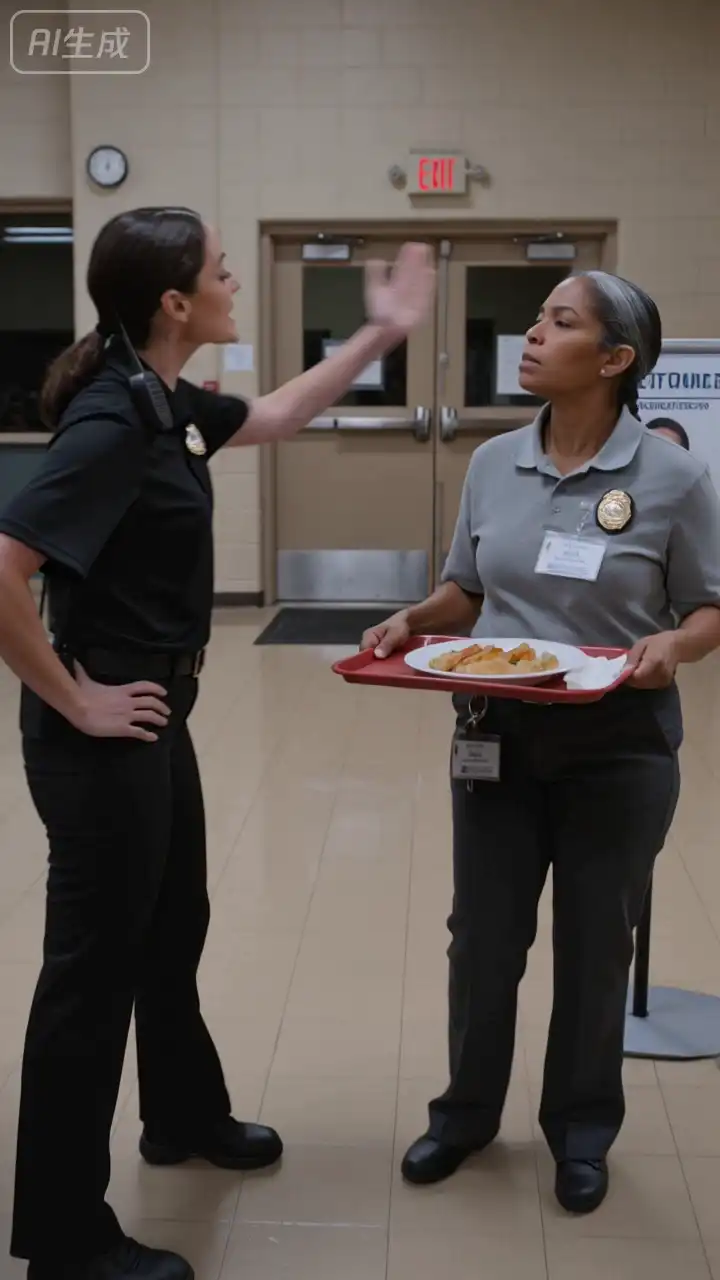
SHE SLAPPED THE CUSTODIAN OVER A LUNCH TRAY. THE SIGN SHE LAMINATED NAMED THE CUSTODIAN AS AUTHORIZED.
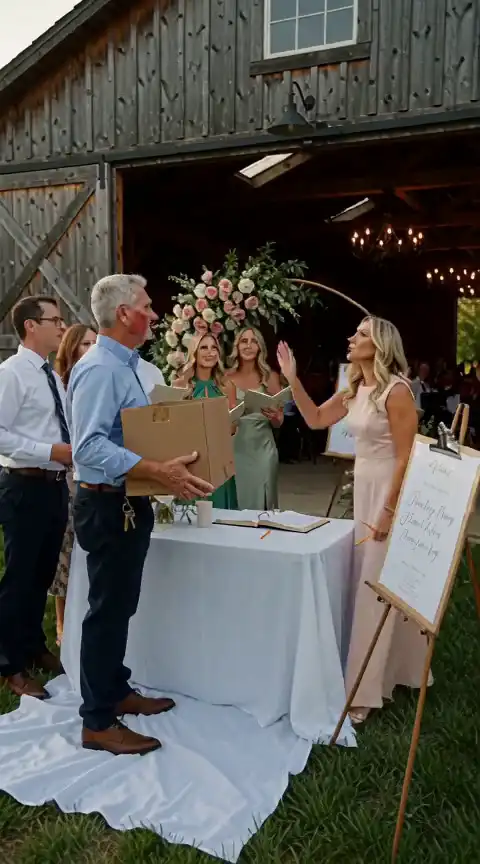
SHE SLAPPED A GUEST FOR USING THE GUEST LINE. THE CERTIFICATE ON THE BARN WALL LISTED HIM AS THE OWNER.