
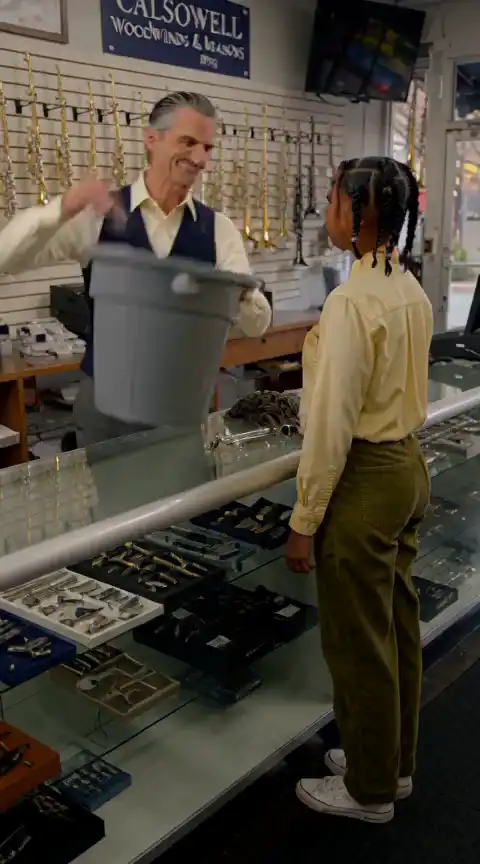
THE CONTROLLING BAND DIRECTOR DRENCHED HIS SCHOLARSHIP CLERK IN DIRTY RINSE WATER OVER A MISSING FLUTE, UNTIL A BROADCAST NEWS VAN SLOWED AT THE CURB AND EVERYTHING CHANGED.
The freezing water was still dripping from the tips of my wet braids, splashing into the murky pool that spread toward the rows of lacquered saxophones.
Mr. Vance Caldwell didn't even glance down at the mess he had made.
He stepped over the spreading gray puddle, adjusting the gold signet ring on his pinky finger as if he had just performed a public service.
"Stand right there until the squad car arrives, Jordan," he said, his voice ringing with theatrical authority.
"Every single person in this room saw your guilty face the second I asked where my instrument went."
Nobody in the ensemble spoke up.
None of the parents seated along the perimeter leather couches objected to a teenage girl standing soaked in mop water on a freezing November evening.
They just watched, murmuring among themselves, nodding along with the man who decided their children's solo placements and conservatory recommendations.
Then the brass bell above the front entrance chimed.
The heavy glass door swung open, letting in a blast of damp autumn wind that made my wet shoulders shake.
A tall woman wearing a sharp navy trench coat stepped over the threshold, a heavy foam-topped microphone held loosely in her right hand.
Behind her came a broad-shouldered cameraman carrying a full broadcast shoulder rig, its red tally light blinking steadily under the fluorescent lights.
Mr. Caldwell's posture straightened instantly.
A practiced, charming smile spread across his face as he ran a hand through his silvering hair.
He clearly assumed the local news crew had arrived to cover his upcoming Carnegie Hall qualifying showcase, a feature he had been bragging about to the school board for three straight weeks.
"Ah, you must be from Channel Four," Mr. Caldwell said, stepping forward with his hand extended in an easy, professional sweep.
"You're a bit early for the rehearsal broadcast, but as you can see, we're currently managing a minor disciplinary issue with one of our shop assistants."
The woman didn't take his hand.
She didn't smile.
She looked directly at the puddle on the floor, then at the empty plastic bucket lying on its side, and finally up at my shivering face.
"Are you Vance Caldwell?" she asked, her voice calm, low, and perfectly modulated for the microphone.
"I am," he replied, his grin faltering by a fraction of an inch.
"I'm the director of instrumental music for the county arts magnet, and senior consultant for this facility."
"My name is Candace Morales," she said, stepping directly between him and the counter.
"I'm the chief investigative correspondent for the state affiliate news desk."
The name landed in the room like a dropped weight.
Two of the parents in the back corner sat up straight, their whispers cutting off immediately.
Candace Morales wasn't the fluff reporter who did thirty-second human interest packages on high school brass sections.
She was the journalist who had spent the last two years dismantling municipal kickback rings and public school procurement fraud across three counties.
"Well, Miss Morales," Mr. Caldwell said, attempting a chuckle that came out thin and hollow.
"I'm honored, of course, but as I said, we have an active theft investigation occurring inside this private commercial space."
"Is that what this is?" Candace asked, pointing the microphone toward the water soaking through my canvas shoes.
"An active theft investigation involving industrial floor runoff poured onto a minor employee?"
Mr. Caldwell's face flushed a sharp, angry crimson.
"That girl stole a twenty-two-thousand-dollar vintage Haynes concert flute from my private locker not forty minutes ago," he snapped, abandoning his polite veneer.
"She was caught red-handed with the master key, and she refused to turn out her backpack until I took measures to preserve the perimeter."
"Did she refuse?" a deep, measured voice asked from the open doorway.
The entire room turned around.
Standing just inside the door, shaking the rain from his dark canvas work jacket, was my father, Marcus Cole.
He had grease stains on the cuffs of his sleeves from his shift at the regional aerospace maintenance hangar.
His dark skin was taut over his jaw, his jawbone set in a hard, rigid line that I had only seen once or twice in my entire life.
In his left hand, he carried a slim, weathered leather briefcase.
"Dad," I whispered, my voice breaking through the cold.
He didn't rush over with frantic panic.
He walked with steady, deliberate steps straight past the rows of polished trumpets until he was standing beside me.
Without a single word to anyone else in the room, he unzipped his heavy wool-lined work coat and draped it gently around my drenched shoulders.
The warmth of his coat smelled like machine oil, cedar, and home, cutting through the sickening stench of the dirty floor water.
"Hold on to that, baby," he murmured softly, resting his broad hand on the top of my wet head for one brief second.
Then he turned to face Mr. Caldwell.
"Who authorized you to put your hands or your garbage on my daughter?" my father asked.
His voice wasn't a yell.
It was a quiet, level rumble that carried through every corner of the silent showroom.
Mr. Caldwell let out a sharp, dismissive bark of laughter, though his eyes darted nervously toward the glowing red light of the television camera.
"Oh, so the father shows up," Mr. Caldwell said, looking to the parents on the couches for support.
"Sir, your daughter is an employee here under school-sponsored work-study credit."
"She committed grand larceny ten minutes before my rehearsal began."
"She had the key, she had the access, and she has been hostile to my program since August."
"The bucket was an accident—a trip over a cleaning station while I was attempting to detain her for the police."
"An accident?" Candace Morales asked, leaning toward him.
"Because thirty seconds ago you told this entire room it was meant to wash the grease off her hands."
"I misspoke in the heat of discovering a felony!" Mr. Caldwell shot back, his voice rising in pitch.
"And who called the press into a private store?"
He whirled on Mr. Hatcher, who was practically shrinking behind the cash register.
"Hatcher, tell these people to turn that camera off!"
"This is private commercial property, and you are the general manager!"
Mr. Hatcher swallowed hard, pulling his collar away from his throat.
"Mr. Caldwell... I... I don't know who called them," Hatcher stammered, his eyes darting between my father and the lens.
"I called them," my father said calmly.
He placed his weathered briefcase on the dry section of the glass counter, clicking the brass latches open with two loud, metallic snaps.
"I called Miss Morales's investigative desk at two o'clock yesterday afternoon."
"Before any flute supposedly went missing."
Mr. Caldwell froze, his hands hovering midway between his pockets and his belt.
"That makes no sense," Caldwell sneered, trying to recover his footing.
"Why would you call the press yesterday unless your daughter was already planning to rob this facility?"
"Because yesterday afternoon," my father said, opening the folder inside his briefcase, "my daughter showed me the inventory reconciliation spreadsheets for the county band program."
A dead silence fell over the store.
The assistant directors near the rear percussion alcove glanced at each other.
One of the mothers on the couch slowly lowered her phone into her purse.
"Jordan isn't just a clerk who sweeps the floor, Mr. Caldwell," my father continued, his voice cutting through the quiet like a steel blade.
"She is a certified student archivist for the district's vocational arts track."
"Her job here, as signed by the superintendent in September, was cataloging every single vintage instrument donated to or serviced by this shop for public school use."
My father pulled out a stack of crisp, printed documents, sliding the first sheet across the counter toward Candace Morales.
"Three weeks ago, Jordan noticed that six professional-grade instruments—four Selmer Paris saxophones, an oboe, and your personal Haynes silver flute—were marked as 'irreparably water-damaged and decommissioned' in the school board database."
Mr. Caldwell's mouth opened, but no sound came out.
"According to the official district salvage report signed by you, Mr. Caldwell, those instruments were scrapped and written off as total losses for an insurance payout of forty-eight thousand dollars."
Candace Morales held the microphone close to my father as she scanned the document on camera.
"And where were those instruments actually located, Mr. Cole?" Candace asked.
"They were sitting in the locked consignment cabinet in the rear vault of this very store," my father said.
"Being prepared for private sale on an out-of-state collector's auction site under a shell LLC registered to Vance Caldwell's residential address in Oak Valley."
"That's a lie!" Mr. Caldwell roared, his face turning an alarming shade of mottled purple.
"That is absolute, fabricated slander from a disgruntled maintenance worker!"
"You're trying to cover for your criminal child!"
He turned frantically toward the cameraman, thrusting his palm toward the glass lens.
"Turn that off!"
"I have an attorney on retainer with the state teachers' association!"
"If any of this footage leaves this room, I will sue Channel Four, the school district, and your pathetic family into bankruptcy!"
Candace Morales didn't flinch.
She didn't tell the cameraman to cut.
The red light burned on, casting a small cherry reflection across Caldwell's sweating forehead.
"We're not just recording for the evening broadcast, Mr. Caldwell," Candace said with cold precision.
"Channel Four is currently streaming our five o'clock digital breaking feed live on thirty-two regional platforms."
"Over forty thousand people are watching you right now."
A collective gasp rippled through the high school ensemble standing near the clarinet displays.
The flute player who had giggled earlier suddenly looked terrified, hastily pocketing her device as if it had burned her fingers.
Mr. Caldwell took a half-step back, his heel splashing into the dirty water he had thrown over me.
"You... you can't do this," he stammered, his theatrical confidence collapsing in real time.
"This is an unverified ambush."
"You have no proof of any missing flute or any auction!"
"I don't need to ambush you, Mr. Caldwell," my father replied calmly, pulling a second sheet from the folder.
"Jordan came home two nights ago with your handwritten note, telling her that if she didn't alter the inventory numbers in the district server by five o'clock today, you would pull her solo chair and cancel her recommendation for Juilliard."
"I never wrote that!" Caldwell yelled, his voice cracking.
"She forged it!"
"She's an anxious, struggling student who couldn't handle the pressure of first chair!"
"She was failing her sectionals!"
"Jordan has held a straight-four-point-zero in advanced music theory for three consecutive semesters," my father stated, not raising his voice by even a decibel.
"And she didn't forge your handwriting, because she didn't have to."
My father pulled a heavy, sealed evidence bag from his jacket pocket.
Inside it was a small, high-capacity digital voice recorder, its red standby light glowing through the clear plastic.
"When you cornered her by the rear supply closet at four-fifteen today and told her you were going to 'make that silver flute disappear from the case and pin it on her poor little neck,' she was already wearing her school-issued audio badge for cataloging."
Mr. Caldwell's eyes went wide, wild with sudden panic.
He looked down at me.
I stood tall inside my father's heavy coat, my chin lifted, meeting his gaze for the first time without flinching.
"You recorded me?" he breathed, disbelief choking his words.
"Every single sentence, Mr. Caldwell," I said, my voice steady despite the cold.
"Including the part where you told me nobody on the school board would ever take the word of a scholarship girl from the North Ridge over a director who brings home regional trophies."
The entire ensemble stood frozen, horrified.
Two of the parents stood up from the couches, their faces masks of sheer outrage.
"Vance," one of the fathers called out, his tone harsh and disgusted.
"Is that true?"
"Did you frame that child while we were sitting in the waiting area?"
"It's completely out of context!" Caldwell shouted, spinning around to face his booster parents.
"She baited me!"
"She manipulated the situation because she knew she was caught!"
"Where is the flute, then?"
Candace Morales asked, stepping into his line of sight.
"If she stole it, where is the twenty-two-thousand-dollar instrument right now?"
Caldwell's chest heaved as he pointed a trembling finger at my soaked backpack resting against the base of the counter.
"In her bag!"
"Search her bag right now on camera!"
"I dare you!"
My father didn't hesitate.
He reached down, picked up my canvas backpack by its top strap, and set it on the clean counter in front of Candace and the camera.
He unzipped the main compartment and turned it upside down.
A battered harmony textbook tumbled out.
Three worn wooden pencils, a box of Vandoren reeds, an inhaler, and a Tupperware container with my lunch sandwich spilled onto the glass.
There was no flute.
There was no velvet case.
There was nothing inside the bag except the ordinary school supplies of a tired teenager.
Mr. Caldwell stared at the empty counter, his mouth working silently like a fish pulled from water.
"That... that's impossible," he whispered.
"She must have passed it off to someone before I confronted her."
"She has an accomplice in the alley!"
"No, she doesn't, Mr. Caldwell," another voice called from the front entrance.
Two uniformed officers from the city police department stepped inside, followed closely by a man wearing an expensive overcoat and wire-rimmed glasses.
It was Dr. Arthur Vance, the district superintendent.
Dr. Vance's face was as pale as chalk, his eyes locked onto the broadcast camera and the puddle on the floor.
"Superintendent Vance!" Caldwell cried out, lunging forward as if a lifeline had just been thrown to him.
"Thank God you're here!"
"These people have orchestrated an illegal media stunt inside this store!"
"They are harassing me and leveling fraudulent accusations in front of our students!"
"Be quiet, Vance," Dr. Vance said, his voice flat, icy, and trembling with suppressed fury.
Caldwell stopped dead in his tracks.
"Arthur?"
"We just executed an emergency administrative search of your staff vehicle parked in the back alley," Dr. Vance said, motioning to the two officers behind him.
One of the officers held up a black velvet-lined hard case with polished silver latches.
"Officer Ramirez found your personal Haynes flute tucked under the spare tire compartment in the trunk of your Lexus," Dr. Vance said.
"Along with three unopened courier envelopes addressed to an instrument broker in Chicago."
The silence that followed was suffocating.
Nobody breathed.
Nobody moved.
The only sound in the entire building was the hum of the camera and the slow, rhythmic dripping of the mop water from my soaked sleeve onto the floor.
Mr. Caldwell backed away until his shoulders hit the glass display case behind him, causing three antique clarinets to rattle against their stands.
"I was... I was transporting it for safekeeping," Caldwell whispered, his voice shrinking to a raspy whine.
"The neighborhood around this shop isn't secure."
"I put it in my trunk to protect the district's investment."
"You put it in your trunk at two-thirty this afternoon," Candace Morales said, looking down at a printout on her clipboard.
"Right before you clocked in here to run this clinic."
"And right before you walked up to Jordan Cole, dumped a bucket of filthy rinse water over her head, and called her a thief in front of fourteen witnesses."
Caldwell looked wildly around the room, searching for a single friendly face.
He looked at the parents.
Every single one of them turned their backs on him.
One mother took her daughter by the elbow and led her toward the exit without saying a word.
He looked at Mr. Hatcher behind the counter.
"Hatcher, tell them," Caldwell pleaded, his hands shaking violently.
"Tell them she was the only one in the back!"
Mr. Hatcher looked at the camera, then down at the wet linoleum, and shook his head.
"You told me to leave the back door unlocked this morning, Vance," Hatcher muttered, his voice barely audible.
"You told me you had an inspection from the board."
"I'm not going down for your scheme."
Caldwell's eyes widened with pure, cornered fury.
He clenched his fists, took a violent step toward the counter, and pointed his finger directly at my father's face.
"You think you won something, Cole?" Caldwell snarled, his voice breaking into a venomous hiss.
"You think this little circus changes anything?"
"I built the music program in this city from the ground up!"
"My brother-in-law is the president of the county commissioners!"
"I will have your daughter's scholarship revoked before the sun comes up tomorrow morning!"
"She will never play an instrument in any accredited school in this state!"
"I'll make sure every conservatory from here to Boston throws her audition tapes straight into the incinerator!"
"Do you hear me?"
"She is nobody!"
"She is a little girl from a broke household who thought she could cross me!"
Dr. Vance stepped forward, his eyes blazing behind his glasses.
"Vance Caldwell, you are suspended immediately from all district duties pending formal termination proceedings," the superintendent said.
"And as of five minutes ago, the board's executive committee voted unanimously to transfer all evidence of your inventory tampering to the state attorney general's fraud division."
Officer Ramirez stepped forward, reaching for the handcuffs on his utility belt.
"Mr. Caldwell, please turn around and place your hands behind your back."
"Get your hands off me!" Caldwell screamed, flinching away like a wild animal.
"I am a master educator!"
"I demand to call my attorney!"
"You have the right to remain silent," the officer said, grabbing Caldwell's right wrist and twisting it firmly behind his back with practiced ease.
The click of the steel cuffs echoed off the glass display cases.
The proud, untouchable band director was bent over the brass polishing counter, his cheek pressed flat against the cold, wet linoleum where he had dumped the mop bucket only twenty minutes earlier.
The high school students watched in stunned silence as the second officer secured his other wrist.
Candace Morales didn't miss a beat.
She stepped into the center of the frame, the camera panning smoothly from Caldwell's red, humiliated face up to the bright store lights.
"Tonight on Channel Four News at Six," she spoke clearly into the microphone, "we bring you the full, unedited report on how a dedicated honors student uncovered a multi-year embezzlement scheme inside the county arts department—and the shocking public retaliation she endured before justice arrived."
She signaled to the cameraman, who lowered the rig slightly, keeping the focus on Caldwell being marched through the front doors into the flashing blue lights of the cruiser.
The bell above the door chimed once more as the officers guided him out into the cold drizzle.
A small crowd had already gathered on the sidewalk, people from nearby restaurants and bus stops watching as the county's most prominent educator was pushed into the back seat of a squad car.
Inside the shop, the silence slowly softened.
Dr. Vance walked over to the counter where my father and I were standing.
The superintendent looked at my soaked clothes, his face filled with genuine shame and sorrow.
"Mr. Cole... Jordan... I don't even know what to say," Dr. Vance began softly.
"There are no words for how poorly this district protected you."
"You don't need to apologize to me, Dr. Vance," my father replied, his hand remaining steady on my shoulder.
"You need to fix the records, ensure her scholarship stands without condition, and make sure that man never stands in front of another classroom of children as long as he lives."
"The scholarship is completely safe," Dr. Vance said immediately.
"In fact, the board will be establishing a full, independent endowment in Jordan's name for her remaining high school terms and four years of undergraduate study at whatever conservatory she chooses."
"We will have the formal documents delivered to your home by courier tomorrow morning."
My father gave a slow, single nod.
"Thank you, sir."
Candace Morales walked over, turning off her wireless microphone receiver.
She looked at me, a warm, gentle smile softening her sharp professional demeanor.
"You're incredibly brave, Jordan," she said quietly.
"Most people twice your age would have folded under that kind of pressure."
"I just wanted to play my music," I whispered, pulling my father's jacket tighter around my chest.
"I didn't want him to take it away from me."
"Nobody is taking anything away from you ever again," my father said.
He reached onto the counter, carefully picked up my scattered textbooks, and packed them back into my canvas bag.
Then he turned to Mr. Hatcher, who was still standing motionless by the register.
"My daughter is resigning her position here tonight, effective right now," my father said.
Mr. Hatcher just nodded numbly.
"Yes, sir."
"Of course."
"I'll have her final check mailed first thing tomorrow."
My father took my backpack in one hand and wrapped his other arm around my shoulders, guiding me gently away from the puddle of gray water.
As we walked toward the glass doors, the students who had remained in the room parted like water, stepping back with lowered heads.
None of them met my eyes.
The flute player who had filmed me on her phone looked like she wanted to disappear through the floor.
We pushed through the double glass doors out into the cool evening air.
The flashing blue strobe of the police cruiser cast long, rhythmic shadows across the brick storefronts.
A few doors down, the engine of the news van hummed quietly, its satellite dish locked onto the evening sky.
My father led me to his old, reliable station wagon parked near the alley corner.
He opened the passenger door, turned the heat on full blast, and waited until I was settled inside before closing the door.
When he got into the driver's seat, he didn't start the engine right away.
He sat there for a moment in the warm, rumbling car, his hands resting on the steering wheel, breathing out a long, heavy sigh that seemed to carry the weight of the entire day.
He reached out, his rough, warm fingers gently brushing a damp stray lock of hair away from my forehead.
"You did good, baby," he said softly.
"You held your ground."
"I was scared, Dad," I admitted, a single warm tear finally slipping down my cheek and cutting through the dried grime of the mop water.
"I know you were," he said, his voice full of quiet pride.
"Being scared doesn't mean you're weak."
"It just means you're human."
"And you showed every single person in that room who you really are."
He shifted the car into drive, pulling smoothly away from the curb and leaving the flashing lights, the news crew, and the disgraced director far behind in the rearview mirror.
Three weeks later, I stood on the polished hardwood stage of the state concert hall for the annual winter honors recital.
I was wearing a simple, clean black dress my grandmother had hemmed for me by hand.
In my hands, I held my own instrument—a modest, well-cared-for silver flute my father had bought refurbished five years ago.
The auditorium was packed with over two thousand people from across the region.
When the master of ceremonies announced my name, the applause wasn't just polite.
It started in the front rows, swept through the balcony, and rose into a standing ovation that lasted nearly two full minutes.
I looked out into the crowd through the bright stage lights.
Sitting in the front row, right next to Candace Morales, was my father, wearing his Sunday suit and smiling with tears shining in his dark eyes.
I lifted the flute to my lips, took a deep, steady breath, and played.
Disclaimer: Mention of any brand or trademark is for identification only and does not imply partnership or endorsement
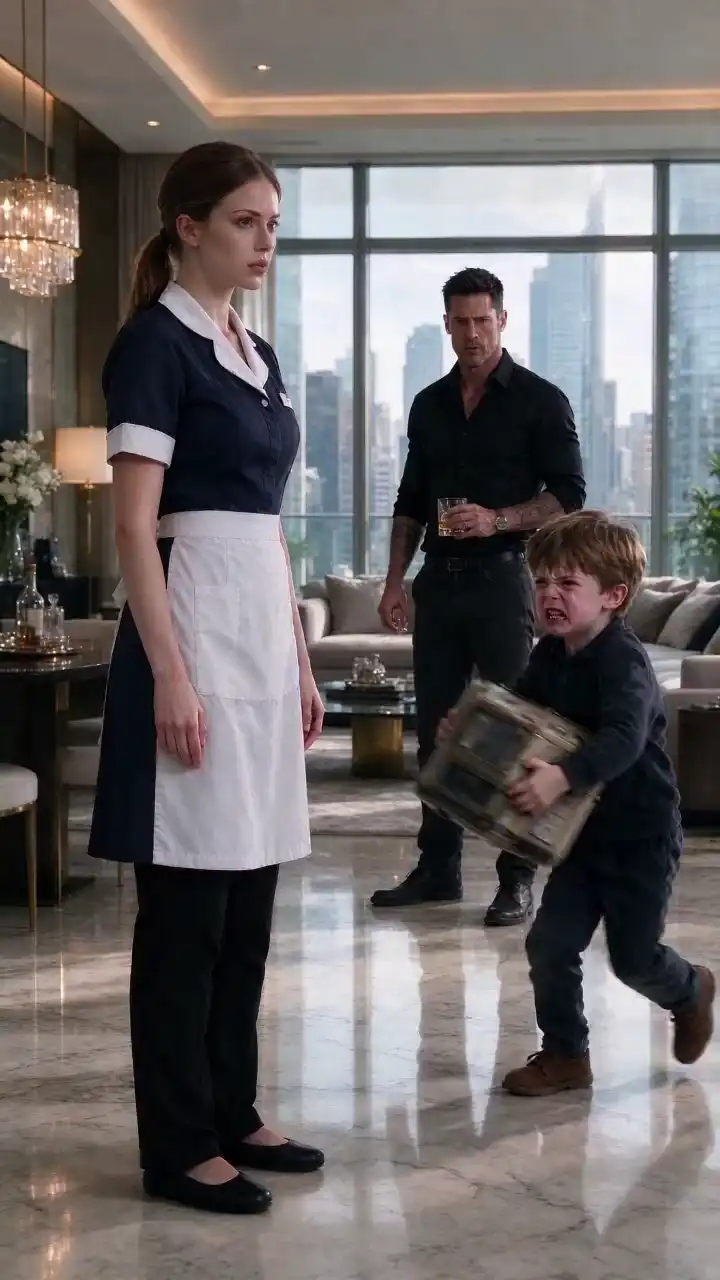
THE BILLIONAIRE'S SON ATTACKED EVERY MAID WHO CAME NEAR HIM... UNTIL A POOR YOUNG WOMAN KNEELED BEFORE HIM AND UNCOVERED THE SECRET BEHIND HIS RAGE
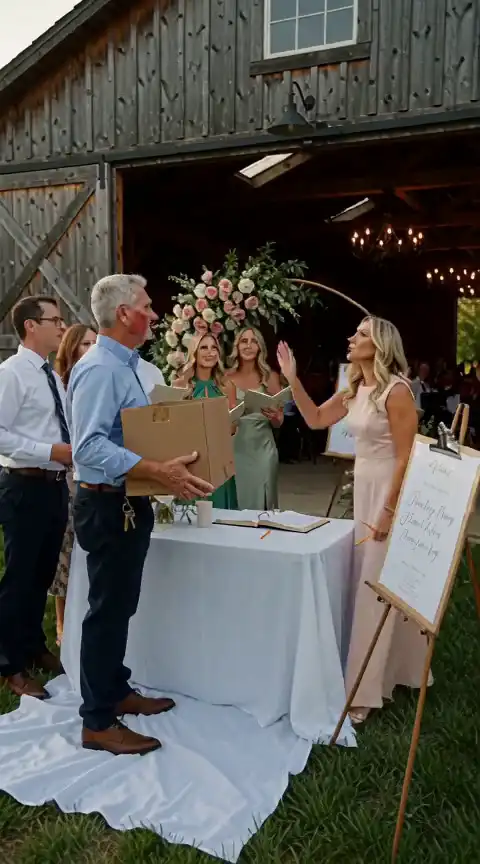
SHE SLAPPED A GUEST FOR USING THE GUEST LINE. THE CERTIFICATE ON THE BARN WALL LISTED HIM AS THE OWNER.
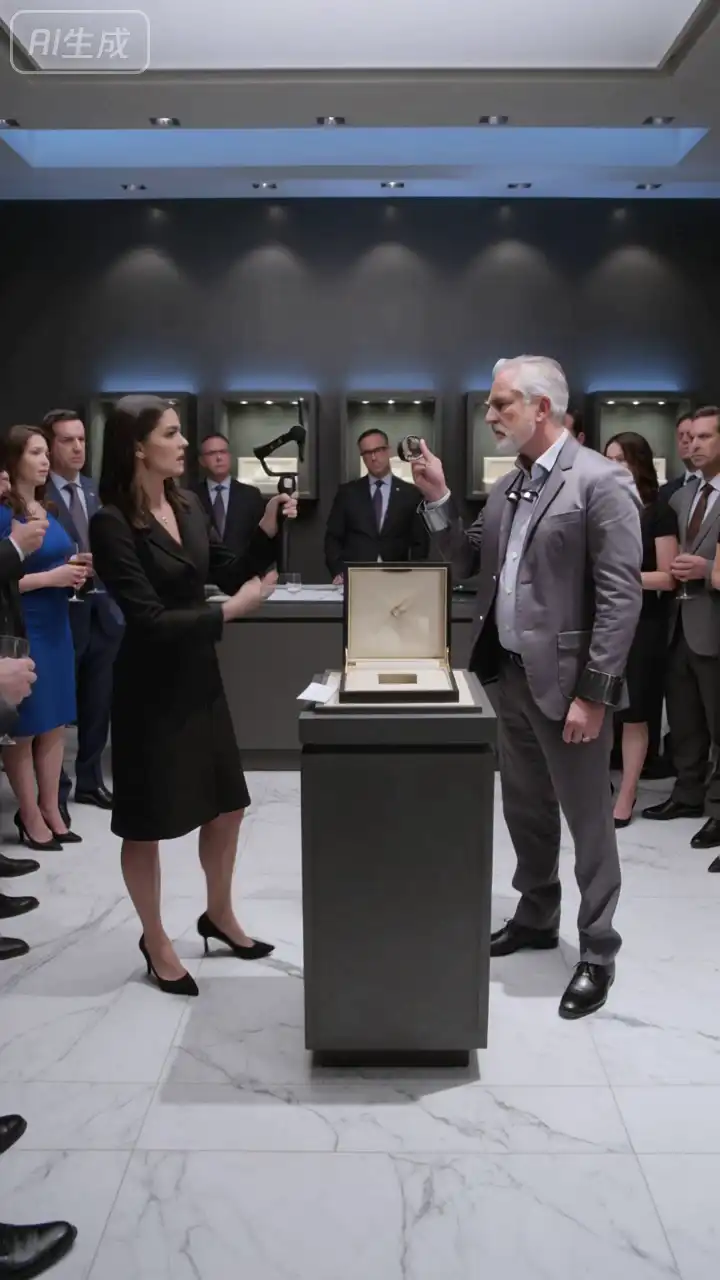
SHE SLAPPED THE MAN WHO DESIGNED THE WATCH. THEN SOMEBODY TURNED THE CARD AROUND.