
THE NIGHT HE STOLE MY MASTERPIECE AND THE ROOM BOWED TO ME
The mic hummed against my palm. I could feel the tremor of it through bone. The museum smelled like linen and lemon and all the money in the world. Colt Sterling stood a step away, glass sweating in his hand, mouth trying on expressions and not liking any of them.
"Sir?" the director said, his tie a perfectly harmless shade of navy. "Do we pause the auction?"
He called me "sir" now. They always do, when they hear Hale.
All the faces tilted toward me like flowers to a heat lamp. Security had plugged every exit with black shoulders. The violinist's hand stayed hovering in that last note that never came.
I breathed once, slow, the way my mother used to tell me to breathe before I ruined a canvas in the final ten minutes. The painting hung behind Colt, a rectangle of night and riverbone, every cut in the brush a secret I had bled to invent.
"Pause it," I said, the sound feeding itself back from the wall. "And bring the provenance to me. The certificate. The easel. Turn the lights up. I want the room to see."
The director snapped his fingers. The room obeyed. A tech cranked spots brighter, bleaching diamonds and fear. The easel rolled as if it had wheels even in this place where everything glided without showing machinery. A museum assistant with a sensible bun and trembling hands brought a folder like it was an organ for transplant.
Colt swallowed. He smiled, because he'd been raised to believe there was always a smile that worked. "Mason," he said. "We can talk about this. Offstage."
"You made this public," I said.
His gaze jumped to the canvas and back. He had touched my work with the flat of his palm earlier, fingers skating over the varnish like he was blessing it. That was how I'd known. He didn't know how to love a painting the way I did. He didn't know how it bit.
"Sir," the director said, proffering the certificate. It had weight to it, thick paper, a watermark like frost only the right angle revealed. My name lived inside it in microprint you could miss if you didn't know where to look. The crest stamped in silver caught one of the chandeliers and hung it for a second in my hand.
I held it up. "This," I said, and the room listened harder, "belongs to a private portfolio under Hale Trust. On loan only. Not for sale. Not for fake speeches. And especially not for theft."
A thin laugh, involuntary, tittered out of a woman near the front and died on the marble. Colt took a step toward me and checked himself against a black jacket.
"Who are you?" someone whispered, and then bit his lip when he realized he had said it into silence. Phones hovered like predatory birds. Somewhere at the back, a flash popped.
Colt turned his smile into outrage. It was his better look, anger. It made him feel honest to himself. "This is insane. You were nobody last week. You were begging me for gallery intros."
I looked at him. We'd been in the same room a hundred times, but I'd never seen him. Not the way I saw him now, with the spotlights turning every pore into a confession.
"Security," he said, shifting his shoulders like he could rise above this. "Escort him out."
No one moved.
The lead from my team, Rhee, didn't take his eyes off Colt when he spoke. "Young Master Hale is the principal," he said, voice a flat river stone. "No one is escorting anyone unless he says so."
A murmur moved through the donors like a rumor they'd been hungry for all night. "Hale?" some said. "The Hale Trust?"
I let the paper tilt again until the crest poured light onto Colt's face. The same crest that had sent a thousand scholarships into the world and bought a thousand paintings that no one believed worth keeping until someone with the right name said otherwise.
"Colt," I said, keeping my words clean. "You picked the wrong painting to steal."
"You let me into your studio," he said, voice cracking now, memory trying to armor itself. "You said you needed help."
"I needed coffee," I said. "You needed a miracle."
He flinched.
"Bring the painting down," I told the assistant. She didn't look at me, only at the black lapel next to her ear, and did as I asked. The canvas descended into my hands like a body lowered to a bed. Up close, the surface winked back a secret I had laid in the underpainting months ago, while the city ground its teeth and rain bruised the sidewalks. The micro-script shimmered when the light clipped it. Not a signature. Not my name out loud. A language only a handful of people knew, tucked so fine into the first strokes that only a forensic eye would pare it out.
"Do you want to press charges?" Rhee asked, not looking away from Colt.
I let the question sit. It was a heavy thing on the velvet table the auctioneer had abandoned. The donors shifted their weight. Joints creaked. Someone's phone vibrated against crystal like a trapped bee. Colt's panic had an odor now, sour in the air.
"No," I said.
His shoulders fell in a breath he didn't hide fast enough.
"Not yet," I continued.
The breath he'd almost taken caught in his throat and did a small, audible thing. It hurt him in some tender, unused place.
"This is how it is going to go," I said, the mic still in my hand, the painting between us like a witness. "You are going to apologize. Not to me. To them." I lifted my chin at the room, the cameras, the behind-the-scene crews whose rented tuxes smelled like starch and stress. "You are going to tell them who painted this. You are going to retract every lie you spun tonight. And you are going to stop selling what is not yours."
He shook his head, and for a second the boy he had been peered out between the money and muscle memory. "I didn't sell it," he said. "I was going to. For charity."
"Charity doesn't make theft a donation."
His jaw bunched. "You think you're the only person who needs to get out from under a name?"
"I didn't use yours."
Up in the balcony, the violinist finally lowered his bow with a sigh that tickled the mic's pickup. The sound trembled through the room and broke some spell. Two donors looked at their watches. The emcee retreated behind a floral arrangement and pretended to be too interested in a peony to exist.
Colt was good, I'll give him that. He found his footing quick. He slid himself back to the mic with a small laugh. "We got a little excited," he said, palms up to the crowd. "The surprise reveal of our friend Mason's talent maybe got away from us. Let me begin again. Ladies and gentlemen, I am proud to present—"
"You can present me by stepping away from the mic," I said.
He stepped back.
"My name is Mason Hale," I said, and it felt like using a name I'd borrowed from a future I was still deciding to want. "This is my work. Thank you for coming to see it with your own eyes tonight. If you would like to support artists like me, donate to someone who actually gives to artists. If you want to bid on this painting, you can reach out to the Hale Trust's arts program. We don't hide our names under someone else's."
I looked at the director. "We will not be auctioning this tonight. Not in this condition, not under this shadow." I set the painting down with care. My hands knew its edges the way you know the shape of a scar without looking. "You will write to every donor who RSVP'd for this event and tell them why. You'll tell them you allowed an unvetted provenance on your stage. And then you will hire a curator who understands that an artist's name isn't an optional line item."
His nod snapped down once, twice, the fry of a man who had just read a recalculation of his career numbers in my pupils. "Yes, Mr. Hale."
"And you," I said, turning back to Colt.
Colt stood there, cufflinks glinting, the fit of his suit still perfect because money does not wrinkle, it only melts for a second and then sets steal-hard again. You could hear the Sterling in the stillness he wore like a scent. The room hung on my next words the way a man on a roof hangs on the last rung.
"You will give back the names you took," I said. "All of them. Every painter, sculptor, photographer, kid with a booth at street level and a rent check that didn't clear because a Sterling wanted to be a prodigy. You'll call them. You'll pay them. You'll write the truth under every piece that ended up at a donor breakfast with your signature next to it. And you will do it on camera."
"Or what?" Colt asked.
I tilted my head. He flinched away from my smile. "Or I make sure you never see the inside of a museum again unless it's to dust floors. Your father's name won't buy you a coat check. These doors close for good. I will pull your charity numbers apart on the evening news and feed what's left to the state. I will count the coins in your foundation's cushions and post the lint."
He took a step toward me, anger fissuring his politeness like heat cracks glass. "You think you can threaten me?"
"I think I already did."
He leaned into the mic, mouth almost brushing it, and that was his mistake. The room caught the word he whispered. "Please," he said. It wasn't a plea anyone expected to hear from a Sterling. It was old, older than his shoes, the kind of please that came from a boy caught stealing candy in a store where all the candy had his family's crest on it anyway.
"Don't say it to me," I said softly. "Say it to them."
He turned to the room. He opened his mouth. He found the apology he wanted to give but couldn't stand to own. He drowned in it.
"Apologize, Mr. Sterling," the director said, an odd meat of delight in his voice. People love to be told to do the thing they already want to see.
Colt lifted his glass, swallowed air, and set it down. "Ladies and gentlemen," he said, words clipped and stiffer than the collar biting his neck, "I spoke out of turn. The painting behind me is by Mason Hale. All credit goes to him. The Sterling Foundation will be meeting with the Hale Trust tomorrow to coordinate the appropriate... reparations."
The word he chose stung him. It should have.
I took the mic back. "We'll see you tomorrow," I said. "Don't be late."
I left to a silence packed with applause that no one offered because money was in the room and money was uncertain and did not want to offend itself. Security moved because I moved. The painting came with us in the easel's arms like a king's child.
Outside, the rain had found the night and was polishing it. My car idled under awning light. The driver, the same man who had carried me home from my father's funeral with the same expression, opened my door.
"Back to the loft, Young Master?" he asked, because dignity is muscle memory too.
"Wait," I said.
In the glass behind me, Colt's face burned through the reflection like a wound still bleeding. People were peeling away from him, bored now that the heat had moved to me.
I turned my head up into the rain. The water felt like permission.
"Not yet," I said. "I want to walk."
Rhee pivoted with me, matching stride. He never walked a half-step behind. It was always two steps, a quiet geometry that existed between him and every room. He didn't mind getting wet, or if he did, he had given the complaint to a place in his chest that didn't file grievances.
"You've been sitting on this?" he asked, which in Rhee language was several paragraphs.
"I needed him to show me which rope he'd put his dignity on," I said.
"And now that you know?"
"Now I decide which knot to pull."
We went past plated glass and sleeves of umbrellas, past the museum banner with its swan-neck serif font cooing about legacy, past a couple smoking under a loaned coat and fighting in whispers about what they owed whom. My shoes kissed rain off the stone like mouths. The city breathed. The city watched.
Somewhere inside me, the boy I'd been when my mother still smelled like turpentine and sleep sat up. He listened for whether I was doing this for him or against everything he had decorated his heart for. He didn't weigh in yet. He had always been quiet until the last stroke.
The night held its breath as if I had taught it to.
The day Colt Sterling cleaned my brushes he did it with the careful impatience of a man who had never been taught to take care of anything. He pressed too hard against the bristles, crushed their bellies with emotion disguised as efficiency. I watched and didn't say anything, because I was twenty-one and my rent had paid its bill with a scream and my mother had been dead six months, and when a man with a watch I could have lived in for a winter said he liked my work, I let him like it.
"This one looks like bruises," he told me, tilting the canvas under bad light so the colors lied to him.
"It's a river in winter," I said.
He didn't hear me. He didn't mean to. He meant to fill the room with his breath and then stand in it blinking like he wasn't sure why he was dizzy. He meant to be a force of nature. I had learned to paint around weather like him.
"I can get you into a show," he said, casually, in the same tone you'd order another beer. "I know people."
He knew people. I'd been to the parties. He kissed both cheeks of the women whose Instagram numbers looked like Social Security codes and shook the hands of the men who wrote their names on things they couldn't draw and said they'd made it.
"What do you want for it?" he asked, hand flat on the canvas.
"For you to take your hand off my painting," I said.
He grinned. He thought it was charm, how fear turns into humor and back. He moved his hand and left a crescent on the varnish where his fingerprint pulled moisture. It didn't ruin it. It woke a memory in me I wish had stayed asleep.
When I was a kid, my mother painted with a rag under one knee the way some prayers keep a cushion under the kneeler. She would glaze a place so thin it was almost air and then lay a palm over it, like blessing, like breath, like making a pact between skin and pigment. The first time I put my hand on a painting I thought I was about to burn it with the heat of all the wrong I'd ever done. The first time I pulled my palm away and saw the light soften around it, I cried. I was eight and crying because pigment obeyed me.
"You're really good," Colt said, and he meant it the way a rich man means it when he sees a pair of shoes he thought he'd invented. Everything was good if he could put it on and walk away.
"Don't you have somewhere to be?" I said, but it was late and the friends he'd come with had left with strangers who knew their names from apps and wanted to know them from the inside. He was bored and being in my studio made him feel the way poor made me feel when I wore a tuxedo: fictional, but in a way that felt like a dare.
"Teach me something," he said.
I taught him how to clean brushes without killing them. I taught him to leave the bristles alone, let the water run in the right direction. He sang into a beer bottle that had forgotten to be cold and looked at my canvases the way a man looks at first editions and imagines the way they smell.
My phone buzzed. My father. He had learned how to text like a teenager after spending a lifetime being called by assistants to come to the table. He had never texted when my mother was alive. He had never lifted a plate in our kitchen until she died.
You coming to dinner? it read.
No, I typed, and then deleted and typed again. Maybe. Busy.
You need money.
I didn't answer. He could smell the poverty on me over a phone.
I hadn't always been poor. The word never stuck to the Hale house. We had dinner plates that came in sets that cost more than some living rooms. We had monogrammed towels that never knew a blemish. But the money had always lived one floor up, down corridors I never walked. My mother kept our apartment near the art building like a secret, and when my father came by he looked at the chipped sink like it was a poem he was trying to like for my sake but couldn't make his mouth learn.
"We can hang this one in my place," Colt said, picking up the river winter by its frame. "Just to keep it safe."
He put it down when I stepped between him and the door. His laugh found me. It softened at the edges just enough to make me feel like maybe he'd heard the way my breath had changed when he lifted my canvas.
"I get it," he said. "You have your process. Respect."
He had taken me to two parties by then, introduced me to three curators who nodded their heads at me in a way that made me wonder if they'd recognize me later if I traded my jacket for a hoodie. He'd posted a picture of my studio with his face in the corner, the canvas he liked best cropped so it looked more like a skyline than a wound.
He left with a promise to text about a showcase, and then he didn't, and when I texted he sent hearts and thumbs and "u up?" late on a weeknight when the building smelled like curry from the neighbors and pledge from the hallway and nothing like money. He apologized in the morning. He invited me to a charity gala.
"It's my foundation," he said. "You can meet people with walls."
I said yes because I had a suit. It had been my father's once when he was thinner and a less complicated kind of rich. It was too short in the sleeve and too honest in the shoulder where it told truths about bodies the tailor couldn't translate. I said yes because my mother would have said yes to anything that drove me into rooms with paintings.
At the gala I watched Colt hold court. He swam in those rooms the way I did rivers. He knew where the currents snapped. He knew whose names to say as if he'd just made them up. He took my elbow and steered me like he was showing me the underpinnings of a godship. Later in the night, he put his hand on a canvas he didn't paint and said, "Mine."
I never hated him any more for that sentence than I had hated him the first time he smiled at me in my studio like art had just discovered him.
I had prepared for someone like him since I learned how to make paint obey. My underpainting was a map only I could read. My provenance had teeth.
"You're not going to use your father's name?" Colt had said once, drunk enough to forget the way he usually curved etiquette around himself like a jacket. "The Hale thing? People would throw checks at you just to watch them stick."
"Maybe I want to know who likes my work without liking my father," I said.
He took a pull from the bottle like a child gulps air after diving too long. "Must be nice."
He said it like a joke, but the edge in his voice cut through the foam and showed bone. He was the son of a Sterling, sure. His father had built things that cast shadows over neighborhoods. But legacy is a house without doors if no one teaches you how to use keys. I can pity a man for the weight he misuses. I can want to steal it and hand it to someone who won't use it like a club.
The sound of the gala's doors slamming open had reminded me of a night a long time ago: me, eight, alone under a table in a room with too many forks for one human mouth. Men in suits standing, the word "Young Master" hung in the air like a thing that could be put on and taken off. It had stuck to me that night because people wanted it to. It had not been a name I'd chosen. It had been a uniform. I had learned to wear it like scaffolding around a building under construction. Tonight I had picked it up and climbed it.
Now, walking in the rain, the word trailed behind me like a banner my hands wanted to let go of and my spine recognized.
"You could ruin him," Rhee said, watching the wet. He never asked how I wanted to walk, only who I wanted to be when I arrived.
"I could," I said.
"He will try to ruin you," Rhee said. "The boy with his face in the camera is already calling his father. The father is already calling a lawyer. The lawyer is already writing your last name into a file with words like slander and misuse and there's a junior associate who will miss his daughter's recital because your name is fashionable to bleed tonight."
"That's a lot of phones," I said.
Rhee watched a bus smear its lights across a puddle. "I don't like getting my suit wet for nothing."
"Thanks for the pep talk."
He let himself laugh. It came from deep in his chest like a dog that knows your scent enough to show teeth without meaning you. "You're welcome."
I stopped under an awning that smelled like cigarettes ground into old plastic. A kid with a skateboard handed a wet cigarette back to his girlfriend and stared at me like he'd just recognized someplace he'd seen on TV.
"That your painting?" he asked, jerking his chin toward the museum.
"One of them," I said.
"You gonna sell it?"
"Not tonight."
He touched the sleeve of my jacket like you touch a painting when security isn't looking. He felt the fabric like it might talk back. "Looks like it could keep a man warm," he said.
"It does."
He half-smiled. "Cool." He took his cigarette back and the two of them pushed off the curb like they'd practiced leaving together.
"You are not obligated to forgive him," Rhee said.
"I know."
"It is a choice. You haven't always been good at seeing the choices you have no desire to make."
"You read that in a book?"
"My grandmother says it when she decides whether to beat my uncle with a sandal."
I laughed then, because you have to laugh before you do the thing that will define your night. I let the rain decide the direction and it decided back toward the museum entrance. I wasn't done with that room yet. I'd given an order and a threat, but the work was mine and I didn't want it breathing their air any longer.
We cut back across the plaza. The pillars looked like teeth. The banners flapped, trying to remember what wind feels like when it isn't trained.
Inside, the lobby pulsed. Photographers had begun to press their faces against the gold. Colt's father stood by the stairs like it had been his house all along. He had the eyes of a man who habitually wins arguments by being the first to run out of patience. Reagan Sterling shook hands with men who were sorry for him and women who were less sorry than they'd planned to be.
He saw me. He smiled the way you do at a dog that might not bite.
"Mason," he said, like we'd met at Harvard and he'd always liked me because I was the kind of poor that made a man like him feel charitable.
"Mr. Sterling," I said.
"What's all this?" he asked, voice pleasant, tone dipped in lacquer. "A misunderstanding. I told Colt to get on stage and fix it. He did. We all had our moment. Good press for everyone. Let's take the photo and get back to dessert."
He made a small motion with his fingers that had probably pulled down entire city blocks and made their bricks kneel.
"No," I said.
He didn't stop smiling. The smile tightened itself like a belt notched too far. "No?"
"I said what I said."
"And if I were to say that the Sterlings have supported this museum since before your father was tall enough to ride the carousel at the county fair, would that matter?"
"Carousels don't go anywhere," I said. "Neither will your son if he thinks he can use other people's names to go up another turn."
Rhee had shifted a half-inch closer without being visible in the mirror that reflected the chandelier behind us. It was a trick he did when the air started turning into weapons.
Reagan Sterling's hand landed on my shoulder with the gentle gravity of a man who had never been told no when he touched what he wanted. "We're both men of means," he said, as if I'd forgotten. "Let's behave like it."
I let his hand stay for one beat, so he'd know that I had seen it, that I wasn't flinching, that I could let a Sterling's hand live on me without moving into his house. Then I lifted my hand and took his wrist between my fingers, not hard, and moved it an inch to the left and let it drop.
"You raised him," I said. "Which means you get to answer for him. The way he has been using your foundation as a front for his hobby is over. The names he has taken from other artists—those payments will be made. The apology will be public. And the next check you cut to an institution like this will come with an accounting attached, not a brand."
He blinked. He hadn't expected me to come for his checks. Men like Reagan counted control the way other men counted calories, one bite at a time, never eating anything that would change the shape of them.
"You want to audit my charity?" he said. The word charity clanged between us like a dish someone had dropped.
"I want to open a window," I said. "If it's clean in there, I'll compliment you on the breeze."
"My lawyers will call."
"Mine already have your number."
He tilted his head. Something in his gaze, a muscle under the left eye maybe, twitched like a horse flicks a fly. "Your father knows about this?"
"My father doesn't always know what I'm doing," I said. "It's something we have in common."
He liked that. He didn't show it in anything but the angle of his jaw, but he liked the suggestion of distance between me and the man who competed with him for donor plaques.
"Why not ruin Colt?" he asked, curious now. His smile returned. He could live in a battlefield if you gave him something to count. "You could. It's your turn on the wheel. Why not take it."
"My mother used to say revenge has terrible posture," I said.
"And mercy looks good in a tux?" he asked. He made a shape with his hand that could have been a shrug or a signature.
"Mercy isn't you getting to decide what it looks like," I said. "Tell him 2 p.m. at Hale Trust tomorrow. Cameras allowed. A list of artists waiting for his call. Every check notarized."
"My boy isn't a monster," he said, and for the first time some other thing slipped under his voice like a fish. "He's a dumbass with too much credit. He knows it. I know it. That's on me. But you don't get to break him."
"I'm not trying to," I said. "You did that when you taught him to say 'mine' to everything."
He didn't move, but ten degrees of something like respect shifted into the room between us. He gave me a nod that you'd miss if you weren't trained to notice which men nod and how. He turned and walked toward the people who still needed to hold his hand to feel like they knew where the ground was.
Rhee looked at me. "You're doing it," he said.
"What?"
"Forgiving him. In your way."
"Don't sound so disappointed."
He didn't. "Mercy is dangerous," he said. "It invites people to stay."
"He'll have to go home after," I said.
"Or to the next artist," Rhee said.
"Not if I can help it."
He made a note on his phone with a thumb. "I will have a list by noon."
"I've had a list since last winter," I said. "People have been emailing me their receipts for years. You'd be amazed what a DM can do."
"People did not email you those receipts because they knew you were a Hale," Rhee said.
"Maybe they emailed me because they remember what it feels like to want to be seen before someone else claims their bones."
We walked back into the velvet belly of the night. My car was still warm inside. I sat. My hands shook. The painting lay in the back, face up like sleep.
On the way home, the city decided to tell me that I was trending. My phone warmed my pocket. The notifications stacked. My name knotted itself with Colt's in a way neither of us would unwind easily.
At the next red light, Rhee turned on the radio. The host was already talking about the "Young Master at the museum," like the phrase had been waiting in someone's mouth all along.
I closed my eyes. My mother's voice came back the way it always did when paint and power got into bed together. She said my name the way a brush says your name when you use it right. I wondered if she would want me to burn it all down and dance in the ash. I wondered if she would want me to hang the apology on a wall and eat breakfast with it for the rest of my life.
"Do you want me at the Trust conference room tomorrow?" Rhee asked.
"Yes," I said. "And have IT check the cameras twice. He'll try to make it about humiliation if we're not careful. I want it about repair."
"Repair is a kind of humiliation," Rhee said.
"Then let's make it sturdy."
He nodded. His profile could have been carved by a sculptor who cared about restraint.
Behind us, the museum's lights looked like a hospital.
Hale Trust had views that made men talk about ocean metaphors and glass metaphors and transparency until you wanted to use the glass to push them into the ocean. The conference room was a box hung in air. The table was a slab of wood that had been sanded by a man who had cried the first time he realized you could touch a tree like that and make it sing.
When I walked in, the board was already there. They were not all men who wore money like a second skin, but enough were. The ones who didn't wore it like a borrowed coat and hoped no one could smell that it was someone else's.
My father sat at the head of the table. He didn't stand when I came in. He didn't need to. His face had been printed on too many checks while I was a child for standing to be part of his vocabulary. He wore his age like a paint stain you can't get out of your favorite shirt.
"Son," he said. He never called me by my name in rooms like this. It made it too easy for other people to think they knew me.
"Dad," I said, and felt twelve, and then didn't.
The CFO, a woman who had been breaking kneecaps with math since before Colt had learned to make a frown look like a plan, cleared her throat. "Mr. Hale," she said to me, but it was the kind of "Mr. Hale" that meant both of us, because the name stuck to two people in this room and the board lived on that glue. "The Sterlings are on their way. With counsel."
"Good," I said. "So are we."
I liked our lawyer because he had hands that always looked clean. He didn't fidget. He breathed. He had a soft voice that turned into concrete when he needed it. He was there, leaning against the glass which did not complain.
Rhee stood behind my chair, which everyone pretended not to notice. He was the only person in the room who could kill someone with a pen and make it look like a signature problem.
"We are not a TV show," my father said.
"No," I said. "That's why we're doing this at two p.m. in an office with fluorescent light and iced water. If I wanted TV I'd do it at midnight on a roof with a horn section."
He didn't smile. He didn't know how to like his son's jokes when they interrupted strategy. "You blindsided donors last night. The director of the museum calls me at two in the morning because you embarrassed him in front of a harp."
"He embarrassed himself," I said.
"And you," my father said softly, which meant he was trying not to look like a man who wanted to shout. "You embarrassed me."
I took that breath again. The one my mother used to put in my chest like a coin to keep. "I didn't steal the painting," I said.
He sat back. His face rearranged itself into disappointment and then back into something like patience. "Do what you're going to do," he said. "But know that I will fix what you break. Because that's what I do."
"I know," I said.
He touched the table. Three fingers against wood. A prayer, or a habit.
The Sterlings arrived with a gust of perfume and a sound like men practicing their footsteps on stone so it will remember them. Colt wasn't late. He wanted it to be known that he could be punctual if it mattered.
He had taken off his cufflinks today. He wore a sweater that made the room want to forgive him because it meant he could look normal. It probably cost more than every pair of jeans I'd worn to college. He didn't make eye contact with me. He looked out at the view like the glass was a stage and he had paid for a private showing.
"Mason," he said. No "Mr. Hale" now. He was trying to drag me back to the place where our jokes lived, where my couch had had his full body on it and his socks had painted a ring on my floor when we couldn't find a coaster.
"Colt," I said.
The lawyers shook hands over a privacy agreement drafted to allow cameras in. It was more complex than some marriages and would last less time.
"Thank you all for coming," my father's voice cut the room into squares. "We are here to discuss two things: the misattribution of work at a public event and a review of the Sterling Foundation's process for artist partnerships."
"That was a PR stunt gone wrong," Reagan said, putting his palm flat on the table. He didn't like the chairs here. They didn't applaud him when he sat in them. He had to be satisfied with how the glass windows reflected him. "Let's dispense with the theater."
"I'd like to keep a little theater," I said. "Something the artists on this list will appreciate."
I slid a folder across the table. Rhee had assembled it like a weapon. Names. Dates. Photographs. Screenshots of invoices, DMs, emails with signatures that slid into place like very small crimes. The look on the Sterling lawyer's face changed fractionally when he realized how much had been printed. He had expected a screen with a few tearful college kids Skyping in from their weird apartments. He had not expected a ledger with numbers typed in by people who knew what it cost to exist.
"These," I said, "are twenty-seven artists who have had their work shaved, cropped, allegedly 'inspired by,' or flat-out taken under Sterling's promotional umbrella in the last three years." I glanced at Colt and then away. "The common thread in every story is that Colt 'helped' them. I'm sure he meant it. Help can be a fist when it comes from the wrong hand."
Colt's jaw flexed. "I gave them exposure," he said, the word coming out of him like it had a cough. "They wanted it."
"They wanted rent," I said. "And name. Exposure doesn't pay for either."
His lawyer lifted a hand, but Reagan did not shush his son. He watched us like we were practicing to be him. He liked watching people practice.
"What happens next," I said, and it eased something inside to be able to lay the line down this clean, "is what I said last night. There will be an apology. There will be payment. There will be a list of names posted on the Sterling Foundation site with corrections and credits. And we will build a fund, with both of our names on it, that pays artists for the work they put into the charitable events that make men like us feel good about ourselves."
Reagan's laugh did a little half-roll. He wasn't used to humor delivered like handcuffs. "You want money from me," he said, amused. "Say it. We both speak fluent dollar."
"I want money for them," I said. "And I want systems. If this were one mistake, I'd let you throw a dinner at it. But it's not one. It's a practice. We're not here to be original. We're here to correct."
"And if we decline?" his lawyer asked.
I nodded toward the cameras. They had been set up by our IT, unobtrusive, honest, black eyes that didn't blink. The CFO had insisted on a sound engineer because she didn't trust anything that looked like it could be dumb. "Then this meeting goes live and the list goes to the Post and every artist I know posts their story and you lose more money than you'll pay if you settle."
The Sterling lawyer leaned back. "Threats do not incline us to be generous."
"Then be practical," our lawyer said. His voice turned into granite and I smiled inside. "This is winnable for us in the public sphere and likely winnable in court if you push. You can bleed slow in three places or you can bandage it here and go get coffee."
Reagan tilted a finger toward Colt. "Son," he said. "Speak."
Colt looked at me then, finally. He looked like a man standing at the mouth of a tunnel made of a word he'd said too many times and didn't trust anymore. "I know I screwed up," he said, the words fighting the part of him that did not use other people's letters. "I... I thought it was my job to make us look good."
"In what room do we look good if we cover up this many names?" Reagan replied.
"I thought it was how things worked," Colt said. "I thought the foundation takes a name and cleans it and puts it on the wall so the donors know who to thank."
"They should thank the artists," I said, because it was obvious and not because the room wanted me to talk. "They should know what they are buying when they write their names into the catalog. They should know what they've been consuming."
Colt looked down. He touched his fingers together like a child counting slowly. "I'm sorry," he said, and the words were worse for him here than on stage last night because this room did not have an audience that would swallow them for him. He had to take them into his own mouth and chew.
"For the record," the Sterling lawyer said, pen clicking. "Who is the apology directed toward?"
"The artists," I said. "And if he says it to me to make you all feel better, I'm walking out."
Colt's head jerked up. The look he gave me had something in it I had seen once when I told a man that his dog was going to die even if he did everything right. He couldn't forgive me for the truth I chose to tell him, and he couldn't forgive himself for knowing I wasn't lying.
"I'm sorry," he said again, louder. "To the artists. To anyone whose work I... took. Who I didn't give credit to. I thought I was helping. I wasn't. I was taking."
The apology sat there. It didn't glow. It didn't come with angels. It was a messy, small thing. It had the sound of bruised fruit landing in a bin. It would do.
"Cameras on," the CFO said.
We recorded it. We made a plan. We set numbers. Reagan signed with a pen he had been given by a man who now wished he could take it back. My father signed with a hand that didn't shake and didn't hurry. The fund got a name that didn't make me want to drink powder. The room breathed out when the meeting ended like people do after going down a flight of stairs carrying someone.
By 4 p.m., the apology was online. A team of interns at the Trust and the Foundation pulled an all-nighter cross-referencing names. A couple of the artists on the list declined payment because internet fame had already done something for their sales and they wanted the money to go to someone who'd get less of a bump. A couple artists screamed at my assistant because they thought it was all performative and wanted to be left out. People have every reason to distrust institutions. I will not blame them for reading motive into what my face looks like when I stand under glass.
By 6, my phone had learned how to buzz while vibrating. It invented a new sensation to deliver names to me faster.
At 9, a fire alarm was pulled at the storage facility where the Sterling Foundation kept art donated "in partnership" with a collection of small galleries. At 9:10, Rhee's second cousin who works where cameras never blink sent him footage of a fresh-faced man in a hoodie doing something with an aerosol can near a door latch. At 9:12, police lights painted the building like Christmas. At 9:14, my name was in a text on a burner phone, and the word "warehouse" underlined itself in my vision.
"I'll go," Rhee said.
"I'm coming."
"No," he said. "You break your ankle on a pallet and your father puts me in a suit made of mistakes."
I went anyway. Because of course I did. You can't be the boy who glues nights together with paint and then sit on a couch when a room full of strangers' names is about to breathe smoke.
The warehouse district doesn't like to be lit. Its light comes in strips and emergency bars and the edges of drinks. The storage facility sat squat and quiet. Its chain-link fence had been personalized by a generation of teenagers who learned how to bend metal with desire. The air smelled like a box that had been closed up too long and was full of old shoes.
Rhee parked where no one would notice. You learn those spots in the first year if you plan to last to the second. He sat with the engine off, eyes doing what eyes do when trained to gather. "Wait," he said, low.
We waited. The night whispered. The warehouse did not burn. Those loud just-fallen-in-love flames you see on TV growl; real fire is petty at first, jealous with its oxygen. It nibbles. It chews through tape. It practices. This one did not get beyond nervous. I let my shoulders drop a centimeter.
"False alarm," I said.
A security guard came out, shaking his head at a busted latch. He wore a jacket that had been new a year ago and nobody had paid him enough since to care if it pilled. He jotted something on a clipboard and went back inside.
"We're not done here," Rhee said.
"I'll make a call," I said, and had already made it by the time the words came out. The CFO answered. "Turn on the alarm system in Sterling's third-party storage," I said. "And have someone from Legal call whoever owns that building about arson. I want their insurance company to want my autographs for the next six months."
"On it," she said. "We already patched the camera network with our own backup. They won't like it."
"They don't have to like it."
"I know."
I let my head rest back against the seat. The leather sighed like it had ideas about my life.
I never got to be selfish with my name. I got to be quiet with it for a long time and then loud all at once. Quiet had been better. Quiet let me lose nights to paint and wake up smelling like linseed and relief. Loud had a siren in it that never turned off. Loud had men like Reagan who wanted to know if I shaved with platinum and slept on gold because then they would know what angle to hit me with to make the right noise happen when I landed.
My phone lit. A number I didn't have. I do not answer numbers I don't have. I answered.
"You made your point," Colt said, not bothering with hello. A car hummed around him like the bubble rich people live in when they don't want to feel the weather. "We paid. We posted. You happy?"
"I'm satisfied," I said. "Happiness isn't part of this."
He blew out a laugh that wasn't a laugh. "You turned me into a hashtag."
"You turned yourself into a hashtag when you took credit for my painting and then did the same to twenty-seven other people."
"I've been getting death threats all afternoon."
"I am getting them too," I said. "From people who think money should make noise and art should shut up except when it makes them feel like better donors. We're both getting threats. Difference is I'm not using them to buy my way into innocence."
He didn't speak for a second. In the pause I heard him swallow. "We were friends," he said. "Thought we were. When my mother left the first time, you let me sleep on your couch."
"You were drunk and your door was stuck and you couldn't get your key to work," I said. "You also peed into my sink."
He groaned. "Don't say that like it wasn't a sink that likes to be peed in."
I laughed despite the heat in my throat. "The point is, Colt, I cared about you. I didn't know how to talk policing. You didn't know how to talk guilt. We managed."
"I'll make the calls," he said. "I'll make them all. I talked to a kid just now whose Etsy would make you cry, he's so proud. He said he's sending me a candle in the shape of a stomach. I don't know why."
"To remind you why you feel something when you steal something," I said.
He didn't like that. "You always make it hurt."
"I paint," I said. "That's the job."
He breathed. It sounded like snow. "You know," he said, voice turned toward something that had belonged to boys and forts and games, "there's more."
"More what."
"More artists. More... stuff. The thing you're doing is going to hit some places we don't want to talk about."
I sat up. "What places."
"My sister," he blurted.
I didn't know he had one. Which meant I didn't know him. Which meant nothing I'd built on his face had foundation.
"We don't... she's not in the papers," he said, stumbling. "Dad made sure. She hates the family police. She has this... she had a friend. They worked at a gallery. It's messy. You'll see it. You'll pretend you didn't. Or you can post about it and burn me and maybe her with me. I'm telling you so you'll be ready."
"Ready how."
"Just ready," he said, that frantic energy curling in his voice like he was seeing futures. "She won't forgive me if you put her name in your Jesus pose. She'll forgive you for painting her. She'll never forgive you for trending."
The line went quiet. He had hung up.
"Problems?" Rhee asked.
"People," I said.
"Same thing."
"Not always."
He watched me for a breath and then pretended he hadn't. "We should go," he said. "The camera footage will give us the boy in the hoodie. New shoes. Old anxiety. He didn't light it this time because his mother called him mid-crime. He'll try again later. He'll fail again if we get the insurance company to do its job."
He was right. He often is. I closed my eyes. I saw a girl I'd never met. Colt's sister. I saw her as a shadow in a window passing behind a piano. She hated the family police. She left rooms when Reagan walked in. She had a secret. Everyone has secrets. The Hale secrets were paintings thrown away and money given to charities that laundered their guilt. The Sterling secrets wore lipstick and lit cigarettes they didn't inhale.
I had been the boy who kept secrets under paint, and now I was the man who kept them under glass. The difference is that paint breathes. Glass suffocates. You have to crack something to get air in. I was about to crack something.
The girl who opened the door had Colt's eyes and none of his face. The apartment was the kind of corner of a building rich families keep for people they can't keep at home. It had furniture that had been bought to prove someone still loved someone. It had a plant dying very bravely on the sill.
"Mason Hale," she said, rolling my name around her mouth like a cigarette she hadn't decided to inhale. "I told him not to send you."
"He didn't," I said. "He warned me you were something he wanted me to miss."
She smiled. It looked like a scar healed in a way you could still trace with your nail. "Come in," she said.
She was called Ava. It felt like a lie and a truth at once, the way names often do when a person has had to pick theirs up and put it down in different contexts. She wore a dress that used to be expensive and now was just something she could wear to the bodega and not care. Her hair was short like a choice, not a regret. She looked like she'd be good at cutting someone while smiling.
"Coffee?" she asked.
"Yes," I said.
She poured. The mugs did not match the apartment. They matched a thrift store and an afternoon and a friend who said "take it, I have three." She put one on the table and sat across from me.
"You want to know about the gallery," she said.
"Yes."
"You want to know if my brother is the only Sterling who steals when it suits him."
"I don't know that I want to know it," I said. "But I know I should."
She snorted. "We grew up in different houses with the same walls," she said. "You were allowed to go see your mother. We were not allowed to see our mother unless she was a good girl. She was rarely a good girl. She liked a party more than she liked a policy. Our father liked policies more than he liked anything."
"You left," I said.
"Often," she said. "The only time I stayed was when I fell in love with a girl who made frames."
"Frames," I echoed.
"She could take anything and give it an edge that made it matter," she said. "I wanted to bring her home like you bring home a stray and watch it learn the rules and go back to liking you. I couldn't. She liked me when I was outside trying to break what my father built. Not when I was inside pretending to be safe."
The coffee was hot. It tasted like a man who burned his hand roasting the beans and knew he'd burn it again tomorrow because you can't time the heat when the machine is older than you. It tasted like intention.
"The gallery let donors pick artists like wine," she continued. "They'd open a catalog, point, and someone would bring the bottle. The owner wore black and believed she was better than everyone else, which means she was exactly like everyone else in those rooms. My girlfriend did the framing. I pretended to want to run the place."
"You didn't."
"I wanted to burn it," she said matter-of-factly. "But the rent was paid by someone whose check had my last name on it and some canaries aren't ready to live without the mine."
"You were part of the taking," I said, because I could close my eyes and see it: the way someone suggests 'you'll get exposure' as they hold cash behind their back for someone whose mouth is already full.
"I was part of the taking," she said easily. "I took. I believed the line because I could call the person who wrote it a tyrant at dinner and feel righteous about the way I repeated it the next morning. The gallery took in quiet. Colt took in loud. That was the difference. He wanted you to clap when he took. She wanted to believe the taking was curation."
"And your girlfriend."
"She wrapped paintings like bodies and kissed their edges," Ava said, voice slipping. "She did not like my father. She did not like how I liked not liking my father. We were on television the day we broke up. It was a news segment about 'Art and Legacy' where Reagan Sterling used words like democratize and my name did a small, foolish dance across the lower third."
"You loved her," I said.
"Enough to learn how to use a hammer," she said. "Not enough to stop becoming the thing she used the hammer against."
"Is she okay."
Ava laughed, but not the kind that makes you pity someone. The kind that made me want to apologize to laughter for making it work this hard. "She married a woman who believes in budgets," she said. "She looks happy in pictures where they're holding tomatoes."
"Tomatoes are honest," I said.
"They are if you grow them right," she said. "I didn't."
She put her cup down. It made a round, polite mark on the wood. "Here's the part you came for," she said. "The gallery has a side door. It leads to a closet that leads to a basement that leads to a space where paintings get... assessed. They call it assessment. It is a magic word. It puts clothes on the naked. When Colt wants to 'present' something, he goes through that door. When an artist, like that kid with the stomach candles, wants to pick up their work and keeps being told it's not ready, it's because it's being assessed. By which I mean it's being taken. Not permanently. Not if they're smart. Their work goes on a wall without them until a donor takes a picture and sends it to a person who can write checks. Then the work goes back to the artist with a note saying "so sorry, fell through the cracks." Sometimes it goes back with a scratch on the frame. It never goes back with the truth."
My hands tightened around the mug. The heat climbed. "Names," I said.
She slid a paper across the table. It looked like something she'd written in a hurry, like anger had held the pen. It had notes in the margins like "this one lives above a laundromat" and "mother's meds" and "good with blue."
"You can post it," she said. "You can blow it up and feed it to the sharks. Or you can do something else. I don't like telling Hales what to do but I am going to try: If you burn Colt, he'll take me with him. Not because I'm innocent, but because he'll throw those people in a glass bag and pound it until it looks like proof. He learned it from the man who taught him to sign his name in fire."
"What do you want me to do."
"I want you to open the closet," she said simply. "Turn on the light. Make them see how the 'assessment' room works. Don't say who did it first or who does it most. Say this is what it is. People will hate it. But the ones who need it will find the door you leave open when you're done."
"You want me to stop naming the thief," I said.
She shook her head. "Name him. Name them all. But make the room bigger than one cockroach. There are bats in there. The whole town uses that door. Give them a new door."
I sat with that. Outside the window, the street performed being a street. A cab went by with its light off. A woman dragged a suitcase like a relative who refused to walk. A dog thought about peeing and decided against it.
"I can do that," I said.
"I thought you could," she said. "It's why I called you. The fact that I hate your glass box doesn't mean I don't think you're good at building. Build this."
She stood. She moved to the kitchen and back with a cookie in each hand. She handed me one. It tasted like someone had put too much salt in on purpose and then decided not to apologize. I liked it.
"Tell Colt," she said finally, "that he can come here if he wants to be told to his face how stupid and loved he is."
"By you?"
"By the part of me that isn't done being his sister," she said. "The other part is probably live-streaming his misery."
"I won't make him a prop," I said.
"I know," she said. "That's why you're dangerous."
There is a trick to making a public thing feel private. You lower the lights just enough so people think they are being let in on something. You hang fabric on the walls that eats the sound. You let the person speaking take their time and you put their hand on the table like they are not the main event. You don't give Reagan the mic.
The space we picked was an old textile mill that had brick like bread. It had been turned into a gallery with good lighting that was not too good. The floorboards remembered feet. The windows were tall enough to make a man rethink his choices.
We called it an open assessment. We invited artists and donors and kids who had learned to frame their own canvases because they couldn't afford not to. We invited small galleries and boutiques and museum people who came because if Hale did a thing, it was safer to be in the room and claim afterward that you had thought of it too.
I hung the painting Colt had tried to sell in the center of the room. No plaque. No price. No explanation. Only the underpainting signature visible if you stood at the right angle. The cameras caught the line of me walking in and standing where the light cut me so I looked like two people: the Young Master with the glass and the boy who still had paint on his elbows.
"Thank you for coming," I said. The room did that quiet it had agreed to do because you teach rooms by giving them something they cannot get outside of your four walls. "This is going to hurt. Not because I want it to. Because we have learned how to heal wrong."
I walked them through the closet and the basement and the side door the way Ava had walked me through it. I did not say her name. I showed them the holes and let them imagine who made them. I talked about assessment like it was a word we could reclaim. We could put it on something that isn't an excuse. We could hang it on a process that lets an artist leave their work in a place where it will not be touched without their hand there, will not be photographed without their eyes, will not be named without their mouth. We could build that.
Donors shifted. Some because their rings were too tight. Some because the floor was telling truths. A museum man coughed into his fist. A woman in a black turtleneck looked at me like I had betrayed a club. I had trained myself to live with that look.
"Colt Sterling used a version of the closet," I said, finally naming him because not naming him would have felt like letting a child take your watch and wear it to school and then pretending time didn't exist. "So did a dozen people whose names you know. I can put their initials here if you like. Or I can ask you to look at the system and see how easy it is to use. It's a broken plate that we have designed to look like art. It isn't. It's a broken plate."
A hand went up. A curator I knew. She wore her hair in a way that made it look like she wasn't in a hurry while always being late. "And you?" she asked. "The Hale Trust never took a name and made it pretty for a check?"
"Yes," I said, bare. "We did. We do. The difference, if there is one, is that we put those names back with checks that clear. That is not a defense. That's a note. I'm not hanging our yellow paint next to someone else's red and calling it orange. I'm saying we have all mixed colors in the light and pretended they get along without becoming something else. They don't. We have to write our steps."
A boy stepped forward. He couldn't have been older than nineteen. He wore a jacket that had been someone's father. He held a print in shrink-wrap. He handed it to me. The edges crinkled. "This was in a lobby for four months," he said. "My name fell off the label. They didn’t put it back. A man in a suit told me if people asked, they'll say I was 'on their radar now.' I'm very tired of being on people's radar. Either shoot me down or fly me."
The room laughed and then wished it hadn't. I took the print carefully. It was a city edge, the kind of line that winds like a river but feels like a wound. "I'm sorry," I said. It came out of me fierce. I had earned the right to say it last night and I wasn't going to waste it. "Come see me after. We'll put you in the fund list."
"Not charity," the boy said, chin up. "Work."
"Work," I said. "Yes."
Another voice. A woman older than anyone in the room. Hair white, eyes like the kind you can't stare at without seeing your own mother in them. "I worked for a gallery that had two checkbooks," she said. "One for donors and one for artists. The one for artists never had ink. I quit. I am retired. I have a garden now. I have tomatoes. I hear that you can build a thing. Are you going to build it or talk about it."
"I will build it," I said.
She nodded as if that were the answer she had expected and would measure me against later.
We had artists sign into a whiteboard with their names and one line about what they needed. Some wrote "a contract that isn't a joke." Some wrote "time." One wrote "a baby sitter for three months." I wanted to pay for all of them. I wanted to put my body on the floor and let the boot prints across my chest be a ledger. I couldn't be that man without turning into my father where I thought checks could teach a heart.
"There's someone in the back with a phone up," Rhee said into my ear. "Not one of ours."
"Let it happen," I said. "We want this in rooms we can't afford to rent."
The call came that night. Another storage facility. This one burned past nervous. It took paintings that had been listed under "community collection" on a website that still played music when you opened it because someone thought that was charming. It ate them and it ate their frames and it ate the twenty years an artist had worked a day job and then painted at midnight because that was the only way to feed both selves. It chewed through two decades and then burped.
We got there as the building was burping. Firefighters worked the way men work when they're used to fighting something that doesn't care if you're good at your job. Smoke convinced the road to disappear for a few feet at a time. We stood behind tape and watched water do its disbelief.
Beside me, a man cried without sound. His hands opened and closed, open and closed, like something trying to fly. "My wife," he said. "It's all hers in there."
"I'm sorry," I said.
"Are you the one from online? The rich one?" His voice didn't hate me. It was asking if I could be a person. "You going to build something to put this out?"
"No," I said. "I'm going to build something so next time the alarm goes off in time and someone answers it from a desk where they're paid to care."
He nodded like he believed me, which was worse than if he had laughed. "She's going to say it's her fault," he said. "That she should have pulled the work months ago. That she should have known."
"She should have been able to trust," I said.
"Right," he said. He looked at the smoke. "Right."
The news ran split screens: me in a gallery telling rich people that the closet existed, firefighters in the dark telling smoke that life existed. Colt's apology got pushed down the page and replaced by a headline that made my father's mouth do something unpleasant at breakfast. "Hale vs. Sterling: Art War." I didn't care what word they put between our names. The boy with the stomach candles emailed me a picture of his candle and wrote, "I forgive you for not understanding me. Please buy my friend a space heater."
I bought him a space heater anyway. He sent me a voice note of the sound it made when it clicked on. It sounded like a small god waking up.
Money is most real when it is being counted. Otherwise it is a story, like any other story. The CFO had a spreadsheet. She treated it like a book she could love. She read it to me like she was teaching me to speak.
"This is the fund as of this morning," she said. "Sterling came through. They wired the amount we agreed on. Reagan tried to voice note me. I did not listen."
"Thank you," I said.
"We have thirty-seven grant applications, thirteen of whom we can pay immediately without a board vote. Seven we need to consider because they are asking for the kind of thing that doesn't fit in a row. One is asking for the right to not be managed."
"What does that mean."
"It means bandages," she said. "We can give him money and if he snaps a bone with it we cannot scold him after. It means letting people be bad at being rescued. I am in favor."
"I am too," I said. "I know that bone."
"We also need a policy for the closet," she said. "If you go after one, you go after all, and then they will come for you for every artist you ever failed to answer. And you have failed to answer some artists."
"I have," I said. "Write the policy. Make it good. Make it better than we deserve. We'll miss sometimes and I'll stand up and say we did."
She held my gaze for a moment. My father did not like when I let people look at me that long in meetings. He thought it let them into secrets. He didn't understand that the secret was that I wanted them to.
"And you," she said, softer. "Are you sleeping."
"No," I said. "I don't think I will for a while."
"You will break if you don't," she said.
"Then we'll put me in assessment," I said, attempting a smile and not making it. "We'll see if I am worth keeping."
"You are," she said. "Especially when you think you aren't."
When we finished, a man was waiting in my office. He wore an old suit that fit him like history. He had hands like a piano player who had learned to do construction when music stopped paying. He had Reagan's eyes and Colt's mouth and neither of their hair. He had a family resemblance that made me put his name together before he spoke.
"Mr. Hale," he said. "I'm Mason Sterling."
The room did a thing. My chair felt different. My hands didn't sweat, but they remembered how.
"We're cousins, then," I said. "In the way money makes people cousins."
He smiled. "We are not gone on a picnic together," he said.
"How can I help you, Mr. Sterling."
"I'm the one that kept the numbers when Ava ran away from them," he said. "I run a logistics company. We move art, sometimes. Boats, sometimes. We keep track of how many pallets lie, how many frames break when a man sneezes too hard."
"You moved for the Sterling Foundation."
He nodded. He took a folder out of a bag that had been repaired at least twice by someone who cared. He put it on the desk. "Names," he said. "Addresses. Times. Photos of men you should fire and men you should hire. A diagram of the closet. I did not do it because I love you. I did it because I am tired of going to birthday parties where a father says 'my boy, the artist' and he means 'my boy, the thief.'"
"Why me," I said. "Why not the police."
"You'll work faster than the police," he said. "And I'd prefer not to go to court with family. I'd prefer to go to dinner and not talk to anyone."
"Why now," I said.
"Because I have a granddaughter," he said. His voice did something my voice did when I said my mother's name. "She draws like something is chasing her. She will either grow up in a room where she's safe to let it catch her, or in a room where it catches her and then writes Sterling on its neck. We both know what that looks like."
I opened the folder. The papers inside had the smell of ink and sweat. This was not a corporate printout; this was a man and a pen and a table, writing down what he had seen so he could hold it like a weapon. He had printed pictures of a basement I hadn't walked. He had highlighted lines in yellow, pink, green like he had given himself small rewards for making it through.
"Thank you," I said because there is a version of me that will always thank a man who has done the right thing late. "I'll use it."
"You should," he said. "And when you're done, come to my shop. I will build you a crate that can fall from a truck and not hurt the painting inside. I owe someone a crate like that and she's not here to use it."
"Who."
"My sister," he said, eyes going somewhere you couldn't go without a shovel. "She liked painting and men. It killed her. Some people want to say it's one or the other. It's never that clean. It's always both."
"I'm sorry," I said. The words were string around a wound. They couldn't hold it but they could honor it.
"Be sorry to the next girl," he said gently. "The one who will put her work in your box because she thinks your name on the paperwork means safety. Make it mean safety."
"I will," I said.
He left. I sat with the folder open and let the weight of doing the thing I had promised press into my sternum until my breath had to decide to exist on purpose.
The closet was a single door, painted the exact color of the wall because that's what cowards do with doors. They pretend they are not doors. They paint them like shins in stockings. I put my hand on the paint and wanted to peel.
We had a warrant. We had a camera. We had a reporter with hair that made people think she was kind even when she was sharpening their quotes into knives. We had the warehouse man with two kids and a wife who had started singing again because the space heater had made her less cold.
We had Ava. She wore a jacket that didn't belong to her and looked like she'd kill for it.
Reagan was not invited. He came anyway. He brought a lawyer. The lawyer brought a bag that looked like it had papers. It had snacks.
"This is unnecessary," Reagan said, using that tone that makes doors un-open in most buildings. "We agreed on an internal review."
"This is that," I said. "We are inside and we are reviewing."
He didn't like the reporter. He didn't like that she smelled like coffee and had roots. He didn't like that she put her hand on the wood and said softly to the camera, "This is a door that doesn't want to be seen."
We opened it. The closet was what Ava said it would be. It had shelves with appropriate labels and vacuum-sealed bags and dust that had learned to mimic innocence. The trapdoor revealed itself under the second shelf. We opened that too. The basement had the same lamps as a dentist's office and the same feeling. People who do wrong like to see what they are doing. They like to look at it while telling themselves they have clean hands.
Boxes. Canvases. A frame with a scratch exactly where Ava said they'd scratch it to put themselves in the story they wanted to tell. "It was scratched when it came in." Numbers written in greedy hands on masking tape. A cart with a soft towel draped over the bars like a mother covering a cage.
"Fuck," Ava said, and then smiled at the camera. "Don't put that in if your sponsors don't like it."
"We'll bleep it," the reporter said.
"Leave it," I said. "People will like you more."
We took inventory. The inventory took us. Artists came out of the woodwork to watch like we were exhuming someone. Some cried. Some laughed. One sat on the floor and did nothing for twenty minutes and then stood up and told a story about his grandmother and a chicken. Sometimes trauma gets you in sideways. You have to let it.
Reagan stood with his mouth doing that thing men do when they forget how to hold their faces. He looked at Colt and Ava and then at me.
"You win," he said.
"This isn't a win," I said.
"Then what is it."
"A practice," I said. "We show the door. We crack it. We put a guard on it. We put names back where they belong. That's it. There's no trophy. There's work."
"You get to be the hero."
"No," I said, and the tired in my voice was not for show. "I get to be the guy who is going to answer emails at three in the morning for the next six months because I told people to trust me."
He rolled his eyes. He wanted to dismiss me. He wanted to put me into a category he had built for men like me when he was twenty and angry. He couldn't quite make me fit.
Colt came and stood two feet away. He looked like a boy in a grocery store lost between the cereal boxes because the colors changed. He said, "I didn't know about the basement."
"I believe you," I said, because I did. "You knew about the closet."
"Yes."
"You knew it made other people's names slip off their work like labels in a shower."
"Yes."
"You knew you benefited."
"Yes."
"Then say that here," I said. "Say it to this room. Say it to these walls so they'll remember your voice when you walk past."
He swallowed the way a man swallows when there isn't enough water on earth. "I knew," he said, loud enough, flat enough, that his father turned his head an inch. "I knew it and I used it and I told myself it was fine because we have a foundation and we 'support.' It was wrong. I am sorry."
A woman near the back said, "Thank you." She didn't sound like she was forgiving him. She sounded like someone who had been waiting for a bus that finally showed up.
Ava looked at me with a face I didn't know. Soft and furious. "You did it," she mouthed.
I had not done anything yet. I had only opened a door. The work was going to be in the days that come when this door's hinges want to grow closed again. I wanted to lie down and sleep for a year. I wanted to find my studio and put my hands in paint and lose my name in something that didn't call me Young Master out loud.
The reporter asked questions. She asked good ones. She asked bad ones. She asked one that made Reagan say something that would live on the opening credits of the evening news for a week. We stood under light and let some of it attach to us and some of it slide off. When it was over, the closets in other buildings opened themselves a notch. Men called their assistants and used the word transparency like a man uses a sharp object in front of a child to teach them respect.
At home, I sat on the floor with my back against the couch and realized my father was sitting in my chair. He had a drink and he had taken off his tie. That was as naked as my father got in front of his son.
"You built something," he said.
"I opened a door."
"That's building," he said. "You build by removing, sometimes. The way you paint, the way your mother painted. By taking off what doesn't belong."
"She said that," I whispered.
"We were young once," he said. "We said everything once."
I looked at him. Too long again. He let me. "Do you want to tell me I'm impractical and dangerous and that I will make enemies that will cost us money for fifteen years."
"No," he said. "You already know that. I want to tell you I'm proud."
The word hit like a brick under my sternum. It had weight. It had been carried for a long time by a man who didn't like how it looked when he held it in rooms. I took it. I held it. I didn't drop it on my foot.
"Thank you," I said.
"You are tired," he said, not asking.
"Yes."
"Sleep," he said. "I'll put out the small fires."
"The big ones?"
"You already are," he said.
The fund had a name that sounded less like charity and more like mechanics. The Fix was what people started calling it online because the internet likes to shorten and swear and make things feel like music. The Fix paid for exact things. It paid for invoicing software and a morning off and a storage unit with a lock that wasn't part of a closet. It paid for paint that wasn't the cheap kind with chalk in it. It paid for frames made by a girl who learned how to grow tomatoes because she needed to put something living in her hands that wasn't a lie.
The first month, I met with twenty-two artists. In person. No cameras. I do not take a victory lap around people's kitchens. I sat and petted a cat in one and drank too-sweet coffee in another and watched an old woman iron a shirt while her grandson showed me pictures he had drawn that looked like sunsets being gentle.
A teenager pulled a folded sheaf of paper out of his backpack. It was a comic. The story was about a car that wanted to be a dragon. The art was rough and it punched. He wanted one thing: "A scanner that works."
"Okay," I said, writing it down. "A scanner that works. And paper that doesn't suck."
He laughed. He took the paper. He looked at it like it had ever looked at him. "You talk like my teacher," he said.
"I'll try to talk worse," I said.
I went back to my studio at night. I stood in front of the river winter Colt had tried to steal and waited for it to tell me what it needed after all this. It did not need much. It wanted my hand, palm flat, like a prayer. I gave it that. I felt something move under paint. It wasn't forgiveness. Paint doesn't forgive. It continues.
Colt came, sometimes. He texted first. He asked "Can I sit on your couch and not talk." I said yes. He sat. He did not pee into my sink. Progress is a strange shape. It looks like a boy on a couch breathing like he might survive himself.
He met with artists. He recorded apologies until his voice cracked. The internet did what it does: it memed him, then got bored, then dug up something he had said in college and wanted him to die for it, then an actor got divorced and the three of us were replaced as a topic by a dress. It was relief. It was also maddening. I had thought this thing we did would burn a hole in the culture. The culture had experience healing over holes.
We put locks on closets. We wrote policies. We bored people into compliance. We lost the second gallery to a fire we could not prove wasn't insurance. We kept going.
Ava brought me a plant. "It will die," I said.
"Then you'll buy another and keep failing until you don't."
"Like art."
"Like families," she said, and it felt like she wasn't making a metaphor. She looked around my studio. "You should put a chair near the window."
"I'll never sit in it."
"You will now," she said.
She was right. I did.
The boy with the stomach candle came by and dropped off two candles. One shaped like lungs, one like a heart. He said "These are organs I don't understand but I use every day." I asked him what the stomach had been. "Hunger," he said simply. He took a cookie from my counter and left.
The third month, the Fix wrote a check to a woman with a gallery in a town no one visits on purpose. She needed a sign. A good one. A sign that told her the door was for her and these people she had. We bought her the sign. The photos she sent me of it lit at dusk made something in my chest sit down with relief.
I went to the opening. I didn't say my name at the door. I put my hands in my pockets and stood with a man with a beard who said, "Do you think this painting knows it's good."
"I think it would like to be told," I said.
He nodded. He went and told the artist. The artist cried. I'd forgotten that can happen when you do a small, right thing. It was like watching someone put salt on a tomato and everything in the room getting simpler.
We kept count without counting. We kept our heads down and our ears up. We kept the cameras off unless they would build a door somewhere else. We kept learning how to say "we don't know" without dying of embarrassment at being men who do not know everything.
Then I got a letter. Ink and paper. No email addendum. It smelled like someone else's envelope because the person who wrote it had a desk that didn't get mail. The handwriting was a catastrophe. You could tell it had been written on a hard surface, like a lap on a train.
Thank you, it said, and then on the second line: I hate you, and both statements looked like they had been written with the same pressure. Thank you because you made it possible for my kid to pay rent back without getting on a ladder and painting a name that wasn't his under a painting he did. I hate you because I have to let him go do the thing he wants now and it terrifies me. He is going to leave my house. He is going to put a painting in a truck and it is going to go to a building and I am going to think about closets. Maybe you will build one of your doors all the way to the back of my head where the worry lives.
I wrote back. I don't often. I wrote back because I could hear the hot fear in her hand. I wrote: I don't know if I can build that far. I will try. In the meantime, if you need a chair near the window, I recommend one with arms.
She wrote back, hilariously, with a picture of a chair. It had arms. It had a cat on it. The cat looked like it forgave me.
Storms teeter. They always have. The night before the gala where the museum planned to make a national statement about assessment and closets and systems and doorways, the sky thought about what it owed us and decided to show off. The city went dark in pieces. Our building had generators. My studio did not.
I lit candles and talked to the painting. I thought about my mother and whether she'd have told me to put on boots and go to the roof and shout for nothing to hear. I thought about my father asleep with his tie off. I thought about Colt with his phone shining blue on his face while he decided whether to reply to three texts I knew he had gotten: one from his old crew who wanted to go drink somewhere that didn't ask for IDs; one from Ava who wanted him to sit on a couch and watch a movie where men do not get to be easy; one from his father who wanted him to be his father.
My phone buzzed. Rhee. One word: Warehouse.
We drove without blinking. The rain had made itself into a thing like lace that wants to strangle you. When we got there, the big door where we had put a camera had been politely removed. The cameras had cut before they could send. A polite removal is a man with money telling your plastic to stop working for a minute. I should not have been surprised. I had allies in places you can't see. I had enemies in the mirror.
Inside, shelves had been emptied by hands that knew where the names were. I could see the empty where a friend's painting had been. It looked like a mouth missing teeth. It hurt worse than fire.
"It was your turn to break," Rhee said.
"It was," I said. "They learn."
"This was fast," he said, looking at the way the plastic wrapped trash on the floor told a story about speed. "This was planned."
"We should have planned for their planning."
"We did," he said. "Out the back there is a truck with plates that do not exist and a driver who does. He will be happy to tell a story because he thinks he will get out of jail faster if he gives us the names of men with money. He will not. But he will tell us, and then we will have a route."
"Where," I said.
"South," he said. "They are taking the paintings to a house where the owner thinks the word 'private' means 'my crime is at home.'"
"Let's go," I said.
"Let's call," he said. "Then go."
We did both. The cops wanted to beat us to the house because they like to be the ones with the door battering rams. They did not beat us. The house sat three towns over, smug. It had a gate that had the kind of ironwork you get when a man wants to turn a note into metal. It opened when Rhee's hand did something to a thing on a panel. We walked up to a door that had never been knocked on by men who didn't deliver packages.
The owner opened the door in slippers. He recognized me in the third second. He recognized what I meant in the fourth.
"Oh," he said. He lifted a hand like we might see the gold on his ring and forgive him.
"We've come for the work," I said.
He looked past us for the police. He looked for the cameras. He looked for Reagan. He looked for a way out. He found none. He shifted the way men do when they are about to ask for a compromise. He said, "Mason, this is a misunderstanding."
"No," I said. "This is a closet you built in your own home. There is a basement, isn't there."
His laugh was brittle. "Of course there is a basement. I'm a collector."
"Collectors have contracts," I said. "Criminals have basement doors that stick."
He led us down. He tried to talk the entire way about provenance and curation and how much the community benefitted when pillars of society held work "in trust." Men like him loved that phrase. "In trust" means "under my hand" unless someone like me pries it open.
The basement had dehumidifiers and labels, the kind that make you forget you are doing something wrong because it feels like a museum. One of the paintings was mine. Not the river winter. A different one, a piece I had done at three a.m. when my neighbor's radio had been tuned to opera and her lover had left and she was the strongest person I knew because she still made soup. It was called Woman With Soup. The label under it said "Sterling, C. - Untitled."
"You're joking," I said.
The owner flinched. "I didn't put the labels on," he said.
"You put the labels on your personality," I said. "It says liar."
Rhee moved through the room with the same grace he moved through violence. He marked boxes with tape. He looked at me. I nodded. He called. Officers moved like water into the space. They did the paperwork. They took the owner upstairs and made him sit in his kitchen, where his daughter's crayon drawing of a dog watched him from a stainless steel fridge and did not judge because dogs don't.
We pulled paintings out of holes. We found names. We found labels. We changed them back. It was satisfying only in the way pulling a splinter that has been there too long is satisfying. It hurt afterward. It bled a little. It needed a bandage you forget to change.
We stepped back into rain. Dawn was trying to wet a match. The first light has always made me feel like I got away with something. I had not. I had done the thing my name made me able to do and the thing my mother would ask me to do.
"Go home," Rhee said.
"You too."
"I live in my car," he said, and smiled.
"When this is over," I said, "you will take two weeks and go somewhere with mountains that do not want to be bought."
"This will never be over," he said, not unkindly.
"Two weeks anyway," I said.
"Okay."
I went home. I slept for four hours and woke to a text from my father: Proud again. The word again did a thing to me I will not describe because I do not want to be corny in front of strangers.
The gala that night was the museum's. They moved forward with their statement, their policies, their new open assessment room where artists could check in and check out and do it with names. They had a ceremony where people spoke the words they needed to hear themselves say. They had a plaque. I had not wanted a plaque. They had to have one anyway because men like plaques.
The emcee did not joke about LinkedIn. The violinist played something that didn't make me want to jump out of my body. The donors pretended to hate the food but ate it. The museum director put his hand on the new door and said something like "We are committed." I believed him in that moment. People say a lot of true things in rooms like that. The hard part is being true alone later in your office when it's five p.m. and your kid's school has called twice.
Colt stood in a tux under a light that was not kind and answered questions from a woman who wanted to make him cry. He didn't. He said "we" a lot. He said "I took" when he had to. He said "we will" when he could. He left without finishing his champagne and went to Ava's apartment and watched a movie where men do not get to be easy. He texted me a picture of a tomato and wrote, "Look at me, I'm a metaphor."
I replied with a picture of a chair. It had arms.
The chair near my window became a place I recognized as if I had always had it. I sat and read artists' grant proposals and emails from men who wanted me to ruin someone they didn't like for reasons that were petty and smelled like old gym socks. I sat and watched rain. I sat and learned that my body had one place where it would ask me to be still without calling me lazy.
I painted. The painting that emerged had fire in it. It had rain, too. It had a fence that you could carry in your hands. It had a boy with his back to you and a woman turned sideways like she might turn all the way one day if you stopped trying to force her to. I didn't know what it was. I don't need to know right away. The part of me that needs to know is the part that checks my phone too often and thinks chairs are for other people.
A knock. I said "Yes," because I live alone except for my dead and Rhee.
It was the woman with white hair. The tomato woman. She had brought me a jar of something red, and I knew from ten feet away that it was not murder.
"You built something," she said without asking if she could sit. She sat. She set the jar down. "It is not a chair. It is a door."
"Both," I said.
"You are right," she said. "I brought you tomatoes. And salsa. My wife makes it. It will make you believe in taste again."
"Thank you."
"You cannot keep doing this at the pace you are doing it," she said. "You will turn into your father and I will have to dislike you in new ways."
"You're very kind."
"I am angry," she said. "I am old and I have watched men put their names on canvases that would have been better off never seeing their names. You are... not that. Not yet. I'm here to prevent the yet."
"How."
"By telling you to go paint," she said. "By telling you to let other people do the part where they call the insurance company and hire a new guard. You did the door. Good. Now go make the painting that will make someone want to not steal it."
"That's a tall order."
"Then climb," she said. "You have the legs for it. And the chair."
She left. I sat in her chair after she left, because yes, it had become hers by sitting in it with authority. I thought about painting something that made someone change the way he signed his name. I thought about whether that is why you paint or if you paint to see what it feels like to be honest for ten minutes in a day where lying is easier.
I slept. For the first time in months, I slept without dreaming of closets.
Months passed. Seasons changed in the city, as much as they change in a place where wind does more than weather. The closets stayed open. A few shut. We opened them again. A gallery decided to sue me for libel. We sued back. Reagan sent a gift basket at Christmas. It had nuts and a note that said, "Call me before you burn the next thing to the ground."
I wrote him back: "Plant something."
He sent a picture. A very ugly tree in a very expensive pot. I laughed. He had tried.
The Fix paid for a grandson to take a bus to a museum two hours away because in his town the museums had all turned into breweries. He sent me a picture of himself in front of a painting I didn't like. He was crying. I didn't care that I didn't like it. He did. That was enough.
Colt found a job that was not on a stage. He sorted boxes in the open assessment room. He made coffee badly. He learned the names of three interns no one learns when they are that person. He dated someone without posting her face. He did not pee in any sinks. He tripped sometimes and that was allowed.
Ava started making frames again and sold them for too little because she didn't know how to price her labor without money in the room policing it. We told her. She raised her prices. She learned to like it.
My father kept being my father and also tried to be my friend. We failed at both sometimes. He showed up at my studio unannounced once with a sandwich I had mentioned liking when I was fourteen. He remembered. He tried. We ate. He said, "I bought a chair," and this time I laughed until I hurt.
I painted. The painting with fire and rain and the fence turned into a series. People asked what it meant. I did not say. I let them argue in front of it the way they do when they need art to be a mirror. I sold one for a number I can't tell my younger self without wanting to lie down on the floor and let the money drive over me. I gave a lot of it away because I don't know how else to breathe with numbers like that.
The museum called. They wanted a retrospective of the last twelve months. I said I am not old enough to use that word. They smiled into the phone in a way that felt like they wanted to use my name on a plaque again. I said no. Not yet. Not until the Fix had an endowment. Not until the closet graphs in the quarterly reports looked boring.
I walked at night sometimes past the museum where it had started. I looked at the room through the glass. It liked me now, and that creeped me out. Rooms that like you will let you slide. I needed rooms that made me stand up straight.
On a night with snow, I stood there and thought about the first "Young Master" call. It echoed in a way that had started to sound like a compliment instead of a collar. I didn't know what to do with that. I let it be both. Some names can be both.
Behind me, a voice. Not a ghost. The living kind.
"You won't destroy us," Reagan said, not asking.
"Not tonight," I said.
"Why not."
"We're not in your house," I said. "I don't destroy men in the street. It's undignified."
He laughed. He had learned to laugh in ways that weren't always domination. It looked good on him. "Your mother would be proud," he said.
"You didn't know her," I said, too quickly.
"I did," he said. "We were twenty and there was a show in a basement that smelled like beer. She painted a woman at a bus stop and I stood in front of it and thought about buying it because I thought that maybe if I bought it she'd look at me the way she looked at the woman in the painting. I didn't. I had just bought a tie. I regret that tie."
"I have the painting," I said.
"I know," he said. "You bought it with your first check. I asked."
"You asked," I repeated.
"I wanted to see if my regret had a price," he said. "It did. I paid it. The number was your refusal."
We stood in snow. People walked by. They didn't notice the two of us in our big coats because the city is kind like that when it wants to be.
"Take care of Colt," he said, the words so soft I almost missed them.
"He has a couch," I said. "And a sister."
"Don't break their chairs," he said.
"I won't."
He walked away. He didn't look back. He doesn't. Men like him don't, and sometimes that's okay.
I turned back to the glass. The guard on duty had his feet up. He put them down when he saw me because habit. I smiled. He frowned. He texted his girlfriend with a picture of me and wrote, "The chair guy."
I went home. The plant was still alive. The chair was still near the window. The painting leaned against the wall and watched me the way paintings do, which is to say with indifference and mercy and the knowledge that tomorrow I would put my hands on it and tell it something about my day without using words.
Mercy is not not-destroying. Mercy is building a door and making sure the light is on. Sometimes you stand at the threshold and you call out a list of names like you're letting people in to a party. Sometimes the party is not fun. Sometimes it's a board meeting. Sometimes it's a warehouse at dawn with smoke and a man crying. Sometimes it's a nineteen-year-old with a scanner that works and a woman ironing a shirt and saying "we are going to be late" and meaning "we are going to be okay."
"Young Master," Rhee said the next morning as he opened my front door without knocking because that's what he does when my phone sleeps. "The car is downstairs."
"Don't call me that," I said.
"What should I call you," he said.
"Mason," I said.
"Okay," he said. "Mason. We have a meeting. The Fix needs a board."
"People to say no to me," I said.
"Yes," he said.
"Good," I said.
We stepped into the morning. The city adjusted its coat. Somewhere, a door was being painted. Somewhere, a closet was being dismantled. Somewhere, a teenager put his hand flat on a painting and decided not to be afraid of the way the light held him. I got in the car. I let the leather sigh. I did not apologize to the chair for leaving it. It will be there when I get back.
I put my palm to the window and drew a line with condensation. It made a mark that disappeared. We moved. We moved in the direction my mother had always pointed me: toward a wall, and then through it.
Disclaimer: Mention of any brand or trademark is for identification only and does not imply partnership or endorsement
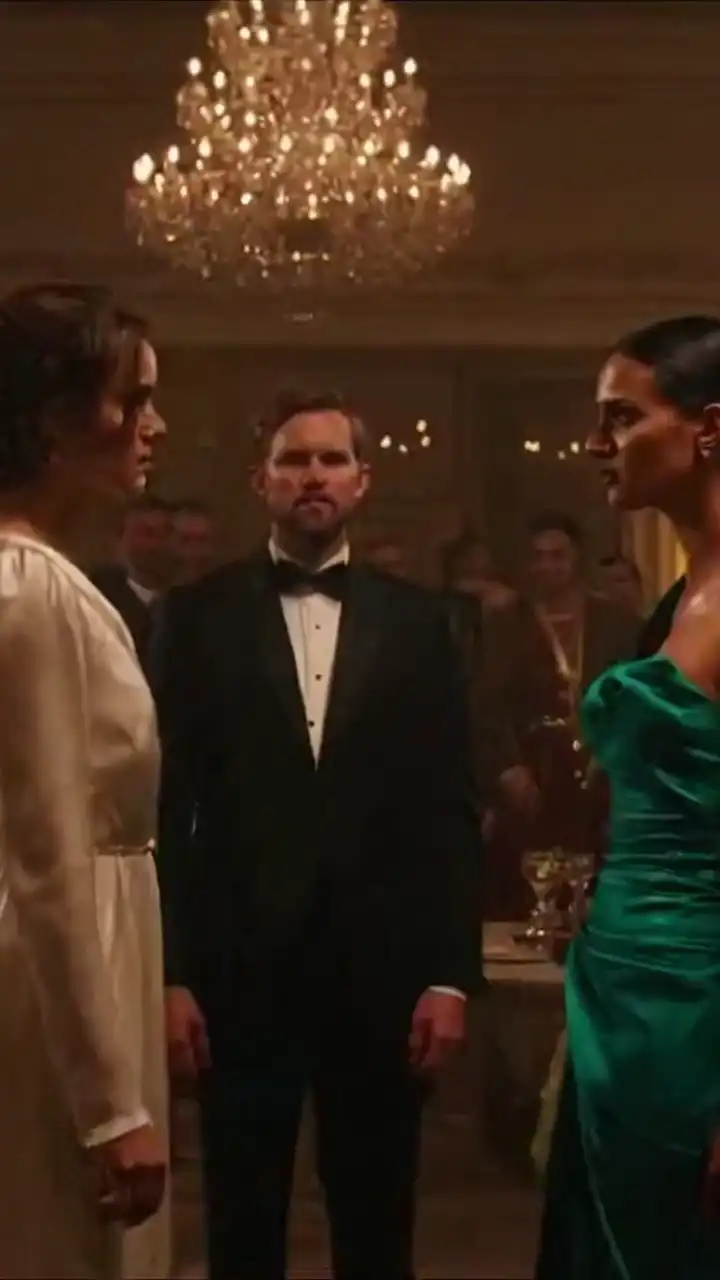
MY HUSBAND USED MY MONEY, GOT ENGAGED TO HIS MISTRESS, AND STOOD THERE WHILE SHE SLAPPED ME

THE MAID OF HONOR POURED WINE ON ME AT MY BRIDAL SHOWER AFTER STEALING MY FIANCÉ. SHE DIDN'T KNOW THE ROOM WAS ABOUT TO HEAR WHAT HE'D BEEN SAYING TO BOTH OF US.
THE MAID OF HONOR POURED WINE ON ME AT MY WEDDING AND CALLED ME CRAZY. SHE FORGOT I STILL HAD THE VOICE NOTE SHE SENT MY FIANCÉ.