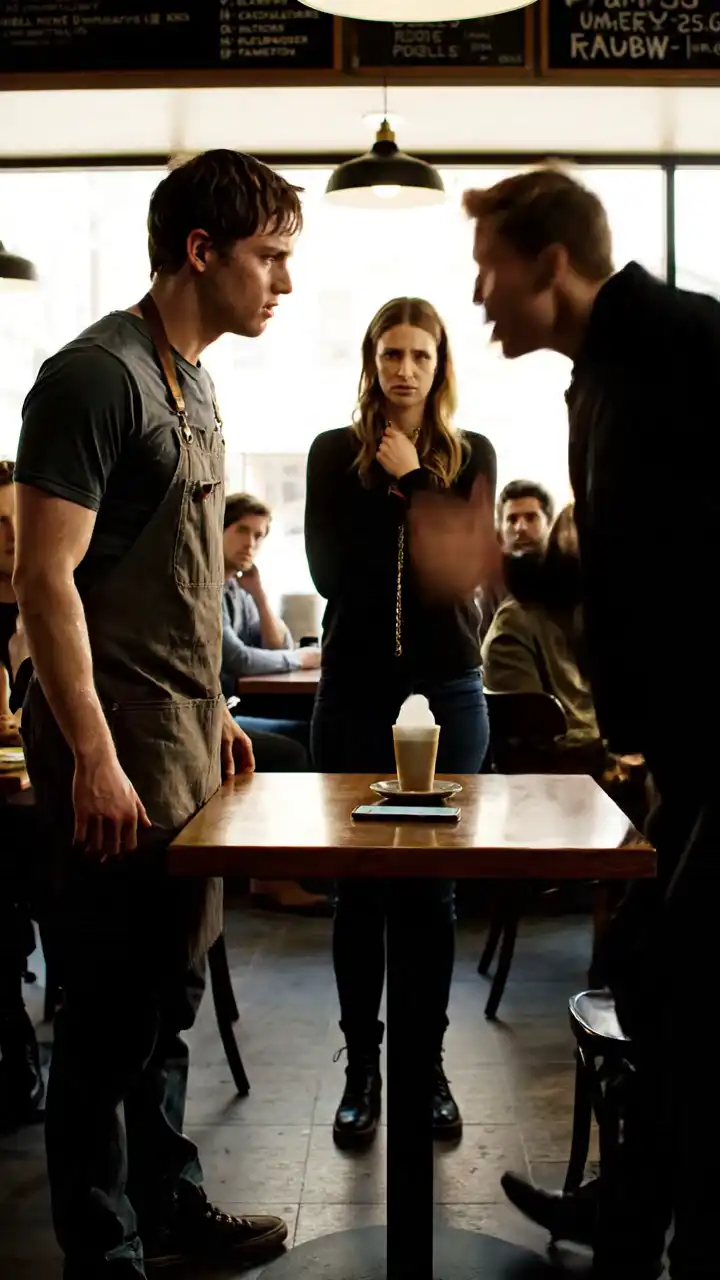
MY BROTHER THREW HIS PHONE AT ME IN A COFFEE SHOP AND EVERYONE THOUGHT I STOLE HIS WIFE
Chapter 1
The phone hit my apron first, then bounced off the edge of our table and landed faceup beside a stranger’s latte.
A bright screen glowed between us.
Even from where I stood, I could read the last line of the message that hadn’t been deleted all the way.
Miss you already Come back after he falls asleep
My brother Dane was half out of his chair, breathing hard, one hand flat on the table at Finch & Thread Coffee like he wanted to flip the whole thing over.
“You did this,” he said.
The room went quiet in that ugly, hungry way public places do when something embarrassing starts and nobody wants to miss the end.
A spoon clinked against a saucer at the next table. Milk hissed from the espresso machine. Someone near the front whispered, “Oh my God.”
I looked down at the phone, then up at my brother. My hands were still damp from the dish sink in the back. The gray apron around my waist was stained with mocha and oat milk. The toe of my left sneaker was split open enough to show my sock.
I had come out from the kitchen because Maribel, the afternoon manager, said, “Nolan, table six is asking for you.”
I thought Dane wanted to borrow twenty bucks again.
Instead, he stood in the center of the café with his wife, Kira, beside him and his phone thrown at my chest like evidence in a courtroom.
Kira looked pale and shocked, but not shocked enough for me. Her hand was pressed to the gold chain at her neck. She kept glancing at the people around us instead of at me.
“I don’t know what you think you saw,” I said.
Dane laughed once, sharp and humorless. “It’s not what I saw. It’s what I found.”
He jabbed a finger at the phone.
There were more messages visible as the screen brightened again from the movement.
Can’t keep sneaking like this
He’s starting to notice
I hate lying to him
The name at the top wasn’t saved. Just a number.
That should have helped me.
It didn’t.
Because right underneath the number was a thumbnail photo from the thread. Whoever had been texting had sent a picture of a man’s wrist on a café table, wearing a cheap black braided bracelet I recognized at once.
I was wearing the same kind.
Not because it was mine.
Because three months earlier, Dane had given matching bracelets to me and our cousin Rhett after our mother’s funeral, saying family should “stop drifting.”
The room kept getting smaller.
Dane pointed at my hand. “Same bracelet. Same coffee shop. Same sneaking around. You think I’m stupid?”
“No,” I said. “I think you’re angry.”
“Answer me.”
“I’m answering.”
“Then say it plain.”
I swallowed. Everybody was looking now. Two college girls on the window bench had stopped pretending not to stare. A man in a suit lowered his newspaper but kept holding it open as cover. Maribel had come out from behind the pastry case and frozen near the register.
Kira finally spoke, barely above a whisper. “Dane, not here.”
That only made it worse.
He turned to her. “Not here? He’s been meeting you here.”
“I have not,” I said.
Dane rounded back on me. “You always needed something, didn’t you? Rent, groceries, a place to crash. We all carry you, and this is how you repay me?”
That landed because there was enough truth in it to sound complete.
I was thirty-four and living in the room above Mr. Vasko’s garage on Alder Row because it was all I could afford. I worked mornings loading produce trucks at Hollis Market and evenings washing dishes and bussing tables at Finch & Thread. When our mother got sick, I burned through the little savings I had. When she died, all that was left was debt, a box of recipe cards, and a coat that still smelled like her hand cream.
Dane had paid for the headstone when I couldn’t.
People believe the person who has paid more.
I bent to pick up the phone, but Dane slapped his palm down over it.
“Don’t touch it.”
His voice was loud enough to make a toddler at the corner table start crying.
“I wasn’t going to run,” I said.
“You already did enough.”
Kira took one step back.
That was the moment that made the whole room decide against me.
Not the messages. Not the bracelet. Not Dane’s shouting.
Her stepping back.
People saw fear and filled in the rest themselves.
Maribel came closer. “Dane, maybe take this outside.”
He didn’t look at her. “This is family.”
Like that made public humiliation private.
I kept my eyes on Kira. “Tell him.”
Her mouth parted, then closed.
“Kira,” I said softly, “tell him I never met you here alone.”
She stared at me like she was trying to choose between drowning and fire.
Dane reached for the phone, unlocked it, and thrust it so close to my face I could smell the coffee on his fingers.
“There are months of this,” he said. “Deleted, but not gone. ‘Wish I could stay longer.’ ‘I can still smell your sweater.’ ‘He can’t know.’ What am I supposed to think?”
I looked at the thread. Some lines had jagged edges where they’d been recovered from recently deleted messages. Others were partial, cut off by failed deletion. Enough to sound filthy. Enough to ruin me.
Then I saw something else.
At the bottom of one message bubble, half cropped and faint, there was an auto-signature from a phone app.
Sent from HarborNest
I frowned.
HarborNest wasn’t a person. It was the assisted-living center outside town.
Our mother had spent her last six weeks there.
Dane grabbed the phone back before I could look longer.
“Well?” he said.
I opened my mouth, but before I could answer, Kira whispered, “Please stop.”
Dane stared at her. “You’re still protecting him?”
That snapped heads all over the café.
A woman by the sugar station covered her mouth.
I felt heat rise into my face, hot and useless. “I’m not the one you should be asking.”
The words came out before I could stop them.
Dane’s eyes narrowed. “What does that mean?”
I wished I could take it back. Not because I was afraid for myself anymore, but because of the way Kira went white.
Maribel touched my elbow. “Nolan, go to the back.”
If I went to the back, it would look like guilt.
If I stayed, it would turn uglier.
I looked at the phone one last time, at those half-deleted messages glowing like cuts that had reopened.
Something was wrong.
Not just wrong in the obvious way.
Wrong in the shape of it.
Dane had found what he thought was proof. Kira was terrified. And buried in those messages was the name of a place tied to our mother, not to me.
But there was no way to say all that with forty strangers watching and my brother waiting for me to deny the thing he had already decided was true.
So I said the only thing that came clean.
“You’re accusing the wrong person.”
Dane laughed again, but his face had gone strangely stiff.
“Then give me a name,” he said.
I looked at Kira.
She shook her head once.
Very small. Very quick.
And I knew then that this mess had started long before Dane threw his phone at me.
Chapter 2
Maribel sent me home twenty minutes later, though she tried to make it sound like a favor.
“Take the night,” she said, not meeting my eyes. “Come back when this cools down.”
When this cools down.
That was how people described fires they didn’t plan to help put out.
I changed out of my apron in the employee bathroom, folded it tighter than I needed to, and shoved it into my backpack. My hands wouldn’t stop shaking. Out in the alley behind Finch & Thread, the dumpsters smelled like old cream and wet cardboard. I sat on an overturned milk crate until the evening rush traffic on Briar Pike turned into a blur of headlights.
My phone buzzed once.
Unknown Number.
For one stupid second I thought it might be Dane apologizing.
It was Kira.
Please don’t say anything tonight
Then another message.
I can explain
I stared at the screen until it dimmed.
Then I typed: Explain what
The little dots appeared, vanished, came back, vanished again.
Nothing.
I laughed under my breath because if I didn’t, I might have punched the brick wall until my knuckles split.
At nine-thirty I walked back to the garage apartment behind Mr. Vasko’s house in the Cresthaven neighborhood, where every other home had porch lights shaped like lanterns and flower beds edged with neat white stones. Mr. Vasko’s place was the one with the rusted gutter and the chain-link gate that never shut right. Rain had stained the siding dark around the windows. The garage room had one hot plate, one narrow bed, one secondhand dresser, and a heater that clicked like it was thinking about dying.
It was enough, until someone used your thin life as proof you were capable of anything.
I barely slept.
At 5:15 a.m., I was stacking melon crates at Hollis Market when my cousin Rhett came up beside me.
Rhett drove forklifts and knew every scrap of family news before the people involved did.
He tilted his head. “Heard you had yourself a show at Finch & Thread.”
“Of course you did.”
“Dane called Aunt Lucille. Aunt Lucille called my mother. My mother called me before sunrise because apparently adultery is now community property.”
I kept stacking. “You believe him?”
Rhett didn’t answer right away.
That hurt more than if he’d said yes.
He rubbed the back of his neck. “I don’t know what to believe. The messages look bad.”
“I didn’t sleep with Kira.”
His jaw shifted. “Then why didn’t she say that?”
That question sat in my chest all morning.
At noon I checked my phone and found three missed calls from Dane, one from our aunt, and another text from Kira.
Please just wait
No explanation. No truth. Just a request to keep carrying whatever she had dropped on me.
I almost blocked her number. Instead, I saved screenshots of both her texts and went back to work.
That evening, I didn’t go to Finch & Thread. Maribel hadn’t put me on the schedule. She hadn’t fired me either, which somehow felt worse. Suspended by discomfort.
I walked anyway, because anger needs motion.
The town of Alder Creek always looked more expensive at twilight. The new apartments over Main Street glowed gold in the windows. Couples sat outside the wine bar wrapped in blankets under heat lamps. Kids in clean soccer uniforms trailed after parents who smelled like fabric softener and fresh shampoo.
Then there was me in a market hoodie with a frayed cuff, carrying all the wrong assumptions on my back.
I stopped across from Finch & Thread.
Through the window I could see Maribel restocking syrups. The same corner table where Dane had stood was empty now. I should have kept walking.
Instead I went in.
The bell over the door gave a cheerful little ring that made me hate it.
Maribel looked up and tightened.
“I’m not here to work,” I said.
She nodded too quickly. “Okay.”
“Did Dane come back?”
“No. But Kira did.”
That got my full attention.
“When?”
“Late afternoon. She sat in the back for almost an hour. Ordered tea. Never drank it.” Maribel lowered her voice. “She looked scared.”
“Scared of what?”
Maribel gave me a tired look. “You think I know? I run a coffee shop, Nolan. People cry here and cheat here and get dumped here and interview here. I hand them drinks. That doesn’t mean I know their lives.”
I almost turned away, but she added, “There was a guy asking for the Wi-Fi password at the same time. Older man. Gray coat. Said he was waiting for someone from HarborNest.”
My body went still.
“What man?”
“I don’t know. Tall. Dark cap. He sat near the back hall, close enough to hear if he wanted.” She frowned, trying to remember. “The dishwasher kid talked to him.”
“Luis?”
She nodded. “Why?”
Because HarborNest had flashed from those messages like a hand from underwater.
Because Luis noticed everything and looked invisible doing it.
I found him in the alley on his break, smoking half a cigarette down to the filter because he never wasted anything.
Luis was nineteen, narrow as a fence rail, with a scar through one eyebrow and the kind of quiet that made older people say he was respectful when really he just didn’t trust anyone enough to talk.
“You spoke to a guy from HarborNest?” I asked.
Luis squinted at me through smoke. “Maybe.”
“What did he want?”
“Wi-Fi.”
“Did he meet anyone?”
He flicked ash onto the pavement. “Why?”
I stepped closer. “Because my life blew up in there yesterday.”
He studied me for a long second. “Yeah. I saw.”
“Then help me.”
He shrugged like he didn’t care, but it was the fake shrug of someone deciding how much truth to sell.
“He was meeting a woman,” he said.
“Kira?”
“I don’t know her name.” He ground the cigarette under his shoe. “Blonde. Nice coat. Red nails. Nervous.”
Kira.
“When?”
“Not yesterday. Couple times before.”
A cold line ran down my back.
“Here?”
He nodded. “Back table. He’d come early. She’d come later. They’d sit close, talk low. Once they were holding hands.”
I heard the milk steamer scream inside the shop. A car door slammed out on Briar Pike. For a second all of it sounded far away.
“You’re sure?”
Luis looked offended. “I know what I saw.”
“Why didn’t you say anything yesterday?”
He snorted. “To who? The guy throwing his phone? The wife looking like she might pass out? The whole room already decided it was you.”
He wasn’t wrong.
“Did you hear a name?” I asked.
He shook his head. “No. But one time she said, ‘Delete them better.’”
That made me close my eyes.
Delete them better.
Not stop.
Not don’t do this.
Just hide it cleaner.
When I opened my eyes, Luis was watching me with something almost like pity.
“There’s more,” he said.
My throat tightened. “What?”
“That old man dropped his phone under the table once. I picked it up. Screen was on.” He reached into his pocket and pulled out his own cheap cracked phone. “I took a picture because I thought it was funny.”
“Funny?”
“He had the contact name saved as Daisy.”
“Kira’s middle name is Daisy.”
Luis nodded. “I found that out yesterday when your brother kept yelling her full name.”
He unlocked his phone and held it out.
The photo was blurry, taken fast from an angle, but clear enough.
A man’s hand. A text thread. And the contact at the top:
Daisy K
Below it, one message fragment visible in the preview:
He suspects Nolan
Everything inside me went quiet.
Not calm.
Just the kind of silence that comes right before glass breaks.
“Send that to me,” I said.
Luis hesitated. “I don’t want trouble.”
“You’re already in it. You just don’t know it yet.”
He looked at my face and must have seen something there, because he finally tapped send.
My phone buzzed.
A blurry picture. A half-deleted truth. And my name sitting inside it like a planted weapon.
Chapter 3
I should have gone straight to Dane.
Instead, I went to HarborNest.
Part of me didn’t even know why until I was pulling open the glass door under the scripted sign that read HarborNest Memory and Senior Care. The lobby smelled like lemon polish, old fabric, and the faint medicinal sweetness that never leaves places where people fade slowly. There was a piano in the corner no one played and a bowl of peppermints on the reception desk.
Our mother had hated the peppermints. She said they tasted like grief and toothpaste.
A receptionist with purple-framed glasses looked up. Her name tag said TESSA.
“Can I help you?”
I held up my phone. “I’m trying to identify someone who may have been texting from here.”
She gave me a careful smile reserved for difficult visitors and unstable relatives. “I’m sorry, we can’t release resident information.”
“I’m not asking for a chart. I’m asking if you know a man in a gray coat who spends time on his phone and leaves during afternoon visiting hours.”
“Sir—”
“My mother died here in January.”
That changed her face just enough to let me know she remembered me, if not by name then by type: the exhausted son who came in work boots, slept in the chair, and always asked whether pain medicine had been given on time.
“I’m sorry for your loss,” she said softly.
“Thank you. But I need help.”
She folded her hands. “If this concerns safety, I can take a report.”
I almost laughed. Safety. What I needed couldn’t fit on one of their little forms.
Before I could answer, a voice behind me said, “You’re Cora Bell’s younger boy.”
I turned.
An elderly woman in a wheelchair sat by the puzzle table, a blanket over her knees, eyes bright as polished glass. I knew her at once. Mrs. Ellery Boone. She had lived two doors down from us when I was a kid, before she moved in with her daughter, before the stroke, before HarborNest.
“You remember me?” I asked.
She sniffed. “I remember everybody. It’s the new stuff that leaks out.”
Tessa smiled. “Mrs. Boone, let’s head back to activities.”
Mrs. Boone ignored her and kept looking at me. “You look worse than at the funeral.”
“I feel worse than at the funeral.”
“Then sit.”
I sat in the chair beside her because she said it like an order.
Tessa gave me one last warning glance and stepped away to answer the phone.
Mrs. Boone leaned closer. Her voice had gone papery but sharp. “You’re here about that man.”
I stared at her. “What man?”
“The one with the cap. Comes Tuesdays and Fridays. Brings carnations he never gives to anybody. Walks the back garden with his phone lit up.” She tapped one bent finger against the armrest. “He’s not visiting the people he signs in for.”
The air in my lungs changed shape.
“You know his name?”
“No. But he has a widow’s face and a liar’s shoulders.”
That was such a strange thing to say I almost missed the truth in it.
“He signs in for someone?”
“He signs in for Mrs. Halpern sometimes. Sometimes Mr. Cates. Rotates. Folks on the end wing who don’t have many visitors.” She lowered her voice. “He’s not kin. I know kin. Kin either look guilty or tired. He looks hidden.”
That word hit me harder than it should have.
Hidden.
“Do the staff know?”
“Staff know enough to keep moving.”
I took out my phone and showed her the blurry picture Luis had sent me.
Mrs. Boone squinted, then nodded once. “That’s him.”
“Do you know why he’d be texting my brother’s wife?”
Her eyes lifted to mine, and for a second all the old-lady fuzziness dropped away. “Because people with nowhere proper to meet always borrow the places built for grief.”
A nurse came to wheel her away then, and before she turned, Mrs. Boone caught my wrist.
“Your mother knew things,” she said.
I felt my chest tighten. “What things?”
“She watched more than she spoke at the end.” Mrs. Boone’s hand trembled, but her grip was still surprisingly firm. “Last month she was here, she told me, ‘One of my sons is standing on rotten boards and doesn’t know it.’”
My mouth went dry.
“Which son?”
But the nurse was already moving her chair, and Mrs. Boone only shook her head as she rolled away.
Outside, the sky over Alder Creek had gone the color of dirty silver. I sat in my truckless, borrowed life on the bus bench and tried to put pieces together.
Dane had found incriminating messages. Kira had panicked but not denied enough. An unknown older man from HarborNest had met her at Finch & Thread. That man had texted, He suspects Nolan.
My name hadn’t landed in this by accident.
Someone had placed me there.
I finally called Dane.
He answered on the second ring like he’d been waiting.
“What.”
“Meet me.”
“Why? So you can lie better in person?”
“Main Street bus stop. Fifteen minutes.”
Silence.
Then, “If you’re wasting my time—”
“Fifteen minutes,” I said, and hung up.
He came in his work truck, still wearing the county utilities jacket he liked because it made him look more important than he was. Dane had always been broad-shouldered, handsome in the heavy reliable way our father never was. He got the steadier version of life too—full-time hours, mortgage, married at twenty-eight, grill in the yard, health insurance.
He got certainty.
I got explanations no one believed.
He climbed out and slammed the door. “Talk.”
I showed him the blurry photo from Luis’s phone.
He frowned. “What is this?”
“Read the preview.”
His eyes moved.
He suspects Nolan.
His face changed, but only slightly. “This proves nothing.”
“It proves my name was in their messages before you ever accused me.”
“The contact says Daisy K. That could be anyone.”
“No, it couldn’t.”
He looked away toward traffic. “You talked to Kira?”
“She texted me. Told me not to say anything.”
His head snapped back. “What exactly are you saying?”
I wanted to scream it. Instead I said, “I think she’s seeing someone.”
He took one step toward me. “Careful.”
“I am being careful.”
“With my wife?”
“With the truth.”
He laughed in my face. “You always do this.”
“Do what?”
“Act calm so everybody thinks you’re the reasonable one.”
That came from further back than the coffee shop. From childhood. From the way teachers believed Dane when he said I lost the lunch money, from the time Dad smashed the radio and Dane swore I’d broken it first, from years of me learning that quiet looked suspicious when you had less power.
“Come with me to HarborNest,” I said. “Ask about the man.”
“No.”
“Why not?”
“Because I’m not chasing some old-man story when I already saw enough.”
“You saw what someone wanted you to see.”
He stepped closer until we were almost chest to chest. “You think I want this? You think I enjoy standing in a coffee shop looking like a fool while my wife can’t even look at me?”
There it was. Not just betrayal. Humiliation.
His pain had found the nearest body and thrown itself.
“I didn’t do this to you,” I said.
“Then who did?”
I thought of Kira’s face when I’d said he was asking the wrong person. I thought of our mother in HarborNest, watching things from her bed, putting together truths no one asked her for. I thought of the hidden old man with carnations for nobody.
“I don’t know his name yet,” I said.
Dane shoved my shoulder hard enough to make me stumble back against the bus shelter glass.
“You hear yourself? You sound insane.”
A woman waiting with grocery bags moved away from us.
“Maybe I do,” I said. “But if I’m right, then Kira let you destroy me to protect him.”
The words hung between us.
For one second I thought Dane might hit me.
Instead he said the crueler thing.
“Why would she pick you to blame unless she thought no one would defend you?”
Then he got back in his truck and drove off.
That sentence stayed with me all night.
Not because it was entirely wrong.
Because it was.
Chapter 4
By Friday, the story had moved through Alder Creek the way coffee spreads in a dropped paper cup—fast, staining everything it touched.
At Hollis Market, two stock boys went quiet when I walked into the break room. At Finch & Thread, Maribel finally texted to say she needed “a few more days” before putting me back on schedule. Aunt Lucille left me a voicemail beginning with, “I’m not judging, sweetheart, but…” which meant judgment was already wearing its coat and coming through the door.
I spent the morning calling HarborNest again. Tessa wouldn’t tell me names. Administration wouldn’t call back. Kira still sent nothing but anxious little delays.
Please wait
It’s complicated
I’m trying to fix it
Every one of those messages made me hate her more.
By afternoon, I was so angry I went to the one person in the family who still valued evidence over noise.
My sister Leona.
Leona was technically my half-sister, though she’d never used the word. She was twelve years older than me, a respiratory therapist at Mercy Valley Hospital, and the only one among us who had inherited our mother’s habit of listening until the whole room accidentally confessed. She lived in a narrow rental duplex on Salem Court with two sons, one lemon tree in a bucket, and bills stacked under a magnet on the fridge.
When I walked in, she looked at my face and said, “Shoes off. Kitchen.”
That was her way of saying I looked wrecked.
I told her everything while she cut celery for soup.
She didn’t interrupt once. Only slid me a chipped mug of coffee and kept listening.
When I showed her the blurry picture from Luis and Kira’s texts, she set the knife down very carefully.
“So she asked you to keep quiet,” Leona said.
“Yes.”
“And Dane would rather believe you’re sleeping with his wife than admit he doesn’t know what’s happening in his own house.”
“Yes.”
“And there’s some older man meeting Kira at your café, using your name as cover.”
“Yes.”
Leona exhaled through her nose. “Ugly.”
“That’s the clean word.”
“Did Mama ever mention Kira to you near the end?”
I frowned. “Why?”
Leona wiped her hands on a towel. “Because she mentioned her to me.”
The room seemed to tilt.
“When?”
“Two weeks before she died. I was adjusting her blankets. She was drifting in and out, but then she got very clear all at once and said, ‘Dane married a woman with one foot already out the door.’” Leona shook her head. “I thought she meant emotionally. Mama had a dramatic streak.”
Our mother did. But she also noticed things nobody else did.
“Why didn’t you tell me?”
“Because our mother was on morphine and talking like a prophet. I didn’t put weight on it.” She looked at me hard. “I am now.”
She went to the junk drawer and dug out an old spiral notebook where she wrote everything from soccer schedules to medication reminders. Flipping pages, she found a note.
“Mama asked me to bring her the blue zipper pouch from her bag,” Leona said. “She said there was ‘the little card from the coffee place’ inside. I never understood that either.”
My pulse jumped. “Where’s the pouch?”
“In my hall closet. I never emptied all her things.”
Leona disappeared down the hall and came back with a faded blue cosmetic pouch, the kind drugstores sell near the travel shampoos. It still had one of our mother’s bobby pins caught in the zipper seam.
I opened it carefully.
Inside were tissues, lip balm, a tiny Saint Jude medal, and a receipt from Finch & Thread Coffee dated seven weeks before she died.
On the back of the receipt, in our mother’s shaky handwriting, were six words:
Red nails man from HarborNest back booth
Leona and I stared at it together.
For a second all I could hear was the bubbling soup on the stove.
“She saw them,” I said.
Leona nodded slowly. “She must have. Maybe one of us brought her by there after an appointment.”
I flipped the receipt over again, noticing another mark near the bottom. A number. Partial. As if she had started to copy a phone number from somewhere and her hand failed.
“…4481”
It wasn’t much.
But it was something from before everything exploded.
Leona touched the edge of the receipt with one finger. “Mama knew.”
I looked at her. “If she knew, why didn’t she tell Dane?”
Leona gave me the saddest smile. “Maybe she tried. Maybe he didn’t hear it. Dane only listens well when the truth flatters him.”
That evening, Leona came with me to Finch & Thread.
I hadn’t asked. She simply grabbed her keys and said, “You’re not walking in there alone again.”
The café was crowded with the Friday after-work crowd. Conversation hummed under the indie music. Cups knocked lightly on saucers. Everyone looked warm and polished and fed.
Luis was wiping the pastry case.
When he saw me with Leona, he straightened.
“I need one more thing,” I told him.
His eyes darted around. “I already sent the picture.”
“I know. Did you ever see the old man sign anything? Receipt, card slip, anything with a name?”
Luis hesitated, then pointed with his chin toward the register.
“Ask Ivy.”
Ivy was the new barista, a widow in her sixties with silver braids and red reading glasses who worked two shifts a week because retirement had bored her senseless. Most customers overlooked her. That alone made her dangerous in the best possible way.
She listened with her hands folded over the counter, expression unreadable.
When I finished, she said, “So you’re the brother.”
“That depends who’s asking.”
“The woman with the red nails was not meeting you,” Ivy said. “I can tell when two people are stealing sugar packets and when they’re stealing whole hours.”
Leona blinked. “You saw them too?”
“I see everybody.” Ivy tipped her head. “I also save signed receipts when the card machine acts up.”
A thin pulse started in my throat.
“You have one?”
“Maybe.”
She disappeared into the office and returned with a rubber-banded stack of merchant copies. Slowly, carefully, she sorted through them.
Around us the café noise swelled and fell. Milk steamed. A baby laughed. Somebody at the far table dropped a fork.
Then Ivy pulled one slip free.
“Here.”
The name on the signature line was barely legible, but printed above it was enough.
MERRITT CALDWELL
I said it out loud once, trying to place it.
Leona’s eyes narrowed. “Wait.”
She snapped her fingers and looked at me. “Merritt Caldwell. Isn’t that the developer from the south side project? The man who bought those old duplexes near Riverbend?”
I knew the name then. Older, rich, local enough to be in charity photos and zoning arguments. Widower. Donor. Smiling man in pressed coats shaking hands with council members.
Luis muttered, “That old guy?”
Ivy nodded. “Paid cash sometimes. Card other times. Generous tips. The woman was the one who always looked over her shoulder.”
My skin crawled.
Leona took a breath. “If this is who I think it is, he sits on the board at Mercy Valley.”
Of course he did.
Men like that were always near institutions where people mistook money for decency.
I was still holding the receipt when the bell over the door rang.
Dane walked in.
He stopped two paces inside, taking in me, Leona, Luis, Ivy, the paper in my hand. Behind him, Kira stood in a cream sweater, face hollow, eyes ringed dark like she hadn’t slept at all.
Every sound in the café seemed to dip.
Dane looked at me. “What now?”
I held up the signed receipt. “His name is Merritt Caldwell.”
Kira made a tiny sound.
Dane turned to her slowly. “Who?”
Nobody at our cluster moved.
Ivy, wise enough to vanish from family disasters, stepped back to the espresso machine. Luis did not move an inch.
Leona said quietly, “Maybe we should sit.”
“No,” Dane said. “No more sitting. Who is Merritt Caldwell?”
Kira looked at me first, and that made Dane’s face darken in a way I had never seen before.
“Look at me,” he said to her.
She did.
Her lips trembled. “Please not here.”
He gave a broken laugh. “Again with that.”
Then he saw the fear in her face and added, more quietly, “Just tell me the truth.”
For one second, I thought she would.
Instead she whispered, “It isn’t what you think.”
I had heard enough of that sentence to hate it on contact.
Dane stepped back from her like he had been burned. “Then what is it?”
She didn’t answer.
The café was no longer pretending not to listen. You could feel the whole room leaning without moving.
I set the receipt on the table between us.
“You used my name,” I said. “Why?”
Kira shut her eyes.
Dane stared at her. “Used his name?”
Leona’s hand found my forearm, not to hold me back exactly, but to keep me from lunging into words too fast.
Kira opened her eyes again, and when she spoke, her voice was thin and scraped raw.
“Because he would believe it.”
Dane flinched like she had slapped him.
And in that terrible silence, everybody finally understood that the ugliest part of this story had not started in the coffee shop.
It had started at home.
Chapter 5
Dane sat down so suddenly the chair legs screeched over the floor.
He looked less angry now than emptied out.
“Say it straight,” he said.
Kira stayed standing.
Her red nails were gone, I noticed then. Bare fingertips. Maybe she had bitten them down. Maybe she had scrubbed herself trying to look innocent. It didn’t work.
“I met Merritt last fall,” she said.
The words were quiet, but in the hush of the café they seemed to travel all the way to the windows.
“At the HarborNest fundraiser. He was a donor. We talked. Then he found me online.”
Dane said nothing.
“Nothing happened at first,” she rushed on. “It was messages. Then coffee. Then more messages.”
Luis lowered his gaze. Ivy kept wiping the same spotless section of counter with deliberate mercy.
Leona asked the practical question. “How long?”
Kira swallowed. “Eight months.”
Dane made a sound low in his throat, not quite a word.
I looked at her and saw, underneath the fear, the selfishness I had been smelling all week. Not wild passion. Not tragic confusion. Just a long series of choices protected by the assumption someone else could carry the damage.
“Why me?” I asked again.
She looked at my face then, really looked, maybe for the first time since this started.
“Because Merritt saw you here one day when Dane stopped by,” she said. “You were wearing the same bracelet. Later Dane mentioned that you worked here most evenings. Merritt said…” She stopped.
“Say it,” Dane said.
Her eyes filled. “He said if anything ever came out, people would believe a poor brother before they’d believe me with him.”
My jaw locked so hard it hurt.
Dane stared at her like his own house had spoken back to him in a stranger’s voice.
Kira went on, and now the words came like things she had been holding shut with both hands.
“He told me to delete everything. Better. He said if there were gaps, it would still point where we needed it to point. He told me not to panic. He said Dane already resented Nolan enough to do the rest himself.”
Dane’s face drained white.
I could see him hearing every ugly thing he had said to me in front of a room full of people.
“Why didn’t you stop him?” I asked.
She covered her mouth and cried once into her palm before forcing herself to continue. “Because when Dane found the messages, I was scared. And then he said your name first.”
That one landed hardest.
Not because it surprised me.
Because it confirmed everything.
She had let him choose the target because the target had always been available.
Leona spoke very softly. “So you watched him throw your brother away and said nothing.”
Kira’s shoulders shook. “I know.”
“No,” Leona said. “You know now. That’s not the same thing.”
Dane leaned forward, elbows on knees, eyes fixed on the table.
“Merritt Caldwell,” he said. “The man from the fundraiser. The one you said was helping with your mother’s memory wing donation idea.”
Kira nodded once, miserable.
I looked at Dane. “You brought him into the house?”
His laugh broke in the middle. “He sent flowers when Mama died.”
For a moment nobody spoke.
That detail was so obscene it made the whole thing feel rotten down to the frame.
Then the bell over the door rang again.
A tall man in a charcoal coat stepped inside, brushing rain from one sleeve.
Silver at the temples. Expensive shoes. Calm face trained by years of not being challenged in public.
Merritt Caldwell.
He saw Kira first, then Dane, then me, and I watched calculation pass through his eyes like a shadow crossing glass.
“Kira,” he said, too smooth, “you left your phone in my car.”
Every person near our table turned.
Dane stood up so slowly it was frightening.
Merritt adjusted without missing much of a beat. “I can see this is a bad time.”
“No,” I said. “This is exactly the time.”
His gaze settled on me. Not nervous. Measuring.
“You must be Nolan.”
I stepped toward him. “You know that already.”
He smiled, small and patronizing. “Only by mention.”
Luis muttered, “Liar,” under his breath.
Dane moved between us before I could. “Did you use my brother’s name?”
Merritt looked at Kira, and in that glance I saw the whole machine of him: control, signal, pressure, the expectation that women would panic and men would posture and he would still come out cleaner than both.
“Kira,” he said, “I think you’re upset.”
She backed away from him.
That was the first good thing she had done all week.
“Don’t,” she whispered.
Dane’s hands opened and closed at his sides. “Answer me.”
Merritt sighed, as if burdened by the emotions of smaller people. “Your marriage is not my business.”
Leona actually laughed at that, one sharp impossible sound.
“Your business has been in his marriage for eight months,” she said.
Merritt looked at her, then at the room noticing him, and his tone changed. Softer. Lawyer-clean.
“I’m not discussing private correspondence in a café.”
I took out my phone and held up Luis’s picture, then Kira’s texts, then the signed receipt.
“You already did,” I said.
For the first time, his expression slipped.
Only a little.
Enough.
Dane turned to Kira. “Is this him?”
She nodded, crying openly now.
Dane looked back at Merritt. “Did you tell her to use Nolan?”
Merritt’s silence was answer enough, but he still tried.
“I advised discretion,” he said.
That phrase was so cold, so polished, that several people nearby inhaled at once.
“Discretion,” I repeated. “That what you call ruining someone who had nothing to lose but his name?”
Merritt’s eyes flicked to my hoodie, my worn shoes, the apron string still sticking out of my backpack.
He should not have looked.
Because in that single glance, every person around us saw exactly what he had thought from the start.
That I was expendable.
Dane saw it too.
And whatever remained of his denial cracked wide open.
“You used him because you thought nobody would care,” Dane said.
Merritt didn’t answer.
Dane took one step closer. “You thought if the poor brother got blamed, it would stick.”
Merritt straightened. “Lower your voice.”
Dane laughed then, a terrible sound. “You don’t get to tell me what to lower.”
Maribel had emerged from the back by now, phone in hand, ready to call somebody if she had to.
But nobody was shouting anymore.
The truth had changed the temperature of the room. It wasn’t chaos now. It was judgment.
Kira wiped at her face. “He said you already looked down on Nolan,” she whispered to Dane. “He said family stories are easy to guide if you pick the person everyone expects least from.”
I looked at my brother.
He couldn’t meet my eyes.
Merritt made one final attempt to gather himself. “Whatever this is, it should be handled privately.”
I heard my own voice go very calm.
“It was private when you were sleeping with my brother’s wife,” I said. “You made it public when you shoved my name under it.”
He turned to leave.
Maribel stepped in front of the door.
Not dramatic. Just firm.
“You can wait,” she said, “for the police or for your conscience. But one of them should hear you.”
That line would travel around Alder Creek for months.
Merritt looked at the faces around him and understood, too late, that money works best before witnesses choose a side.
Kira sat down finally and folded in on herself, crying into both hands.
Dane stayed standing, looking at me like I was the wreckage and the mirror both.
“I’m sorry,” he said.
It was small. Late. Not enough.
But it was the first true thing he had given me in days.
I nodded once because I was too tired for anything bigger.
Then I said, “I know.”
What I did not say was the rest of it.
I know exactly how easy I was for all of you to sacrifice.
Chapter 6
Two weeks later, Finch & Thread gave me my shifts back.
Maribel didn’t make a speech about it. She just handed me a fresh apron, squeezed my shoulder once, and said, “The back sink misses your speed.”
That was enough.
Alder Creek did what towns do when a scandal changes direction. People who had stared at me too long started being extra polite. A woman who had watched Dane accuse me in public suddenly tipped twenty dollars on a drip coffee and told me to “keep my chin up” like she had been on my side all along.
I took the money.
I did not take the rewrite.
Merritt Caldwell’s name surfaced in places it had been cushioned before. Other whispers followed. Not all of them criminal, but enough of them ugly. Enough married women at charity events, enough private meetings, enough staff at HarborNest remembering him signing in under borrowed names that the polished version of him began to come apart. He resigned from two boards before anyone could vote him off. Around town, people called it a fall from grace.
Grace had nothing to do with it.
Kira moved out of the house on Millbrook Lane and into her sister’s condo in Dalton Ridge. Dane filed for divorce quietly. There were no children, which felt like the only mercy in the whole mess.
He called me three times before I answered.
On the fourth call, I did.
We met at Greenbank Cemetery beside our mother’s stone because apparently grief keeps being the family room for things we should have said elsewhere.
The day was cool and bright. Wind moved through the cedar trees in long soft passes. Somebody had left cheap grocery-store carnations at the next grave over.
Dane stood with his hands in his jacket pockets and looked older than forty-two for the first time in his life.
“I keep hearing myself in that café,” he said.
I didn’t answer.
He stared at the headstone. “The way I talked to you.”
“Yeah.”
“I believed the easiest thing.”
“That too.”
He nodded like each word deserved to hurt.
After a while he said, “I think part of me was ready to believe it because I’ve spent years thinking you take and I carry.”
I looked at him then. “And?”
“And maybe I needed that story more than I needed the truth.”
There it was.
Not a full redemption. Not a dramatic collapse into tears. Just the plain ugly center.
I appreciated it more than I wanted to.
He cleared his throat. “I can pay you back for the lost shifts. For the room if you want to move. For—”
“No.”
He looked startled. “No?”
“I don’t want your money, Dane.”
“Then what?”
I thought about the phone hitting my apron. The whole café watching. Kira’s silence. Merritt’s glance at my shoes. The old receipt in our mother’s handwriting. My name laid down like a tarp over somebody else’s filth.
What had been taken from me wasn’t just wages.
It was position. Dignity. Standing in my own family.
So I told him the truth.
“I want you to stop thinking helping me means owning the story of me.”
He was quiet.
Then he nodded slowly.
“I can do that.”
“I’m not sure yet,” I said. “But you can try.”
That was the most I had.
He accepted it.
We stood there another minute in the wind.
Before leaving, Dane touched the top edge of our mother’s stone and said, almost to himself, “She knew.”
I looked down at the grass. “Yeah.”
“She always did.”
When I got back to Finch & Thread that night, Luis was dragging a bag of grounds to the dumpster.
He jerked his chin at me. “Your brother okay?”
“No.”
Luis considered that. “You?”
I looked through the window into the café. Warm lights. Steam on the glass. People bent over cups and laptops and first dates and private hurts. The same place where my life had cracked open in public. The same place where the truth had finally stood up.
“Better,” I said.
Inside, Ivy was setting clean mugs upside down in neat rows. She caught my eye and gave me a tiny salute with a dish towel.
The rush started ten minutes later.
Orders stacked up. A toddler dropped a muffin. A teenager cried in the corner after what looked like a breakup. Maribel called for more ice. Normal life, messy and unglamorous, flooding back over the scene of the damage.
Near closing, I wiped down the back booth.
For a second I put my hand flat on the table where all those hidden meetings had happened and where my mother, half sick and half fading, had still managed to see what the rest of us missed.
Then I took my hand away.
Some things break a family and some things reveal it.
They are not always the same thing.
When we locked up, Maribel handed me the tips from the late shift. “Good night, Nolan.”
I tucked the bills into my pocket and stepped out onto Briar Pike. The air smelled like rain on hot pavement. Across the street, the storefront glass caught my reflection—cheap shoes, tired face, shoulders a little straighter than before.
I stood there for a moment longer than necessary.
I had lost a brother for a while. I had lost the last excuse to stay small for people who found that convenient. I had lost any wish to be loved at the price of being easy to blame.
It turned out that was not only loss.
It was also the beginning of something cleaner.
I walked home without hurrying, carrying the one thing nobody in that café had managed to take from me in the end.
My self-respect.
Disclaimer: Mention of any brand or trademark is for identification only and does not imply partnership or endorsement
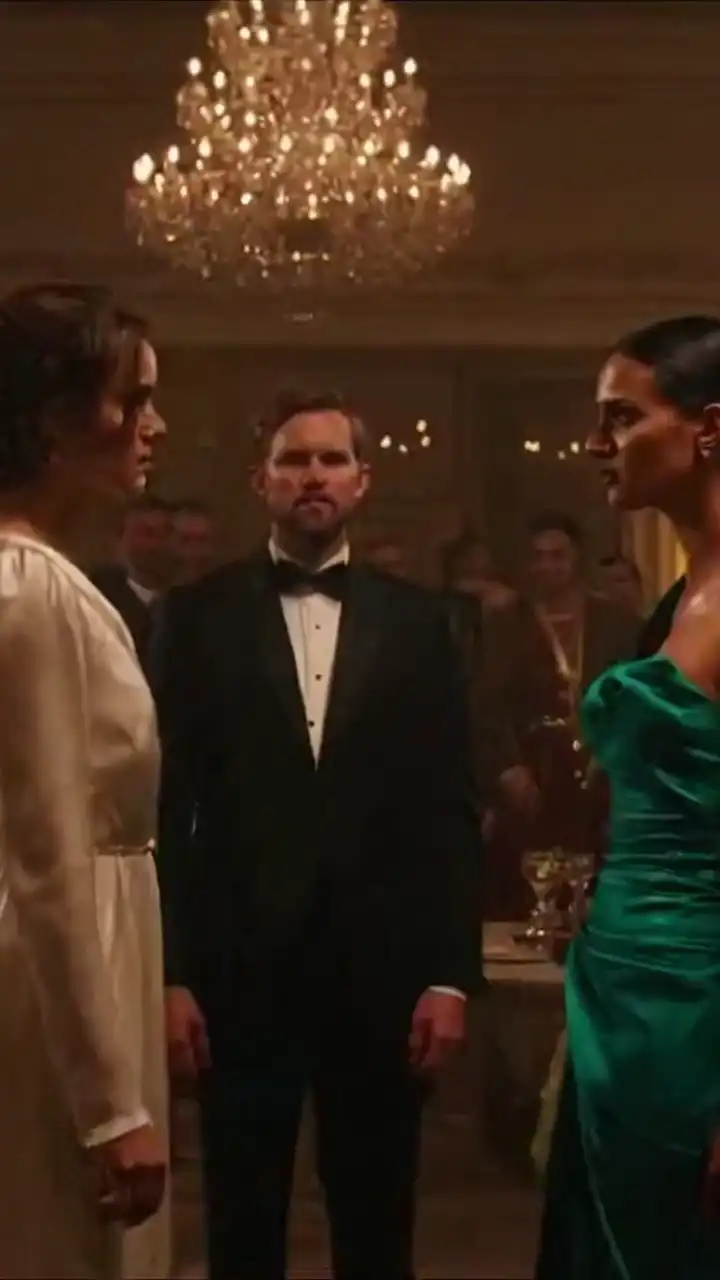
MY HUSBAND USED MY MONEY, GOT ENGAGED TO HIS MISTRESS, AND STOOD THERE WHILE SHE SLAPPED ME

THE MAID OF HONOR POURED WINE ON ME AT MY BRIDAL SHOWER AFTER STEALING MY FIANCÉ. SHE DIDN'T KNOW THE ROOM WAS ABOUT TO HEAR WHAT HE'D BEEN SAYING TO BOTH OF US.

THE MAID OF HONOR POURED WINE ON ME AT MY WEDDING AND CALLED ME CRAZY. SHE FORGOT I STILL HAD THE VOICE NOTE SHE SENT MY FIANCÉ.