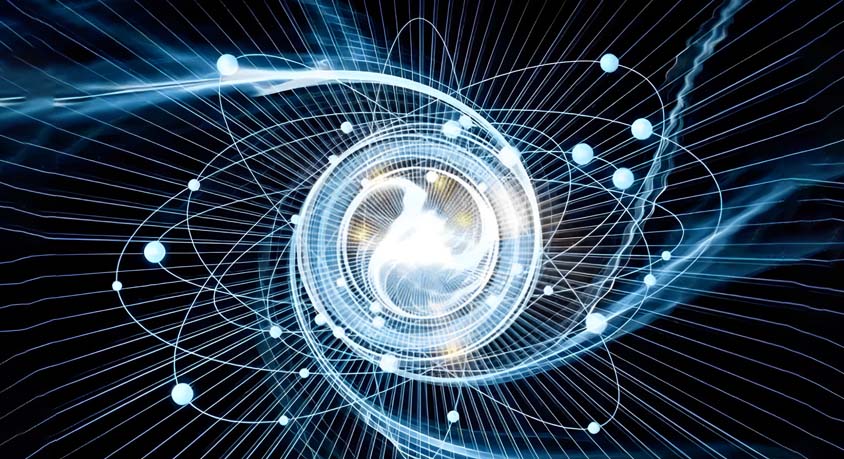
Most people assume quantum computing’s threat to data security is a distant problem—something to worry about when practical quantum machines arrive in a decade or more. This misunderstanding is dangerous. Hackers and state-sponsored groups are already intercepting and storing terabytes of encrypted data—medical records, financial transactions, government communications—waiting for the day quantum computers render current encryption obsolete. Think of today’s encryption as a sturdy padlock on a safe; hackers aren’t trying to pick it now—they’re stealing the entire safe, knowing they’ll have a master key (quantum computing) by 2030. This “harvest now, decrypt later” strategy is a silent war on data privacy, and every organization or individual with sensitive information is a target.
The threat exists because modern encryption—used in everything from email to online banking—relies on mathematical problems (like factoring large numbers or solving discrete logarithms) that classical computers can’t crack in a lifetime. Quantum computers, however, use quantum bits (qubits) that bypass these mathematical barriers. A quantum computer with 20 million qubits—projected to exist by 2035—can break RSA encryption (the backbone of internet security) in hours, compared to the 10 billion years a classical supercomputer would need. Hackers know this; a 2024 report found 62% of global cyberespionage campaigns now include “data hoarding” for future quantum decryption, targeting healthcare providers, financial institutions, and defense contractors. Even encrypted messages sent today—between world leaders, doctors and patients, or businesses and clients—could be exposed a decade from now.
The solution lies in post-quantum cryptography (PQC): algorithms designed to resist quantum attacks by relying on mathematical problems even quantum computers can’t solve—like lattice-based cryptography or hash-based signatures. Unlike experimental quantum key distribution (QKD), which requires expensive new hardware, PQC works with existing systems, making it a practical, cost-effective fix. In 2024, the U.S. NIST finalized PQC standards for general use, and early adopters report a 99.7% compatibility rate with current software. The European Union has mandated that all critical infrastructure (energy grids, healthcare systems) switch to PQC by 2030, while Japan has allocated $2.3 billion to PQC research and deployment. For individuals, consumer-grade PQC tools—from encrypted messaging apps to secure cloud storage—are already available, adding a quantum-safe layer without disrupting daily use.
The urgency can’t be overstated. Data stored today has a “cryptographic shelf life” of 5–10 years; waiting until quantum computers are operational to adopt PQC means decades of sensitive data will be exposed. A healthcare provider that delays PQC deployment, for example, risks exposing 10 years of patient records—including genetic data and medical histories—to quantum-powered hacks. The cost of inaction is far higher than proactive deployment: switching to PQC costs businesses 2–3% of their IT budget, while a post-quantum data breach could cost 20x that in fines and reputational damage.
This isn’t a theoretical threat—it’s a present reality with a ticking clock. Hackers aren’t waiting for quantum computers; they’re collecting data now. The question isn’t “if” quantum decryption will be possible, but “when”—and whether you’ll have protected your data in time. Post-quantum cryptography isn’t a luxury; it’s a necessary defense in a world where today’s secrets are tomorrow’s open books. The time to act is now—before the quantum heist goes from silent preparation to public disaster.
Disclaimer: Mention of any brand or trademark is for identification only and does not imply partnership or endorsement

MY HUSBAND USED MY MONEY, GOT ENGAGED TO HIS MISTRESS, AND STOOD THERE WHILE SHE SLAPPED ME

THE MAID OF HONOR POURED WINE ON ME AT MY BRIDAL SHOWER AFTER STEALING MY FIANCÉ. SHE DIDN'T KNOW THE ROOM WAS ABOUT TO HEAR WHAT HE'D BEEN SAYING TO BOTH OF US.

THE MAID OF HONOR POURED WINE ON ME AT MY WEDDING AND CALLED ME CRAZY. SHE FORGOT I STILL HAD THE VOICE NOTE SHE SENT MY FIANCÉ.