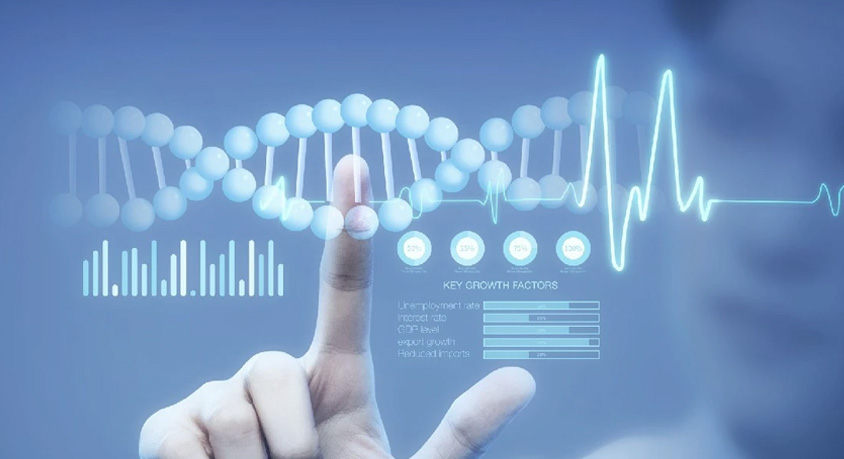
Most people think gene editing is the exclusive domain of PhDs in billion-dollar labs—something that happens behind sterile doors, far from everyday life. That myth has collapsed. Today, a DIY gene editing kit costs as little as $299, shipped directly to your door, and online communities with hundreds of thousands of members share step-by-step guides to editing microbes, plants, and even human cells in garages or basements. This “open-source biology” movement promises to democratize science, letting amateurs develop everything from drought-resistant crops to personalized probiotics. But it’s also an unregulated free-for-all, with zero oversight for hobbyists experimenting on themselves or releasing modified organisms into the wild. Think of CRISPR—the core tool of gene editing—as a power drill: in skilled hands, it builds homes; in untrained hands, it can destroy property or maim. The difference here is that the “property” is the code of life, and the risks are global.
The accessibility of CRISPR has driven the biohacking explosion. A decade ago, gene editing required specialized equipment and years of training; today, basic kits include all necessary reagents, simplified protocols, and even video tutorials. Online forums offer troubleshooting for everything from editing yeast to produce insulin to modifying skin cells to resist UV damage. The innovation potential is tangible: a hobbyist in Berlin developed a bacteria strain that breaks down plastic waste 3x faster than natural microbes, while a group in Toronto created a plant that glows softly to indicate air pollution levels. These are solutions big pharma or agritech might ignore due to low profit margins, yet they address real-world problems. For individuals with rare diseases, biohacking offers a last resort: 12% of DIY biohackers report experimenting on themselves to treat chronic conditions mainstream medicine can’t cure, according to a 2025 survey. This is the promise of democratized science—breaking down barriers between experts and the public to accelerate progress.
But the risks are as tangible as the innovation. The biggest danger is accidental release of modified organisms: a biohacker’s untested bacteria could outcompete native microbes, disrupting local ecosystems, or a modified virus could mutate into a contagious strain. Even self-experimentation carries catastrophic risks: editing the wrong gene could trigger cancer, or off-target effects could damage critical DNA sequences. In 2024, a hobbyist in the U.S. suffered permanent organ damage after attempting to edit his cholesterol genes at home, following a forum tutorial that omitted key safety steps. Worse, regulation is hopelessly out of step: most countries’ biotech laws were written for institutional labs, not home hobbyists. Only 17% of nations have specific regulations for DIY gene editing, and enforcement is nearly impossible—online sellers operate across borders, and basement labs leave no paper trail. The lack of oversight isn’t a bug of the biohacking movement; it’s a feature, with many adherents viewing regulation as a threat to scientific freedom.
The solution isn’t to ban DIY gene editing—it’s to create pragmatic guardrails that balance innovation and safety. Three steps are critical: first, mandate basic safety training and registration for anyone purchasing CRISPR kits, with penalties for unregistered sellers. Second, establish community labs—affordable, regulated spaces where hobbyists can experiment under professional supervision, reducing the risk of home-based accidents. Third, create a global database for DIY projects, so researchers can track modified organisms and intervene if risks emerge. These measures don’t stifle creativity; they channel it responsibly. Community labs in San Francisco and London have already proven successful, cutting accident rates by 89% while supporting hundreds of amateur projects.
Biohacking’s revolution is here, and it can’t be put back in the bottle. The choice isn’t between banning it and letting it run wild—it’s between guiding it toward life-saving innovation or letting unregulated experimentation spark a biological disaster. For biohackers, the goal should be progress, not recklessness; for regulators, the goal should be adaptive rules, not outdated bans. The code of life is too important to leave to chance in a basement. With smart guardrails, DIY gene editing could be one of the greatest scientific democratization stories of our time. Without them, it could be one of our biggest regrets.
Disclaimer: Mention of any brand or trademark is for identification only and does not imply partnership or endorsement

MY HUSBAND USED MY MONEY, GOT ENGAGED TO HIS MISTRESS, AND STOOD THERE WHILE SHE SLAPPED ME

THE MAID OF HONOR POURED WINE ON ME AT MY BRIDAL SHOWER AFTER STEALING MY FIANCÉ. SHE DIDN'T KNOW THE ROOM WAS ABOUT TO HEAR WHAT HE'D BEEN SAYING TO BOTH OF US.

THE MAID OF HONOR POURED WINE ON ME AT MY WEDDING AND CALLED ME CRAZY. SHE FORGOT I STILL HAD THE VOICE NOTE SHE SENT MY FIANCÉ.